For hosts
Podcast Guest Questionnaire
The form you send between the yes and the recording decides how prepared both of you are when the red light goes on. Here is what to ask, what to leave out, four templates to copy, and the two answers most questionnaires forget: how long to block, and the single link your show notes will carry.
7 min read
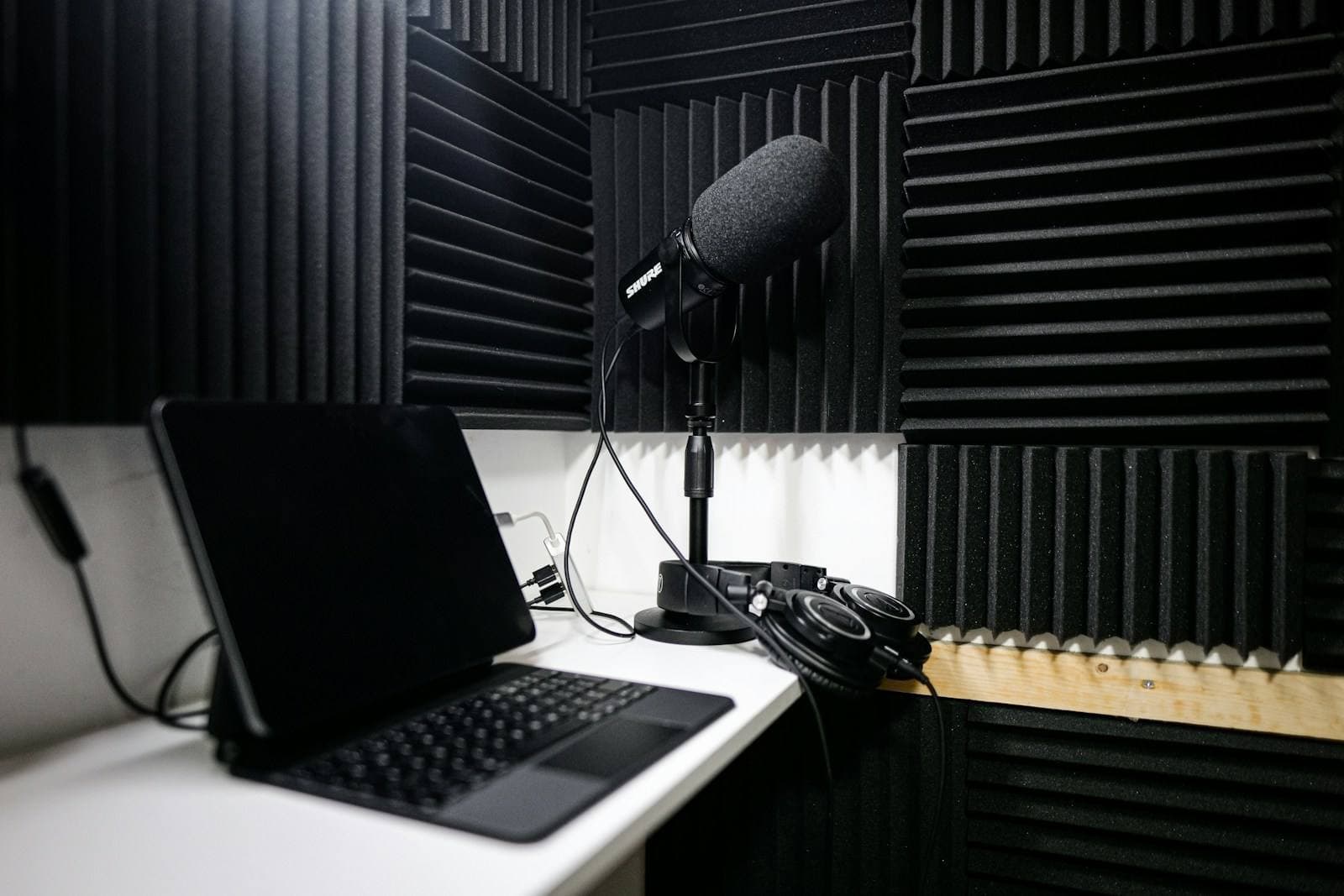
A guest said yes. Between that email and the recording there is usually one more message, and it is the one that decides whether you walk into the call knowing how to say their name, what the episode is about and where to send listeners afterwards, or find out live.
Most pre-interview questionnaires fail in one of two ways. Some are so long that the guest skims them the night before, and some ask for the guest's whole biography, which they already sent in the pitch. A good one is short, asks only for what you cannot find yourself, and tells the guest what to expect in return.
This page gives you the four parts every questionnaire needs, a short email version for most episodes, a full intake form for a show that books often, a recording setup check, a pre-interview call agenda, and the version to answer if you are the guest.
What should a podcast guest questionnaire ask?
Ask for four things and nothing else: how to introduce the guest, what the episode is about in their words, the logistics of the recording, and what happens afterwards. Keep it to about eight questions a guest can answer in ten minutes, and send it as soon as the date is confirmed rather than the day before.
Everything a questionnaire asks should land in one of these rows. A question that fits none of them is usually something you could look up yourself, or something better asked on air.
| Part | What you are asking for |
|---|---|
| The introduction | Name and pronunciation, a one-line description, the credential that matters here |
| The episode | Their angle, a story or two, anything they would rather not discuss |
| The recording | Time zone, microphone and headphones, a quiet room, who else joins |
| Afterwards | The one link, a headshot, and how they plan to share it |
The episode row is the one that pays. A guest who has written their angle down before the call gives a sharper first answer, and you get a title for the episode before you record it.
Podcast guest questionnaire templates
Four templates, from the lightest to the most complete. Most shows only need the first. Fill the brackets, cut any question you already know the answer to, and send it in the same thread as the confirmation so nothing gets lost.
Looking forward to [date]. A few quick questions so the episode is ready before we start. A sentence or two each is plenty.

1. How do you pronounce your name, and how would you like to be described in one line?
2. What is the one part of your background most relevant to [subject]?
3. What is the one idea you would most like listeners to leave with?
4. Is there a story or example you would like me to ask you about?
5. Anything you would rather we did not discuss?
6. Which time zone are you in, and do you have a microphone and wired headphones?
7. What is the single link you would like listeners to follow afterwards?
8. Could you send a headshot I can use on the episode page?

We will record on [platform]. I will send the link the day before. Please block [length] so we have time to set up without rushing.
ABOUT YOU
- Full name, as it should appear in the episode title
- Pronunciation (write it the way you would say it)
- One-line description, in your own words
- Short bio, under sixty words, to be read aloud
- Headshot (square, at least [size] pixels)

THE EPISODE
- The one idea listeners should leave with
- Two or three questions you would like to be asked
- A story, number or example you can speak to
- Topics you would rather avoid
- Anything launching or changing around the air date

THE RECORDING
- Time zone and preferred recording slots
- Microphone, headphones and a quiet room: yes or not sure
- Will anyone else join the call?

AFTERWARDS
- The single link for the show notes
- Social handles to tag when the episode goes out
- Would you like a share kit on publish day? (yes / no)
A few things that make a big difference to how you sound:

- Use a microphone if you have one. If not, wired earbuds with a built-in mic beat a laptop microphone.
- Wear headphones so the recording does not pick up my voice from your speakers.
- Pick the smallest, softest room you can. Carpets, curtains and a closet full of clothes all help.
- Close other apps, silence notifications, and plug in your laptop.
- Join from a computer on [platform] a few minutes early so we can check levels together.

If anything here is a problem, tell me now and we will work around it.
1. Thanks, and how the episode will run: the length, the format, what I will edit out.
2. Their angle, in their words. Listen for the sentence that becomes the title.
3. The one story they most want to tell, and where it fits in the conversation.
4. Anything off limits, and how they would like to handle it if it comes up.
5. The introduction you plan to use. Read it to them and let them correct it.
6. Logistics: the recording link, the setup check, and the publish date.
Use the call for guests you have never heard speak, for sensitive subjects, and for anyone booked for a long-form episode. For a returning guest or a short segment, the email version is enough and the call is a cost to both of you.
How long should you ask the guest to block?
Every questionnaire needs a time, and most get it wrong by quoting the length of the finished episode. The recording runs longer than the edit, and the first few minutes go on levels and small talk, so the slot you ask for should be the episode plus a buffer, not the episode alone.
For a sense of what guests are used to: across the 382 public podcast feeds whose episode durations we could read, on September 16, 2026, the typical show's median published episode runs 33 minutes. Among the shows that pass all three of our checks (publishing recently, reachable, and visibly booking guests) it runs 41 minutes. Those are lengths of edited episodes, not recordings, so treat them as the floor of a guest's calendar block rather than the whole of it.
The rule that follows is simple: ask for your usual finished length plus about a third, round up to the half hour, and say so in the email. A guest who blocked an hour and is released after fifty minutes is happy. A guest who blocked forty minutes and is still talking at the hour is watching the clock on air.
Ask for one link, then actually publish it
Most questionnaires ask for "your website and socials" and get five links back. Ask for one, and tell the guest it is the one your show notes will carry. It makes the guest choose, it gives the listener a single place to go, and it gives you a line in your notes that is worth writing.
It is also the question that most often goes unanswered in public. In our read of public feeds on September 16, 2026, 16% of the 205 shows we could see booking guests published no outbound link in the notes of any guest episode, so a listener who wanted to find the guest had only what was said on air. An episode with no link in its notes cannot have linked to its guest, which is why that figure is exact rather than an estimate.
The same one link belongs in the introduction and in a three-line show-notes credit. For both, with templates, read how to introduce a podcast guest.
Five questionnaire mistakes guests notice
- Asking for what you already have. If the pitch included a bio, a headshot or a topic list, do not ask for them again. Say you have them and ask whether anything has changed.
- Sending twenty questions. A long form gets skimmed or answered in one word each, and the answers you most need are buried in the ones you least need. Cut to eight.
- Asking for audience size after the booking. If a guest's following mattered, it mattered before you said yes. Asking after the fact reads as a second audition.
- Sending it the day before. The guest answers in a hurry and you read the answers in a hurry. Send it with the confirmation, and ask for replies a few days ahead.
- Not saying what you will do with the answers. Tell the guest which answers shape the questions, which go into the introduction, and which end up in the show notes. They write better answers when they know who will read them.
If you are the guest: how to answer a podcast questionnaire
Answer in the host's words, not your press kit's. Write your one-line description so it can be read aloud, give one angle rather than your whole topic list, and send exactly one link. If you have a one-sheet, most of these answers are already on it, and pasting from it keeps every show you appear on consistent.
- Write your name phonetically if there is any doubt. Hosts would rather ask than guess on air.
- Name one story you want to be asked about. It is the answer you will give best, and hosts are glad to know where it is.
- Say what you would rather not discuss, briefly and without explanation. It saves an awkward moment for both of you.
- Reply a few days before the recording, not the night before. Early answers become better questions.
The line a host is most likely to read out word for word is your short bio. For templates in three lengths, read how to write a podcast guest bio.
Sources and benchmark date
The two figures above are derived at build time from our own read of 385 public podcast feeds, not typed in. The duration read and the link-out read are dated separately because they are separate reads of the same feeds. The method, the limitations and the raw data are public:
- Which Podcasts Actually Book Guests? (our study)
Original analysis of 385 public podcast RSS feeds from a 408-show directory, including the three checks used above. Method, limitations and the full dataset are published with it under CC BY 4.0.
- Should you pitch short podcasts?
The episode-length read in full: 382 feeds with a readable duration, read on September 16, 2026, banded by length and crossed against the same three checks.
- Do podcasts link to their guests?
The link-out measurement in full: 14144 episodes across 383 feeds, read on September 16, 2026, and the limits of what a visible link can prove.
Frequently asked questions
What questions should be on a podcast guest questionnaire?+
About eight, in four groups. For the introduction: how to pronounce their name, a one-line description, and the credential that matters for this episode. For the episode: the one idea listeners should leave with, a story they want to be asked about, and anything off limits. For the recording: time zone and whether they have a microphone and headphones. For afterwards: the single link for your show notes and a headshot.
When should you send a podcast guest questionnaire?+
As soon as the recording date is confirmed, in the same thread as the confirmation, and ask for answers a few days before the recording. Sent the day before, it gets answered in a hurry and read in a hurry, and the answers arrive too late to shape your questions.
Should you use a form or an email for a guest questionnaire?+
An email for most shows: it is personal, it sits in the thread the guest already has, and eight questions do not need a form. A form tool starts to pay once you book guests every week, because the answers land in one place and you can reuse the fields for headshots and links. Keep the same four parts either way.
How long should a guest block for a podcast recording?+
Your usual finished episode length plus about a third, rounded up to the half hour. The recording runs longer than the edit and the first minutes go on setup. For scale, the median published episode among the shows in our read that pass all three of our checks runs 41 minutes, read on September 16, 2026. That is the edited length, so it is the floor of the block, not the whole of it.
Do you need a pre-interview call with a podcast guest?+
Not for every episode. A fifteen-minute call pays for guests you have never heard speak, for sensitive subjects, and for long-form episodes. Use it to hear their angle in their own words, agree anything off limits, and read them the introduction you plan to use. For a returning guest or a short segment, the written questionnaire is enough.
Why ask a podcast guest for only one link?+
Because one link gets clicked and five get skimmed, and because it gives your show notes a credit worth writing. It is also the part most shows leave out: in our read of public feeds on September 16, 2026, 16% of the 205 shows we could see booking guests published no outbound link in the notes of any guest episode. Ask for one, and publish it.
More on the interview itself
Book guests who arrive prepared
List your show, say what you book, and hear from guests who keep a public one-sheet with their bio, their topics and their links. Much of the questionnaire is answered before you send it.