For guests
The Podcast Guest One-Sheet
Your one-sheet is the single page that decides whether a host books you. Here's exactly what goes on it, a copy-paste template to fill in, and the details that separate a guest who gets invited from one who gets skipped.
8 min read
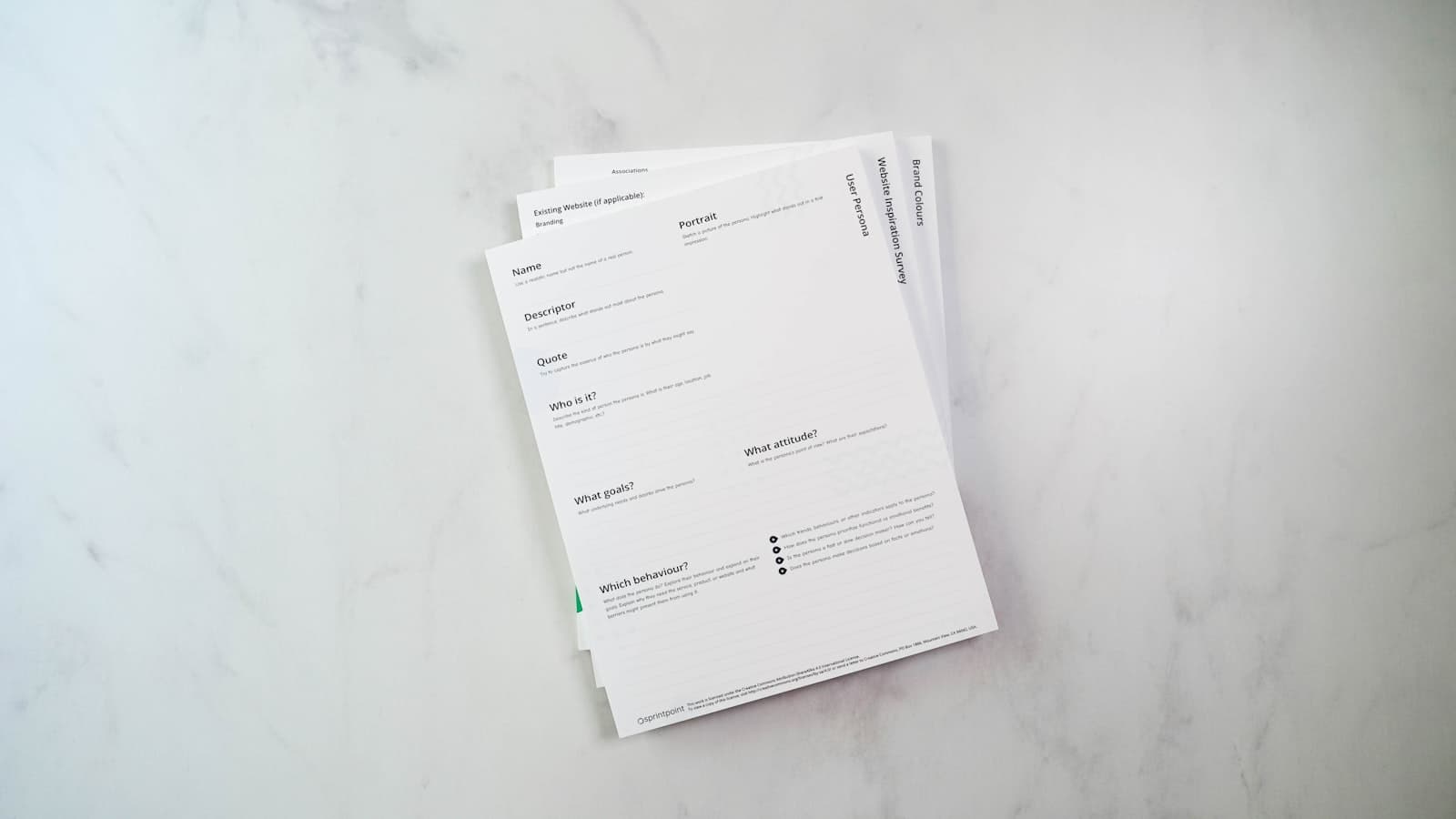
A guest one-sheet, sometimes called a podcast media kit or speaker one-sheet: is a single, skimmable page that tells a host everything they need to say yes: who you are, what you can talk about, the proof that you're good on a mic, and how to book you. It's the difference between "this person sounds interesting" and "this person is easy to book."
Hosts decide fast. They're looking at a name in their inbox or a profile in a directory and asking one question: will this make a good episode for my audience, with as little work as possible for me? A strong one-sheet answers that in about thirty seconds. This guide walks through every section, gives you a template you can copy and fill in today, and flags the mistakes that quietly get pitches deleted.
What a one-sheet actually is (and why it works)
A one-sheet is a self-contained pitch you build once and reuse for every show. Instead of writing your credibility from scratch in each email, you point hosts to a page that does the selling for you. It removes friction on both sides: you stop rewriting your bio, and the host gets a clean, structured answer to "who is this and what would they bring?"
It works because it shifts the host's job from imagining a good episode to evaluating a ready-made one. Concrete talking points, sample questions, and a clip mean the host can picture the show in their feed immediately, and the easier you make that picture, the faster the yes.
You can keep a one-sheet as a simple web page, a PDF, or a profile on a guest-booking platform. The format matters less than the content: every version should carry the same nine ingredients below.
What to put on a podcast guest one-sheet
Nine elements cover everything a host needs to evaluate and book you. Keep it to a single screen or page: a one-sheet that runs long stops being a one-sheet.
- Name + a one-line positioning statement: who you are and the lane you own, in a single sentence a host could repeat.
- A short bio (2–3 sentences): only the credibility that matters to a listener, not your full résumé.
- Talking points / topics: 3–5 specific episode angles, each framed as something the audience walks away with.
- Sample questions: 5–8 questions a host can literally read on air, so they see the episode is half-prepped.
- Proof you're good on a mic: links to past appearances, a clip or audio sample, or a notable result.
- Audience / reach you can promote: newsletter size, social following, or community you'll share the episode with.
- A headshot: one clean, high-resolution photo (hosts use it for episode art and promotion).
- Logistics: your time zone, recording setup, and general availability, so booking is one reply, not a negotiation.
- How to book + contact: a direct way to say yes (a link, a calendar, or a single email).
If you only have time for three, make them the talking points, the sample questions, and one piece of proof. Those three are what turn interest into a booking.
The bio is the line a host reads aloud, so it earns its own draft. For templates in three lengths and two before-and-after rewrites, read how to write a podcast guest bio.
To draft every length at once, finish four sentences in the free guest bio generator: it writes the one-liner, the read-aloud intro and the long bio from your own words.
Copy-paste one-sheet template
Fill in every bracket, then trim anything that isn't true and impressive. Lead with your strongest material: hosts skim top to bottom and rarely reach the end.
[YOUR NAME]
[One-line positioning: e.g. "Pricing strategist who's helped 200+ SaaS founders set their first price"]

ABOUT
[2–3 sentences. Only the credibility a listener cares about. End with a hint of personality so you read as a real guest, not a résumé.]

TALKING POINTS
• [Angle 1: framed as a listener takeaway, e.g. "How to price a product before you have customers"]
• [Angle 2: listener takeaway]
• [Angle 3: listener takeaway]
• [Angle 4: optional]

SAMPLE QUESTIONS (read these on air)
1. [Question that opens the episode with a hook]
2. [Question that gets to your core idea]
3. [Question with a specific, surprising answer]
4. [Question your past hosts loved]
5. [Question that ends on something actionable]

PROOF
• Past appearances: [Show 1: link], [Show 2: link]
• Clip / audio sample: [link]
• Notable result or credential: [one line]

REACH (I'll promote the episode to)
• [Newsletter: N subscribers] · [Platform: N followers] · [Community]

LOGISTICS
• Time zone: [zone] · Setup: [mic / remote-ready] · Availability: [general window]

BOOK ME
[Direct link, calendar, or single email: make saying yes one click.]
How to write talking points that get you booked
Talking points are where most one-sheets fall flat. The fix is to phrase every angle as the listener's takeaway, not your topic. "Marketing" is a topic; "How to get your first 100 customers without an ad budget" is an angle a host can drop straight into a feed.
- Make it specific: a number, a named outcome, or a contrarian take beats a category every time.
- Make it theirs: tilt each angle toward what this show's audience actually struggles with.
- Make it a takeaway: start with the listener's win ("How to…", "Why…", "The mistake that…"), not your expertise.
- Make it provable: only pitch angles you can back with a story, a result, or a framework.
Three to five sharp angles beat ten vague ones. A host reading a tight list immediately sees the episode; a host reading a topic dump has to do the work themselves, and busy hosts don't.
Design and format: keep it skimmable
A one-sheet is read in a glance, so structure beats decoration. Whatever format you use, optimize for fast skimming over visual flourish.
- One page, clear sections, generous whitespace: a wall of text gets skipped.
- Lead with your name, photo, and positioning line; put proof and logistics lower.
- Use a real, high-resolution headshot: hosts reuse it for episode art, so make it usable.
- If it's a file, send a PDF (renders the same everywhere) or, better, a link that's always current.
- Make every link clickable and check that the audio/clip actually plays: a dead link kills trust.
Avoid heavy branding, tiny fonts, and multi-page "media kits" stuffed with logos. The goal is comprehension in thirty seconds, not a brochure.
One-sheet mistakes that get you skipped
Most weak one-sheets share the same handful of problems. Fix these and you're ahead of the majority of guest pitches a host sees.
- Making it a résumé: listing titles and history instead of what the audience gains.
- No sample questions: leaving the host to invent the episode from scratch.
- Vague topics: "leadership" or "entrepreneurship" with no specific, ownable angle.
- No proof: no clip, no past appearance, nothing that shows you're good on a mic.
- Hard to book: no clear link or contact, so the host has to chase you.
- Out of date: old reach numbers, dead links, or a show you mention that no longer exists.
The shortcut: a one-sheet hosts can find
A PDF only helps when you remember to attach it. The faster path is a living one-sheet that hosts can discover on their own, so the booking sometimes starts with the host reaching out to you.
On Let's Make A Podcast, your guest profile is your one-sheet: topics, sample questions, proof, and availability in one place. Hosts browse, filter by fit, and invite you directly, and you can still link the same profile in any cold pitch. Build it once, keep it current, and it works whether you're pitching or being found.
Frequently asked questions
Should a one-sheet lead with your name or with the episode idea?+
Lead with the idea. 192 of the 230 recent episode titles carrying an explicit guest credit (83%) put at least 4 words of subject before the credit, across the 385 readable feeds we read on 2026-09-16. Hosts publish the subject first, so a one-sheet whose talking points read like episode titles is already in the show's own format.
What does a one-sheet have to overcome that a podcast feed will not tell you?+
120 of the 385 readable feeds (31%) published checkable evidence of booking an outside guest when we read them on 2026-09-16. For the rest, a host's willingness to book is unknown from outside, so the job of a one-sheet is to make the fit checkable in one page: a specific episode idea, a credential and a link that proves you can hold a microphone.
What is a podcast guest one-sheet?+
A podcast guest one-sheet (also called a media kit or speaker one-sheet) is a single, skimmable page that tells a host everything they need to book you: a short bio, your talking points, sample questions they can read on air, proof you're good on a mic, your reach, logistics, and how to book you. It lets you pitch once and reuse the same page for every show.
What should a podcast guest one-sheet include?+
Include nine things: your name and a one-line positioning statement, a 2–3 sentence bio, 3–5 specific talking points framed as listener takeaways, 5–8 sample questions, proof (clips or past appearances), the audience you can promote the episode to, a high-resolution headshot, logistics (time zone, setup, availability), and a clear way to book you. If you only have room for three, prioritize talking points, sample questions, and one piece of proof.
How long should a podcast one-sheet be?+
One page or one screen. The whole point of a one-sheet is that a busy host can evaluate you in about thirty seconds, so keep it to a single skimmable page with clear sections. Multi-page media kits stuffed with logos and history get skipped: lead with your strongest material and cut the rest.
Do I need a one-sheet to be a podcast guest?+
You don't strictly need one, but it dramatically improves your odds. A one-sheet removes the host's work: they can see the episode, read the sample questions, and book you in a single reply. Without one, you're asking the host to imagine a good episode and chase you for details. A living profile on a guest-booking platform does the same job and is easier to keep current.
More on the interview itself


Build your one-sheet once: get found by hosts
Turn your one-sheet into a living profile hosts can search, filter, and book. Free while we're in early access.