For hosts
How to Make a Podcast
Everything it actually takes to go from an idea to a published episode: the concept, the format, the smallest gear setup that sounds good, the recording, the edit, the publishing, and the one thing that decides whether the show is still running in six months.
11 min read
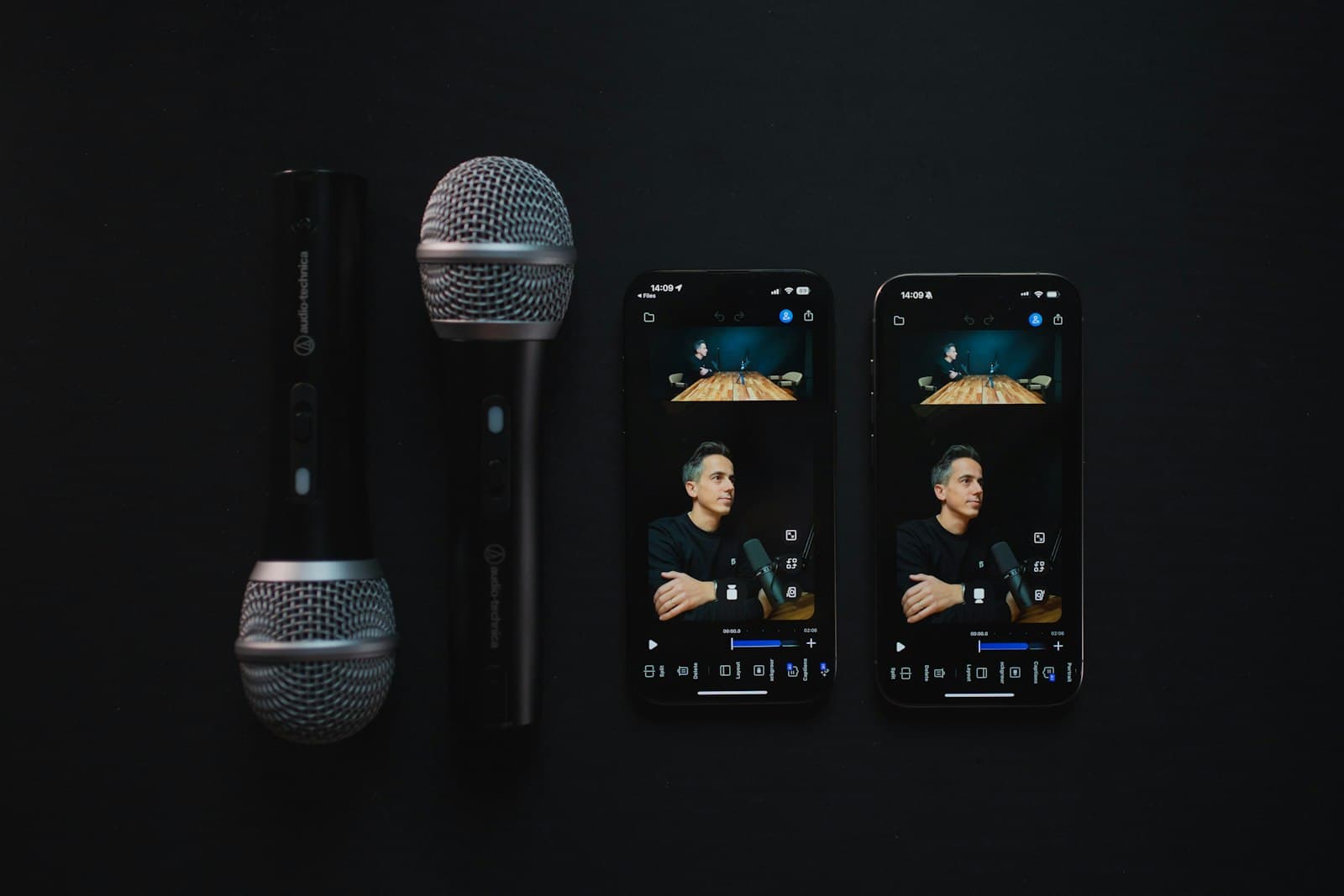
Making a podcast is a much smaller technical project than most people expect and a much bigger consistency project. You can publish your first episode this month with a $70 microphone, a free editor, and a hosting plan that costs less than a streaming subscription. Nothing in the pipeline is hard.
What is hard is episode ten. We can put a number on that instead of a phrase, because our directory holds the public feeds behind 408 podcasts and we can read the catalogue size of the 385 we could open. Of the 61 shows still sitting in the smallest band, under 50 episodes, only 34% had published anything in the six months before we read them. Of the 105 in the largest band, 500 episodes or more, 96% had. Shows almost never stop because the audio was bad. They stop because the host runs out of things to say, or, if it is an interview show, runs out of people to say them with.
So this guide does two things. It walks the whole path from idea to published episode in plain order, and at each step it flags the decision that quietly determines whether you are still publishing next season.
First, the number that should shape every other decision
Almost every guide to making a podcast opens with equipment. This one opens with the failure rate, because the failure rate is what the rest of the guide is designed around, and because it is a thing we can measure rather than assert. We read the public RSS feeds behind 385 real podcasts between July 16, 2026 and September 16, 2026, and split them by how many episodes each show had published.
"Still publishing" means the feed had released an episode within roughly six months of the day we read it. "Quiet over a year" is the harder floor under that: no episode in over twelve months, the point where "between seasons" stops explaining it. "Publishes guest evidence" means a stranger could check the feed and see an outside guest credited, or the show describing itself as an interview show. It is what is visible, not what the show does, so read it as a floor. Catalogue size is an episode count, never an audience: no public feed carries download figures and neither do we.
| Catalogue size | Shows | Still publishing | Quiet over a year | Publishes guest evidence |
|---|---|---|---|---|
| Under 50 episodes | 61 | 34% | 56% | 31% |
| 50 to 149 episodes | 80 | 66% | 24% | 30% |
| 150 to 499 episodes | 139 | 82% | 13% | 31% |
| 500 episodes or more | 105 | 96% | 2% | 32% |
The "still publishing" column is the drop-off, and it is steep. In the smallest band, 40 of 61 shows had gone quiet. Across the whole readable corpus, 25% had published nothing in roughly six months, and 19% had published nothing in over a year, which is the point where "between seasons" stops being a plausible explanation.
The "quiet over a year" column is the one to sit with, because it rules out the comfortable reading. A six-month gap can be a break. 56% of the smallest catalogues had published nothing in over a year, against 2% of the largest, and among the small shows that had stopped, the middle one had been silent for about 2.5 years. These are not shows between seasons. They are shows that ended, and almost none of them announced it.
The obvious objection is that this is publishing pace wearing a disguise: small catalogues and slow schedules go together, and we already know slower shows stop more often. So here is the same cut inside one schedule. Among the shows that were publishing weekly, 6 of 11 in the smallest band had gone quiet, against 1 of 26 in the largest. Same cadence, same six-month test, and the gap survives. What separates them is not how often they published. It is how long they had been doing it.
Two honest limits, because a number is only useful if you know what it cannot tell you. This is a snapshot of many shows on one set of days, not one group of shows followed through time, and a short catalogue is not the same thing as a young show. We can put a bound on that second one rather than just conceding it: of the 61 shows in the smallest band, only 4 were still publishing and too new, at their own pace, to have had a six-month gap yet. Set those aside and the band's drop-off reads 70% rather than 66%. The correction runs the uncomfortable way, which is the direction a caveat rarely runs. The other limit stands unmeasured: our directory is one we assembled, weighted toward shows a guest might realistically want to reach, so it over-represents podcasts that got somewhere. If anything that flatters the small band too.
The finding you should take from the table is not "big shows are better." It is that the difference between a podcast that exists in a year and one that does not is almost entirely about whether the host kept publishing, and nothing in the first three steps below has any bearing on that. The microphone is a one-time decision. The publishing is the whole job.
Step 1: Decide what the show is before you buy anything
The most expensive mistake in podcasting is buying gear first. Equipment is the fun part and the easy part, and it answers none of the questions that matter. Start with three sentences instead.
- Who it is for: name a specific listener, not a demographic. 'Second-year teachers in public schools' is a concept. 'Educators' is a category.
- What it is about: the recurring subject every episode orbits, so someone who liked one episode has a reason to play another.
- Why yours: the angle, the access, or the point of view that makes the show different from the ten others in that lane.
A good test: write the sentence a listener would use to recommend your show to a friend. 'It is a weekly show where indie game developers break down exactly how they shipped and sold their first title.' That sentence tells a stranger whether to subscribe, and it tells you which episodes belong and which do not.
If you cannot write that sentence yet, that is fine, but write the closest thing you can and let the first five episodes sharpen it. What you must not do is skip it. A show with no concept has no way to decide what goes in it, which is exactly the show that stalls at episode six.
Step 2: Pick the format you can actually sustain
Format is a workload decision disguised as a creative one. Each one costs a different thing every single week, and you should choose based on which cost you can pay indefinitely.
- Solo: cheapest to schedule, most expensive to write. You supply every idea. Works when you have deep expertise and enjoy preparing a monologue.
- Co-hosted: the easiest to keep energetic, because conversation is easier than performance. The recurring cost is two calendars instead of one.
- Interview: the guest brings the substance, so prep is lighter and each episode brings a new audience. The recurring cost is booking, and it is the cost most new hosts underestimate.
- Narrative or documentary: the highest ceiling and by far the highest edit load. A 30-minute narrative episode can take 20 hours of production. Do not start here.
Most new podcasts land on interview, and for good reason: it is the format where you are never staring at a blank page. Just go in clear-eyed about the trade. You are exchanging a writing problem for a scheduling problem, and the scheduling problem is the one that ends shows.
Then pick a length and a cadence you can defend on a bad week. Twenty-five to forty-five minutes is the comfortable default for interviews. Every other week that you actually keep beats a weekly that burns you out by month three, because the only publishing schedule that compounds is the one that survives.
Step 3: The smallest setup that sounds good
Listeners forgive an imperfect edit and abandon bad audio. Fortunately, the gap between unlistenable and genuinely good is narrow and cheap to cross, and everything past that point has sharply diminishing returns.
- Microphone: one decent USB microphone, roughly $60 to $120. This is the single upgrade that matters. A dynamic USB mic is more forgiving in an untreated room than a condenser, because it hears less of the room.
- Headphones: any closed-back pair. Monitoring on speakers bleeds your guest's voice back into your mic and creates echo you cannot fix later.
- Room: soft surfaces beat expensive gear. Rugs, curtains, a bed, a closet of hanging clothes. Avoid glass, tile, and bare parallel walls. Nobody can hear your room treatment; everybody can hear your reverb.
- Recording software: a remote recording tool that captures each participant on a separate local track. This one setting protects you from the most common disaster in remote podcasting, which is a guest's internet dropping mid-answer.
- Editing software: a free editor is genuinely enough for a light edit. Pay for one only when you know which limitation is costing you time.
Yes, you can record a real podcast on a phone. A modern phone with a wired lavalier microphone in a quiet room beats a $300 microphone in a kitchen. Start with what you have, and let the show earn the upgrade.
Before your first real guest, record a five-minute test with a friend and listen back on headphones. You want to discover your levels, your room, and your software's quirks on someone forgiving, not on the person you spent three weeks landing.
Step 4: Line up guests before you record (if it is an interview show)
This is the step that gets skipped, and the smallest band in the table above is where the shows that skipped it end up. The first few guests are easy: they are friends, colleagues, and people who owe you a favor. That well runs dry at almost exactly the moment your show has enough episodes to be worth continuing.
Treat booking as a pipeline that runs continuously, not a task you do when you need an episode. Keep several sources open at once:
- Your own network first. Warm asks get fast yeses and calm your nerves while you are still learning the gear.
- People with something new out. Authors, founders, and researchers with a launch are actively looking for places to talk about it this month.
- Guest marketplaces. Platforms where people list their topics precisely because they want to be booked, so you are inviting rather than cold-emailing strangers.
- Referrals. End every recording with 'who else should I have on?' It is the highest-quality source there is, and it is the only one that refills itself.
When you invite someone, lead with why this specific person fits this specific show, set expectations plainly, and offer concrete times instead of asking when they are free. A short, personal invite outperforms a polished template every time:
Subject: Guest invite: [Your Show], a podcast for [audience]

Hi [Name],

I'm making [Show Name], a podcast where [one-line concept]. I'd love to have you on to talk about [their specific work]: your [specific thing they did] is exactly the story my audience wants.

It's a relaxed [30]-minute remote conversation, no prep needed beyond showing up. We'd cover [2 or 3 themes].

Would [day] or [day] next week work? Here's my calendar if that's easier: [link].

Thanks either way,
[Your name]
Aim for three to five confirmed guests before you publish episode one. That buffer is the entire difference between a show with momentum and a show that stops the week someone cancels.
Step 5: Record something worth finishing
Good episodes are mostly made before you hit record. A small amount of preparation is what separates a real conversation from a polite question-and-answer session.
- Do the homework. Read or listen to something the guest made, so your questions start past the obvious ones they answer everywhere.
- Send directions, not a script. Three or four themes in advance relaxes the guest and keeps you both flexible.
- Ask for stories, not opinions. 'Walk me through the moment it broke' gets specifics. 'What do you think about X' gets platitudes.
- Actually listen. The best moment in any episode is usually the follow-up question you did not plan.
- Leave silence. Let a good answer land instead of rushing to the next item on your list.
Open with something easy while you both settle, save your sharpest question for the middle when the conversation is warm, and close the same way every time. A consistent closing ritual, a recommendation or a rapid-fire round, is a small thing that makes a set of episodes feel like a series.
Step 6: Edit lightly, and stop
Editing is where new podcasters lose the most time for the least return. Your listeners are not comparing you to a national radio production; they are deciding whether the conversation is interesting.
- Trim the top. Cut everything before the moment the episode actually gets going, which is usually two or three minutes in.
- Remove the dead ends: the long technical fumble, the tangent that went nowhere, the part where somebody's dog got out.
- Level the voices so nobody has to reach for the volume when the other person speaks.
- Leave the ums. Removing every filler word takes hours and makes people sound uncanny.
- Add a short cold open only if it earns attention, and keep any intro music under about ten seconds.
A useful rule for your first ten episodes: cap the edit at roughly the length of the episode itself. If a 40-minute conversation takes you four hours to edit, the show will not survive your enthusiasm running out. Shipping consistently beats polishing.
Step 7: Publish and get it into the apps
Distribution is the part people expect to be complicated and it is genuinely not. Apple Podcasts and Spotify are not places you upload to; they are directories that read a feed.
- Choose a podcast host. Its job is to store your audio and generate an RSS feed. Expect roughly $5 to $20 a month, and check that you can export your feed and redirect it if you ever leave.
- Fill in the show metadata carefully: title, description, category, and cover art at 3000 by 3000 pixels. Your title and description are the searchable text inside podcast apps, so plain and specific beats clever.
- Submit the feed once to Apple Podcasts Connect and Spotify for Podcasters. Approval takes anywhere from a few hours to a few days. After that, every new episode appears automatically. You never submit again.
- Publish two or three episodes on day one so a new listener has something to binge, and so your show does not look abandoned on arrival.
- Write real show notes: a short summary, a few timestamps, and links to the guest. This is the page search engines can actually read, and it is the link your guest will share.
For promotion, the highest-leverage move by a wide margin is making it effortless for your guest to share the episode. Send them the link, a ready-to-post caption, and a short audio or video clip. Every guest who posts brings their audience to your show for free, which is the closest thing interview podcasting has to a growth engine.
A realistic first month
If you want a schedule rather than a checklist, this one works and assumes a few hours a week:
- Week 1: write the three sentences, choose format and cadence, order one microphone, and send your first five guest invites.
- Week 2: do a test recording with a friend, set up your podcast host, and commission or make the cover art.
- Week 3: record two or three episodes back to back while your setup is fresh in your head.
- Week 4: edit lightly, write the show notes, submit the feed to Apple and Spotify, and publish. Then send the next five invites the same day, before the relief of shipping turns into a gap.
Notice that guest invites appear in week 1 and week 4. That is the entire thesis of this guide. Everything else here is a one-time setup cost; booking is the recurring one, and the show survives exactly as long as you keep paying it.
The part that decides whether the show survives
Once the gear is bought and the feed is live, making a podcast collapses into one repeating question: who is on next week's episode? If you answer that question a week ahead, the show feels easy. If you answer it the night before, the show feels like a second job, and second jobs get quit.
Here is the part of that argument our data does not prove, stated plainly rather than left out. If booking were the thing keeping shows alive, the share of shows publishing visible guest evidence would climb across those bands the way liveness does. It does not: it runs from 30% to 32% with no ladder to it. What the feeds can show is that shows stop, in large numbers and early. Which recurring cost they stopped paying is not something a public RSS feed will ever tell you, and we would rather say so than dress a correlation up as a cause.
What we can say without hedging is that the problem this site exists to solve is that one. Let's Make A Podcast connects hosts who need guests with people who want to be on podcasts. You add your show once, then search people by topic, niche, and audience fit, read what they can actually talk about, and invite the ones who belong on your show. No cold emailing strangers who never wanted to hear from you.
If you would rather not run the research, outreach, and follow-up yourself, the AI booking concierge is the planned paid path: we research fitting shows and draft each personal pitch for your approval, at $49 to $79 a month. It is in early access and nothing is charged yet.
You can also just browse first. Our directory covers real shows and real guests, and it costs nothing to look before you have recorded a single minute.
Sources and benchmark date
Every figure on this page is computed at build time from the public RSS feeds behind 385 podcasts in our own directory, read between July 16, 2026 and September 16, 2026. None of it is typed in, and none of it is a claim about podcasts as a population.
- Our directory: which podcasts book guests
The method behind every figure on this page: how the 408 feeds were collected, what "still publishing" and "publishes guest evidence" are defined as, and what they do not cover.
- Should you pitch small podcasts?
The same catalogue-size split read from the guest's side, with the contact-route and qualification columns this page leaves out.
Frequently asked questions
How many podcasts stop publishing?+
96 of the 385 readable feeds (25%) had gone roughly six months without a new episode when we read them on 2026-09-16. Those are feeds in our own directory rather than a sample of every podcast ever published, so read it as a snapshot of shows a guest might realistically target. It is the reason cadence beats gear: the common failure we can measure is a show that stops, not a show that sounds bad.
Do most podcasts interview outside guests?+
120 of the 385 readable feeds (31%) published checkable evidence of booking an outside guest when we read them on 2026-09-16. The other 69% published nothing a listener could verify either way, so an interview format is common without being the default, and a feed that never names a guest is unproven rather than closed.
What percentage of podcasts fail?+
We can measure the visible half of that. Across the 385 podcast feeds in our directory that we could read between July 16, 2026 and September 16, 2026, 25% had published nothing in roughly six months and 19% had published nothing in over a year. The drop-off tracks catalogue size closely: 34% of the shows in our smallest band (under 50 episodes) were still publishing when we read them, against 96% of those in the largest. It is not simply a pace effect: among shows publishing weekly, 6 of 11 in the smallest band had gone quiet against 1 of 26 in the largest. Two caveats: a short catalogue is not the same as a young show, though only 4 of the 61 shows in that band were still publishing and too new to have gone quiet yet, and this is our own directory rather than a random sample of every podcast ever published.
How many episodes do most podcasts publish before they stop?+
Nobody can answer that from public data, ourselves included, because a feed does not record the day a show decided to stop. What a feed does show is its catalogue and its last episode date, and read that way on 2026-09-16, the shows most likely to be quiet were the ones with the shortest catalogues: 40 of the 61 shows in our under 50 episodes band had gone six months without publishing. Treat "make it past the first dozen" as the bar, and plan the guest pipeline that gets you there before you buy anything.
How much does it cost to make a podcast?+
You can start for well under $150. A decent USB microphone runs $60 to $120, editing software can be free, and podcast hosting is roughly $5 to $20 a month. Cover art is the only other real cost, and you can make a clean one yourself. Everything beyond that is optional and should wait until the show has proven it will keep going.
What equipment do I need to start a podcast?+
One decent USB microphone, closed-back headphones, and a quiet room with soft surfaces. That is genuinely the whole list for episode one. A remote recording tool that saves each speaker on a separate local track matters more than a more expensive microphone, because it protects you when a guest's connection drops.
Can I make a podcast on my phone?+
Yes. A modern phone with a wired lavalier microphone in a quiet, soft-furnished room sounds better than an expensive microphone in an echoey kitchen. Record in a voice memo or recording app, keep the phone still and close, and upgrade later if the show sticks.
How do I get my podcast on Spotify and Apple Podcasts?+
Upload your episode to a podcast host, which generates an RSS feed, then submit that feed once to Apple Podcasts Connect and Spotify for Podcasters. Approval usually takes a few hours to a few days. After that, every new episode you publish appears in both automatically and you never submit again.
How many episodes should I have before launching?+
Publish two or three at once so a new listener has something to binge, and have three to five more guests confirmed behind them. The buffer, not the number you launch with, is what protects your publishing streak against a busy week or a cancellation.
How long should a podcast episode be?+
As long as the conversation is good and no longer. Twenty-five to forty-five minutes is the comfortable default for interview shows. Consistency matters more than duration: pick a range your listeners can plan around, and cut anything that is in the episode only because you recorded it.
How do I find guests for a brand-new podcast with no audience?+
Start with your own network for the first few episodes, then keep several sources running at once: people with a book or product just out, guest marketplaces where people list their topics because they want to be booked, and a referral question at the end of every recording. A small audience is far less of an obstacle than new hosts assume, because most guests come on for the conversation and the clip they can share.
How do podcasts make money?+
Most small shows do not make money from advertising, and waiting for sponsors is a poor plan. The realistic paths early on are the ones connected to what you already do: clients, a product, a newsletter, a community, or listener support. Sponsorship becomes worth chasing once you have a consistent audience in a niche an advertiser wants, which takes a while and takes publishing consistently to reach.
Keep reading
The gear is the easy part. Line up the guests.
Add your show once, then search people who want to be booked and invite the ones who fit. Free while we are in early access.