For hosts
How to Start an Interview Podcast
Interview shows are the easiest format to start and the hardest to keep fueled. Here's the whole path: from a focused concept to your first published episode, with the part most new hosts underestimate (booking guests) handled.
9 min read
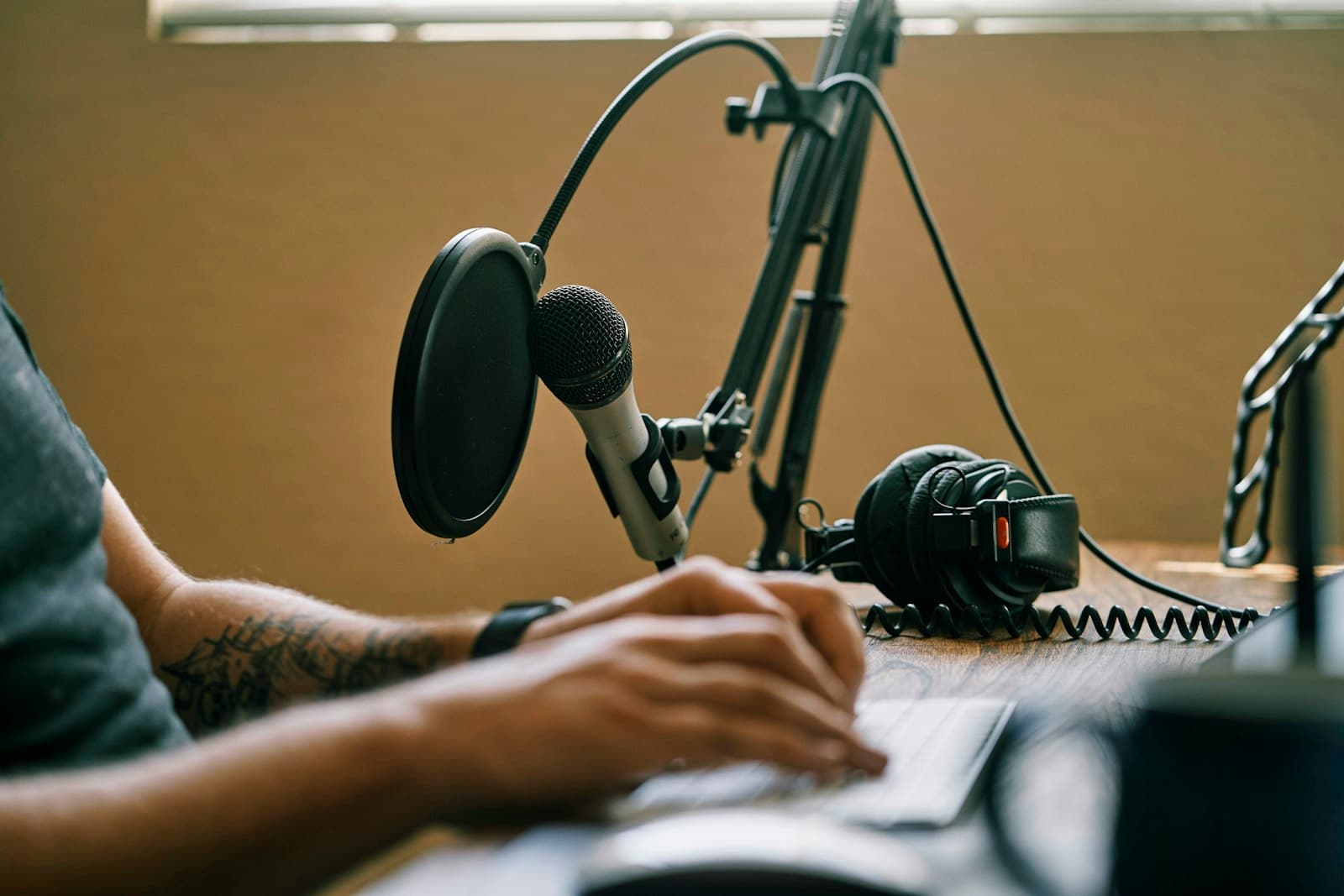
An interview podcast is the most beginner-friendly format there is: your guests bring the expertise, the conversation carries the episode, and you don't have to script a monologue every week. That's exactly why it's the format most new hosts choose.
But there's a catch nobody warns you about. The thing that makes interview shows easy to start: guests: is also the thing that kills most of them by episode ten. Run out of people to talk to and the show quietly stops. This guide walks the full path to your first episode, and builds a guest pipeline in from day one so the show actually survives.
Step 1: Pick a focused show concept
The single biggest predictor of whether a new interview podcast finds an audience is focus. 'Conversations with interesting people' is not a concept: it gives a listener no reason to subscribe and gives you no way to decide who belongs on the show.
Nail down three things before you record anything:
- A specific audience: who, exactly, is this for? 'Early-stage SaaS founders' beats 'entrepreneurs.'
- A clear topic lane: the recurring subject every episode orbits, so the show is bingeable.
- An angle: your point of view or the question the show keeps asking, so it isn't interchangeable with ten others.
A useful test: can you describe the show in one sentence that names the audience and the payoff? 'A weekly show where indie game developers break down exactly how they shipped and sold their first title.' That sentence tells a listener to subscribe and tells you precisely which guests fit.
Step 2: Choose a format and cadence you can sustain
Format and schedule are commitments, not preferences. Pick what you can keep up for a year, because consistency is what compounds into an audience.
- Length: 25–45 minutes is the comfortable default for interviews; go shorter if your topic is tight.
- Cadence: weekly builds momentum fastest, but a sustainable every-other-week beats a burned-out weekly that stops.
- Structure: a light, repeatable arc (quick intro, the guest's story, the core lesson, a rapid-fire close) makes editing and prep faster every time.
- Solo vs. co-host: a co-host adds energy and scheduling overhead; decide before you build the workflow around it.
Batch-recording two or three episodes in a sitting gives you a buffer, so one busy week or one guest cancellation never breaks your publishing streak.
Step 3: Set up gear and recording tools (without overspending)
You do not need a studio to start. Audio quality matters, but the gap between 'good enough' and 'overkill' is small and cheap to cross. Beginners lose far more episodes to no guests than to mediocre microphones.
- Microphone: a single decent USB mic (roughly $60–120) is plenty for episode one; upgrade later if the show sticks.
- Headphones: any closed-back pair so you and your guest don't get echo from open speakers.
- Recording platform: a remote-recording tool that captures each person on a separate local track, so one bad connection doesn't ruin the audio.
- Quiet room, soft furnishings beat bare walls; a closet of clothes is a surprisingly good vocal booth.
Record a five-minute test with a friend before your first real guest. You want to discover your levels, your room, and your tool quirks on someone forgiving, not on the founder you spent three weeks landing.
Step 4: Line up your first guests (the part that decides everything)
This is where interview podcasts live or die. You need guests for episode one, and, just as important, a system so episode ten isn't a panic. Start sourcing before you record, and keep several channels running at once.
- Your own network first: a colleague, a former boss, someone whose work you admire. Warm asks get fast yeses and calm your nerves for the early episodes.
- Guest marketplaces: platforms where people list their topics because they want to be booked, so you can search by fit and invite instead of cold-emailing strangers.
- Authors, founders, and creators with something new out: they're actively looking for places to talk about it right now.
- Referrals: end every recording with 'Who else should I have on?' It's the highest-quality source there is and it keeps the pipeline self-refilling.
When you invite, lead with why this specific person fits your specific show, set expectations (length, tool, topic), and offer concrete times or a scheduling link instead of 'when are you free?' A short, personal invite looks like this:
Subject: Guest invite: [Your Show], a podcast for [audience]

Hi [Name],

I'm starting [Show Name], a podcast where [one-line concept]. I'd love to have you on to talk about [specific topic / their specific work]: your [specific thing they did] is exactly the kind of story my audience wants.

It's a relaxed [30]-minute remote conversation. We'd cover [2–3 themes]. No prep required beyond showing up.

Would [day] or [day] next week work? Here's my calendar if it's easier: [link].

Thanks either way,
[Your name]
If writing that from scratch is the part that stalls you, the free invitation generator assembles the same shape from who the person is, what the episode covers and what the recording asks of them. It runs entirely in your browser, nothing you type is sent or stored, and it never adds an audience claim you did not make.
Aim to have three to five guests confirmed before you publish episode one. That buffer is the difference between a show with momentum and one that stalls the moment your first batch runs out.
Step 5: Record a conversation worth listening to
Great interviews are made before you hit record. A little prep turns a polite Q&A into a real conversation people finish.
- Research the guest: read or listen to something they've made so your questions go past the obvious.
- Send three or four directions, not a rigid script: guests arrive relaxed and you both stay flexible.
- Ask for stories, not opinions: 'walk me through the moment it broke' gets specifics; 'what do you think about X' gets platitudes.
- Listen and follow up: the best moments come from the question you didn't plan because you actually heard the answer.
- Leave silence: let a good answer breathe instead of rushing to the next item on your list.
Open with something easy to settle nerves, save your sharpest question for the middle when you're both warm, and close with a consistent ritual (a recommendation, a rapid-fire round) so episodes feel like a series.
Step 6: Edit, publish, and get the episode heard
Publishing is more straightforward than new hosts fear. Don't let perfectionism on the edit stop you from shipping.
- Light edit: trim the dead air and the worst stumbles; listeners forgive imperfection, they don't forgive boring.
- Hosting: upload to a podcast host that generates your RSS feed and distributes to Apple Podcasts, Spotify, and the rest.
- Show notes: a short summary, timestamps, and links to the guest; this is also your SEO surface.
- Promotion: the highest-leverage move is having the guest share it, so make that easy with a ready-to-post caption and an audiogram.
Every guest who shares your episode brings their audience to your show for free. Booking guests who have a reason to promote is the closest thing to a growth hack interview podcasts have.
The shortcut: never run out of guests
Most interview podcasts don't fail at recording or editing: they fail at the pipeline. The fix is to make guest sourcing a system instead of a scramble. On Let's Make A Podcast, you add your show once, then search guests by topic, niche, and audience fit, review their one-sheets, and invite the right people, with scheduling and prep in the same place.
Set up your show profile and you can line up your first few guests today, before you ever hit record.
Frequently asked questions
How many podcasts publish a way for a guest to reach them?+
63 of the 385 readable feeds (16%) published no door a stranger could knock on when we read them on 2026-09-16: no address in the feed, and nothing beyond a homepage. Publishing a real contact route is the cheapest advantage a new interview show has over shows with far longer back catalogues.
What is a typical guest-readiness score for a podcast feed?+
The median was 50 out of 100 across the 385 readable feeds we read on 2026-09-16. The score reads only what a guest can check from outside: visible guest evidence, publishing recency, cadence and a contact route. A show in its first month that publishes all four can sit above that median with no back catalogue at all.
How do I start an interview podcast as a beginner?+
Start with a focused concept (a specific audience, a clear topic lane, and an angle), pick a length and cadence you can sustain, and get a single decent USB mic and a remote-recording tool. Then line up three to five guests before you publish episode one, sourcing guests early is what keeps the show alive past the first batch.
How many episodes should I have ready before launching?+
Record and edit two or three episodes before you publish, and have three to five more guests confirmed. That buffer protects your publishing streak against a busy week or a guest cancellation, which is what stalls most new interview shows.
How do I find guests for a brand-new podcast with no audience?+
Start with your own network for the first few episodes, then keep several channels running: guest marketplaces where people list topics because they want to be booked, authors and founders with something new out, and referrals from every guest. A small audience is fine: guests come on for the conversation and the exposure, not just your download numbers.
What equipment do I need to start an interview podcast?+
Less than you think. A single decent USB microphone (around $60–120), closed-back headphones, a quiet soft-furnished room, and a remote-recording tool that captures each person on a separate local track will get you a great-sounding episode one. Upgrade later only if the show sticks.
Keep reading


Line up your first guests today
Add your show, then search guests by topic and audience fit and invite them in one place. Free while we're in early access.