10 Best Follow Up Email Subject Lines for Podcast Pitches
Your first pitch may not be your best chance of getting a reply. An analysis of cold emails summarized by Saleshandy found that 57% of positive replies came from follow-up messages, not the initial outreach. That's a reason to plan the next message before you declare a good guest idea dead.
For podcast booking, the mistake is treating every silence the same. A host who hasn't read your pitch needs context. A producer who's interested needs a recording date. Someone who's declined needs you to stop selling.
The best follow up email subject lines match those different moments. They don't manufacture urgency or disguise another copy of the original pitch. They tell the host why this message deserves attention now.
The templates below cover the first follow-up, a more relevant second touch, scheduling, and a courteous close. They're practical starting points, not podcast-specific performance guarantees. Choose the line that matches the conversation, replace the brackets with accurate details, and make sure the body delivers what the subject promises.
A follow-up should make the host's next decision easier, not make your desire for a booking louder.
Table of Contents
- 1. Re: [Original Subject] Reply Thread
- 2. Your Recent Episode on [Topic]
- 3. Quick Bump on [Topic]
- 4. A Question for Your Next Episode
- 5. Two Slots Next Week?
- 6. Closing the Loop on [Topic]
- 7. New Data on [Topic] for Your Listeners
- 8. Still Looking for [Topic] Guests?
- 9. Holding a Spot for [Show Name]
- 10. Thanks for Considering, [First Name]
- Follow Up Subject Lines at a Glance
- Build Your Follow-Up Sequence and Start Sending
1. Re: [Original Subject] Reply Thread
Best stage: Your first follow-up after an unanswered pitch. Keep the existing subject when the original idea is still relevant and the host mainly needs a reminder.
Reply to your actual sent message rather than manually adding Re: to a fresh email. That preserves the earlier pitch and avoids implying that the host has already replied. Email clients can display conversations differently, so don't assume a prefix alone creates a thread.
A short continuation should leave the original context easy to find.
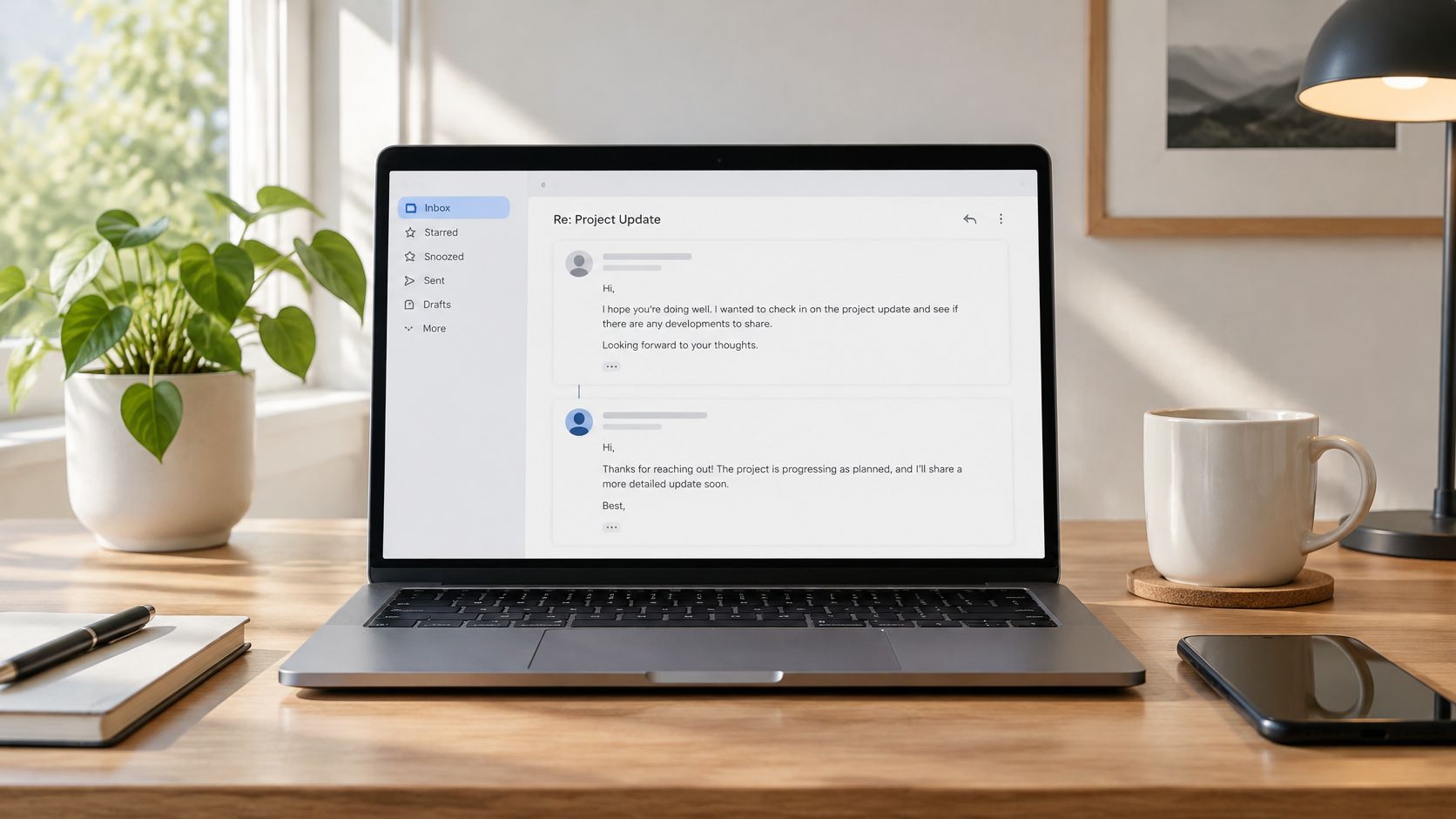
Keep the context, improve the offer
Subject: Re: Guest pitch: supply chain resilience for small manufacturers
Body: Your recent conversation about supplier risk suggested a useful follow-up: how a small manufacturer decides what to keep in reserve. [Guest] can explain that decision using a practical purchasing example. Would that fit your interview plans?
Send after the host has had a reasonable working interval to respond, not the next morning. If they've published submission instructions or a review window, follow those instead.
- Add something useful: Introduce a sharper talking point, a relevant resource, or an episode connection.
- Keep the original accessible: Don't paste the entire pitch above the conversation history.
- Reassess repeated silence: Another reminder won't repair a weak guest fit.
If the first email buried the interview idea beneath a long biography, use these podcast pitch examples to tighten the offer before continuing.
2. Your Recent Episode on [Topic]
A specific episode reference is stronger personalization than a first-name token because it explains why you chose this show. Use this as a second touch when a recent conversation gives you a clearer angle.
The recording itself is your source of context, not just its title.

A peer-reviewed study in Marketing Intelligence & Planning found that inserting a recipient's first name wasn't a consistently reliable subject-line tactic. For podcast outreach, make the personalization useful: identify the discussion your guest could extend.
Subject: Your recent episode on founder burnout
Body: Your guest distinguished taking time off from reducing founder dependency. [Guest] could extend that discussion with a practical approach to handing over customer decisions. Would that be useful for a follow-up episode?
Before sending, check the public feed, verify the guest's name, and listen to the relevant passage. Don't describe an episode as recent if you haven't checked when it appeared.
This video offers additional context for podcast outreach.
Keep the subject compact, but don't cut the detail that makes it meaningful. A vague reference to the host's latest episode can look just as automated as a generic compliment.
3. Quick Bump on [Topic]
Quick bump is an alternative first follow-up, not an extra message to send immediately after the threaded reminder. Choose it when your original subject was vague or when the interview topic needs to be visible without opening the conversation.
The trade-off is tone. It's casual and economical, but it can sound transactional on a carefully produced editorial show. Match the host's public communication style rather than defaulting to sales language.
Make the message genuinely quick
Subject: Quick bump on the AI onboarding interview
Body: Resurfacing the interview idea about where AI onboarding breaks down for new employees. [Guest] can walk through a practical handoff between automated guidance and a human manager. Is that relevant to your upcoming coverage?
The body restates the idea so the host doesn't have to search their inbox. It also asks about editorial fit rather than jumping straight to calendar availability.
- Use it after a pause: Give the original pitch time to be considered.
- Include the topic: Quick bump alone tells the host nothing about the proposed episode.
- Skip the apology: You don't need a paragraph explaining that you know they're busy.
The podcast pitch follow-up tool can help draft a concise continuation. Edit the result so it contains a real interview angle, not merely a polished request for attention.
4. A Question for Your Next Episode
Use a question when you need the host to make an editorial decision, not when you're trying to create mystery. The useful question is whether a specific topic belongs on the show.
This works as a later follow-up when your original pitch was too broad. An entrepreneur's biography might not suggest an episode, but a question about handling an unpopular price increase does.
Subject: A question for your next episode on pricing?
Body: Would an episode about explaining a price increase to existing customers fit your current plans? [Guest] can discuss the customer conversation, internal preparation, and mistakes to avoid. Happy to send a short outline if that's relevant.
The host can answer without agreeing to an interview or reviewing a large attachment.
Editorial test: If the host says yes, you should already know what concrete outline you'll send next.
Avoid vague curiosity lines such as a question for you. They conceal the topic and make the recipient open the email just to discover whether it matters.
Guidance from BDOW distinguishes context-preserving follow-ups from messages that need a question or defined next step. Apply that distinction here: ask about the episode angle first, then move to logistics after interest.
Don't ask what topics the host wants if their published guest instructions already tell you. Use those instructions to propose something specific.
5. Two Slots Next Week?
Best stage: The host has expressed interest, but the recording isn't scheduled. Don't send this to someone who hasn't acknowledged the pitch.
Before offering availability, confirm that the guest can attend. For PR teams, that means checking the guest's calendar rather than offering tentative openings that require another approval round.
Keep the scheduling details together so the producer can act without reconstructing the conversation.
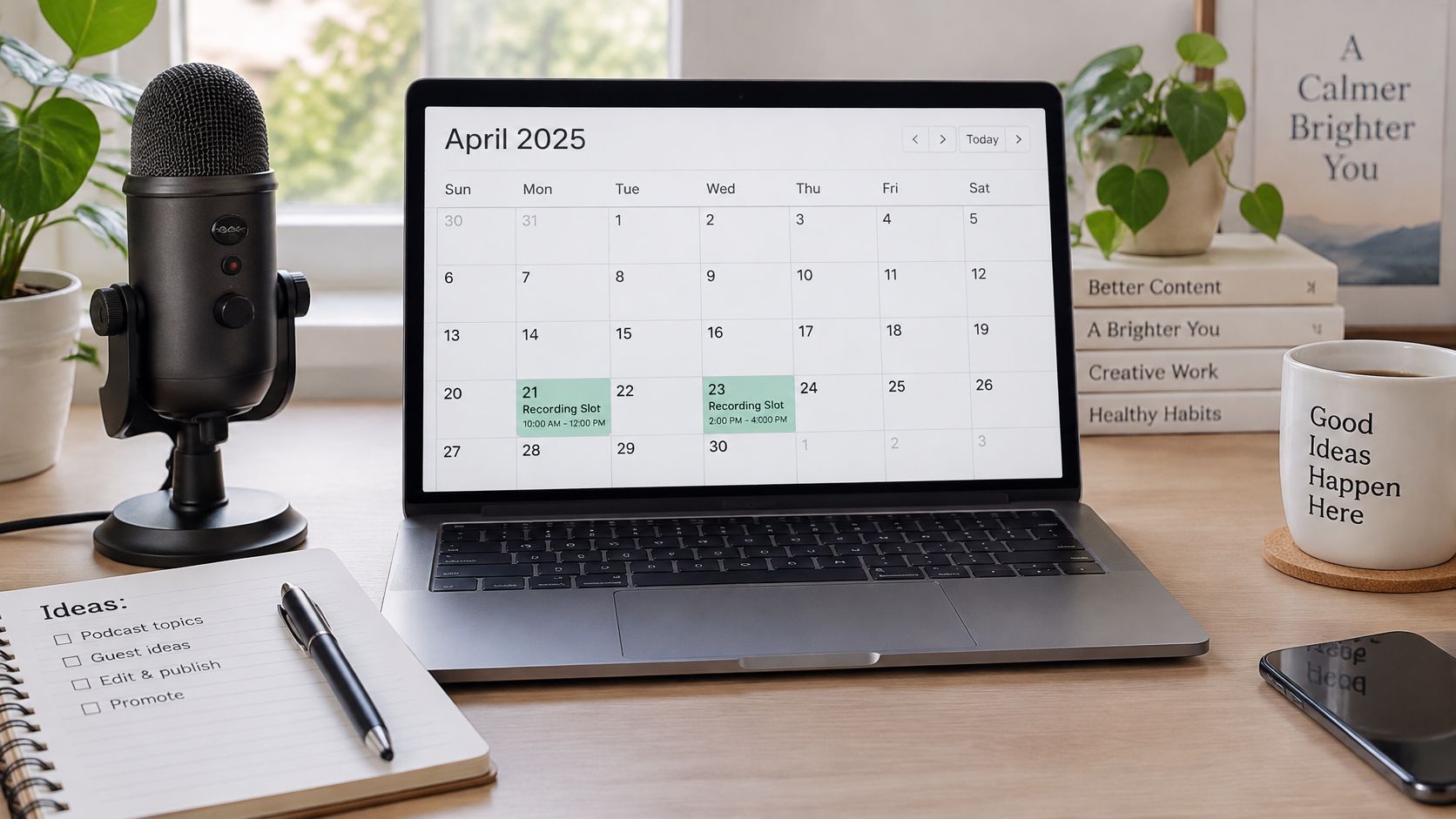
Move from interest to a confirmed recording
Subject: Two slots next week for [Guest]?
Body: Following your note about the pricing interview, [Guest] is available [day, date, time, time zone] or [alternative day, date, time, time zone]. Does either work with your recording schedule? Please also confirm your preferred recording format and expected interview length.
Offer a clear choice, but let the host propose an alternative. They may record only during a regular production window.
- Write the time zone explicitly: Don't assume the guest and producer share one.
- Use the host's booking process: If they've sent a scheduling page, use it.
- Keep the pitch out of the way: The host has already shown interest, so don't restart the sales argument.
A scheduling link can help after agreement, but it shouldn't force the host to adapt to your workflow. Once a time is selected, confirm the calendar invitation and recording instructions.
6. Closing the Loop on [Topic]
A breakup email is a clear endpoint, not a device for making a host feel guilty. Use it after an unanswered reminder and a useful follow-up, when you have no further reason to contact them about the same idea.
Don't send every template in this list before closing. These are alternatives for different situations, not a mandatory sequence.
Subject: Closing the loop on the leadership interview
Body: I'll close this pitch and won't send further reminders about the leadership interview. If the topic becomes relevant later, you're welcome to reply to this thread. Thanks for considering it.
That wording gives the host permission to leave the conversation without manufacturing a deadline.
Make the stopping rule real
If you say you're stopping, stop. Don't follow a final note with another final note, and don't restart the same pitch through a different address.
Mailshake's follow-up guidance highlights the tension between persistence and recipient trust. For podcast booking, preserve that trust by making later messages useful and treating a decline as a decision, not an objection to overcome.
- Close the specific pitch: You don't need to make dramatic statements about never contacting them again.
- Leave the door open: A future topic may fit, but it needs a clearly different reason for contact.
- Record the outcome: Mark the pitch closed so a teammate doesn't restart it accidentally.
The success of this email isn't necessarily a reply. Sometimes the right outcome is a clean stop.
7. New Data on [Topic] for Your Listeners
A new finding can justify another touch when it changes the proposed interview. New must describe the information, not the fact that you've just discovered an old report.
Use this line when the guest has published relevant research, can explain a documented development, or can interpret a fresh finding within their actual expertise. Don't attach unrelated industry news to an unchanged biography.
A research-led pitch should make the evidence easy to inspect.
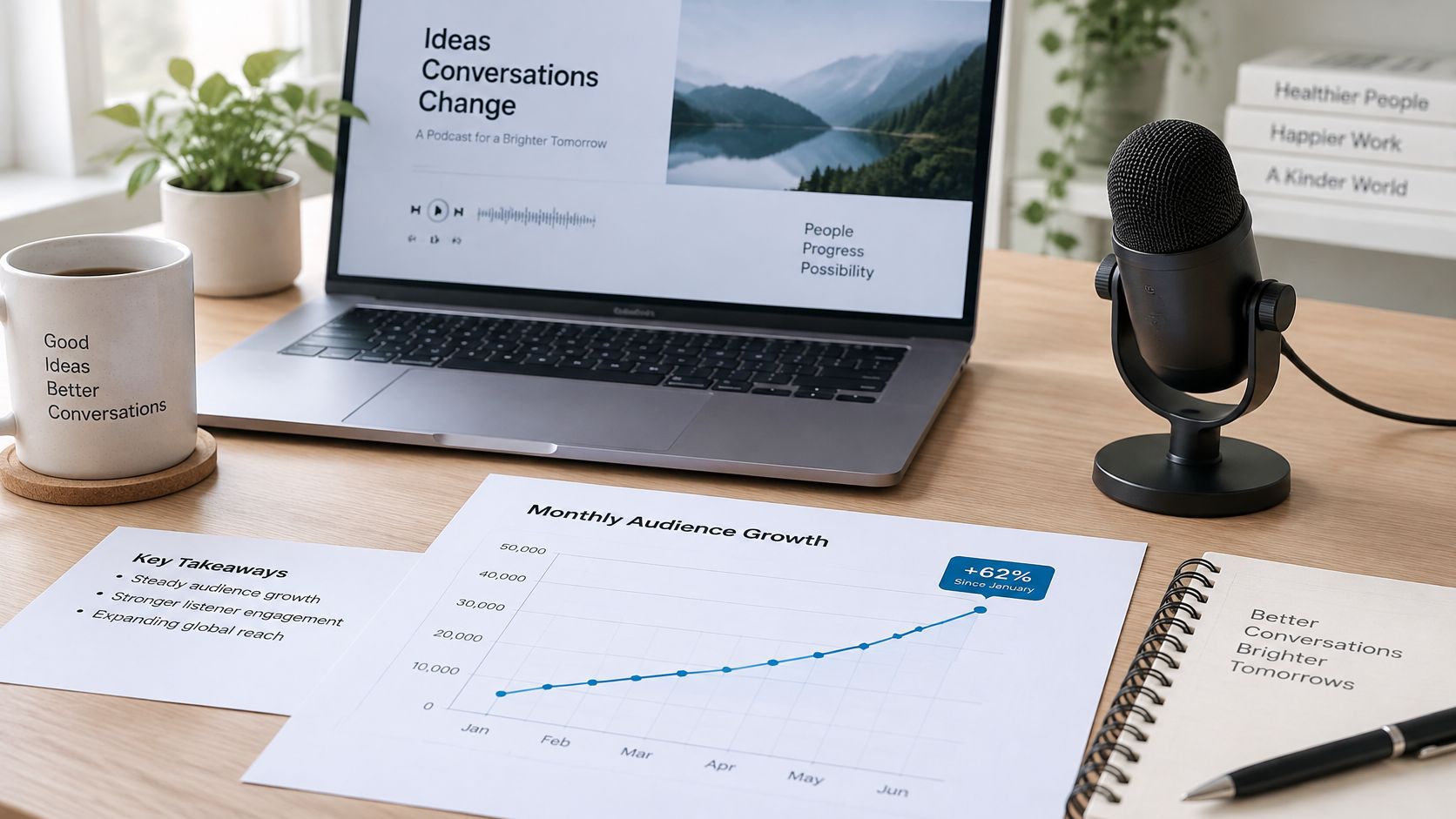
Give the host an episode, not a press release
Subject: New data on remote retention for your listeners
Body: Following my earlier pitch, [Guest] has published [research title] examining [specific question]. The useful interview angle is what managers should change about [decision], including the study's limitations. I can send the original report and a concise discussion outline if that fits your coverage.
- Verify the finding: Check the original publication, sample, and measurement.
- Explain the relevance: Connect the finding to a decision the show's listeners face.
- Separate evidence from interpretation: Be explicit about what the guest studied and what they're recommending.
Put the source in the body, not the subject line. If you need help turning a report into an interview offer, adapt the podcast guest pitch template around the audience's question rather than the announcement.
8. Still Looking for [Topic] Guests?
An uncertain booking status calls for a status question, not a stronger sales pitch. Use this when a show previously requested a topic, appears to be between seasons, or hasn't made its current guest policy clear.
Check the public feed and published pitch route first. A publishing gap isn't proof that a show has stopped, and an active feed isn't proof that it accepts unsolicited guests.
Subject: Still looking for guests on small business finance?
Body: Are you currently considering outside guests on small business finance? [Guest] can explain how owners can prepare for a lender conversation without turning the episode into a product pitch. If you're not booking this topic, I'll close the enquiry.
This gives the host a straightforward status question and enough detail to assess the guest if the answer is yes.
Ask about the show's plans. Don't imply that a quiet feed means the host needs help filling episodes.
Still should refer to something real, such as a published guest request or an earlier conversation. If you have no evidence of previous interest, use a neutral alternative: Considering guests on [topic]?
If there's no reply after a reasonable reminder, mark the status uncertain and pause. Repeatedly asking whether a show is active won't resolve the uncertainty and can make later, better-targeted outreach less welcome.
9. Holding a Spot for [Show Name]
This is the most conditional subject line on the list. Use it only when you've reserved guest availability for an interested show.
A guest's launch schedule, travel plans, or limited recording window can create a legitimate coordination deadline. Your outreach target doesn't. Don't imply that the host has reserved an episode slot when they haven't agreed to anything.
Describe the reservation accurately
Subject: Holding a recording window for [Show Name]
Body: Following your interest in the author interview, we've kept [recording window] available for your upcoming series. We can hold that availability until [real deadline], after which we'll release it. Would you like us to keep it open?
This fits a warm booking conversation with an actual calendar constraint. For an unanswered cold pitch, use Availability for your upcoming series instead.
- Name what's held: It's the guest's availability, not space on the host's editorial calendar.
- Explain the deadline: A real scheduling constraint is enough. Don't add exaggerated scarcity.
- Release the hold: If the deadline passes, update the calendar and pitch record.
The trade-off is pressure. Even truthful urgency can be unhelpful if a producer can't commit that far ahead. Offer a later recording window when possible, and don't treat a missed deadline as a rejection of the guest.
Clear scheduling language protects both sides from assumptions.
10. Thanks for Considering, [First Name]
A courteous close suits a host who has reviewed the idea, exchanged messages, or declined politely. It can also end a quiet thread when you want a warmer tone than closing the loop.
The first name makes the message conversational, but it isn't the reason the email is relevant. In an observational analysis described by Prospeo, personalized subject lines were associated with stronger opens and replies; that doesn't establish that adding a name alone will improve your results.
Subject: Thanks for considering, Maria
Body after silence: Thanks for considering the interview on founder succession. If it becomes relevant to a future series, you're welcome to return to this thread; I'll leave it with you.
Body after a decline: Thanks for letting me know, Maria. I appreciate you considering the idea and will close this pitch.
Don't disguise another ask as gratitude
After a decline, don't append a revised pitch unless the host invited alternatives. After silence, you can leave the door open without asking them to explain why they haven't responded.
- Check the name: Confirm whether you're addressing the host, producer, or booking editor.
- Match the response: Thank someone for their feedback only if they gave feedback.
- Log any invitation: If they suggest another season or topic, record that context accurately.
A gracious ending preserves the relationship better than an email that claims to say thanks while continuing to demand a decision.
Follow Up Subject Lines at a Glance
| Item | Best Sequence Position | Tone | Personalization Needed | Timing |
|---|---|---|---|---|
| Re: [Original Subject] Reply Thread | First follow-up in the original thread | Familiar and direct | Low; add one relevant update | 3-5 business days after the pitch |
| Your Recent Episode on [Topic] | Early follow-up | Research-led and relevant | High; reference a verified recent episode | While the episode is still recent |
| Quick Bump on [Topic] | First follow-up | Casual and low-pressure | Moderate; name the topic | 5-7 days after the pitch |
| A Question for Your Next Episode | Early or middle follow-up | Curious and value-driven | High; connect to the show's topics | When a relevant episode angle is available |
| Two Slots Next Week? | After the host shows interest | Practical and action-oriented | Moderate; offer real availability | Once the host is interested |
| Closing the Loop on [Topic] | Final follow-up | Professional and conclusive | Moderate; specify the topic | Third or fourth follow-up |
| New Data on [Topic] for Your Listeners | Mid-sequence follow-up | Timely and informative | High; use verified, relevant new data | When genuinely new information is available |
| Still Looking for [Topic] Guests? | Early follow-up when booking status is unclear | Direct and respectful | Moderate; tailor to the show's topic or status | After checking that the show is active |
| Holding a Spot for [Show Name] | After interest or during season planning | Prepared and time-sensitive | High; use the show name and a real timeline | When availability or a deadline is genuine |
| Thanks for Considering, [First Name] | After a decline or late in the sequence | Warm and appreciative | High; use the host's first name | After a response or when closing a quiet thread |
Build Your Follow-Up Sequence and Start Sending
Build a short sequence around decisions, not a fixed requirement to send more messages. The first decision is whether the interview idea fits. The next is whether the host wants to explore it. Only then should you ask when to record.
Choose Re: [Original Subject] when the original pitch is clear and worth preserving. Choose Quick Bump on [Topic] instead when you need a concise reminder with a more informative subject. Don't send both just because both templates are available.
For a later touch, earn the follow-up with an episode reference, a sharper editorial question, or a new resource. If you can't explain what changed since the previous email, wait or close the pitch.
Use a simple stage-based plan
- First follow-up: Preserve context and restate the audience benefit.
- Second touch: Add relevant show context or improve the episode angle.
- Scheduling: Offer specific availability after the host expresses interest.
- Breakup: Close the thread respectfully when further contact would be repetition.
Keep the subject, body, and requested action aligned. An episode-reference subject should lead to an episode-specific idea. A scheduling subject should contain usable availability. A final note should be final.
Judge your wording by qualified replies and confirmed conversations, not just opens. Track whether the host expressed interest, requested material, declined, or asked you to return later. Those outcomes tell you more about booking fit than an attention-grabbing subject alone.
Let's Make A Podcast supports this workflow by emailing guests a follow-up draft ready to send when a pitch goes quiet. Guests send pitches from their own inbox to the route the show publishes, so review the draft for accuracy, tone, and anything that's changed since the original message.
Questions or help requests can go to hello@letsmakeapodcast.com. Our team usually replies to emails within a couple of business days. Include what you're trying to do and where you're stuck so we can respond usefully.
You don't need a cleverer version of checking in. You need a relevant reason to write and a next step the host can answer without extra work. Draft your first follow-up today using the template that matches the conversation you're having.
Let's Make A Podcast combines show discovery, guest one-sheets, pitching tools, and booking coordination to help you move from a relevant introduction to a recording. Visit Let's Make A Podcast to find suitable shows and prepare a context-aware follow-up for your next pitch.