10 Podcast Directory Free Sources for Booking Guests
The usual advice is to submit your show everywhere or pitch the biggest podcasts you can find. That's distribution advice, not booking advice. A directory listing tells you a show exists. It doesn't tell you the host wants outside guests, accepts unsolicited pitches, or is still recording.
That distinction matters whether you're an author seeking interviews, a producer researching experts, or a PR professional building a placement list. A show can have an impressive archive and no current production schedule. It can publish regularly but feature only its own presenters, employees, or invited partners.
Booking rule: Treat every directory result as a research lead, not permission to pitch.
The audience opportunity is real. Edison Research's 2025 Podcast Consumer study found that 55% of Americans aged 12 and older consumed a podcast in the previous month. But audience scale won't tell you which individual host would welcome your expertise.
If you're searching for “podcast directory free,” choose tools by what they reveal: recent episodes, interview history, topic fit, and a legitimate route to contact the production team. Use listening platforms to understand the conversation and research databases to investigate the people involved. Then verify the host's current instructions before writing a pitch.
Table of Contents
- 1. Podcast Directory Find Podcasts by Niche
- 2. Apple Podcasts
- 3. Spotify
- 4. Listen Notes
- 5. Podchaser
- 6. Podcast Addict
- 7. Podbean
- 8. iHeartRadio
- 9. TuneIn
- 10. Podcast Index
- How the free podcast directories compare for guest booking
- Turn Directory Research Into Booked Interviews
1. Podcast Directory Find Podcasts by Niche
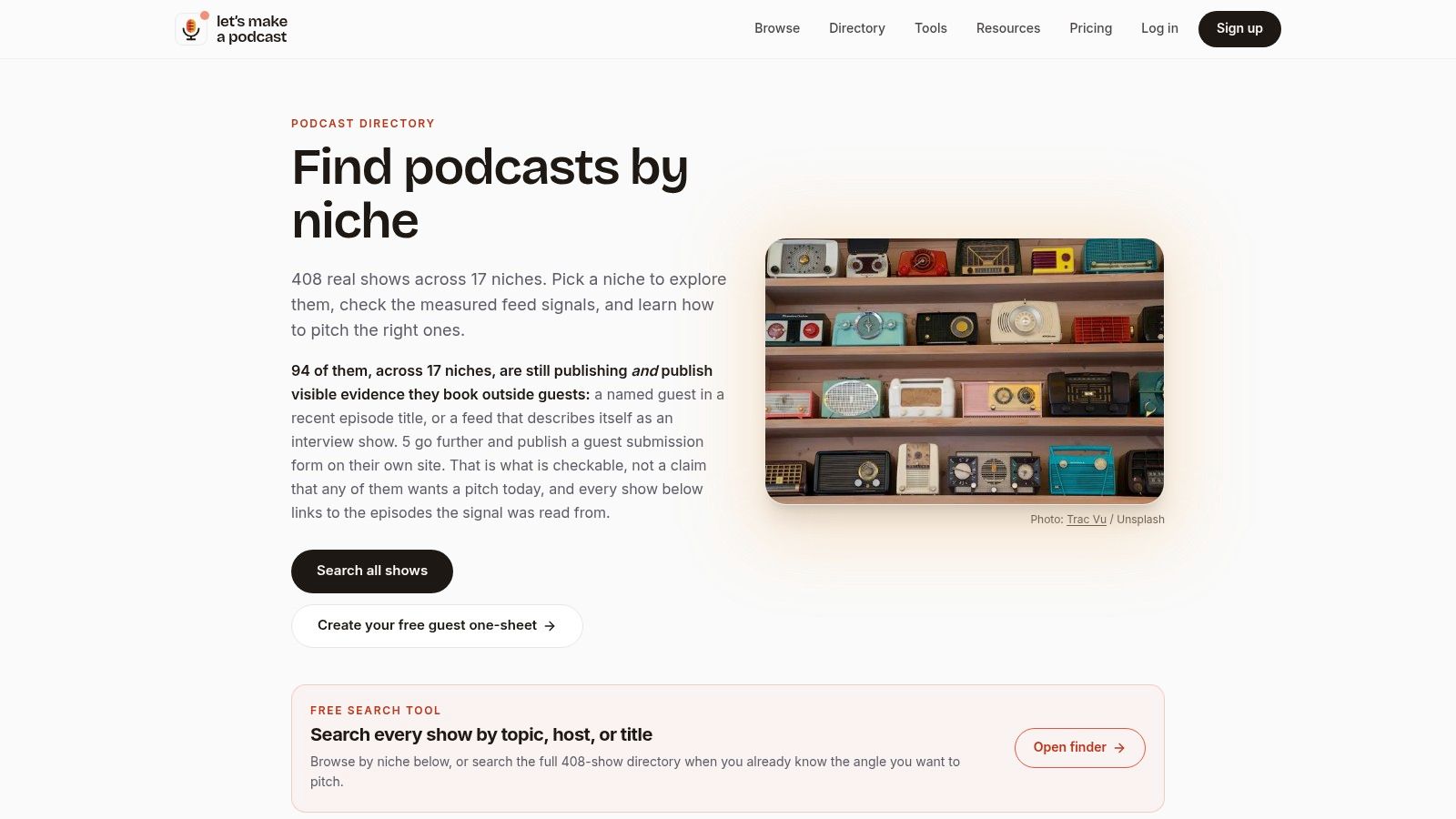
Our Podcast Directory at Let's Make A Podcast starts with a more useful booking question than popularity: does this show look worth investigating? It contains the public feeds behind 408 podcasts, with topic, host, and title searches that help narrow your starting list.
The listings come from Apple Podcasts public directory data, while episode lists are read from each show's public RSS feed. Each listing has a Be a guest page. Those details let you move from a broad niche to a specific show and inspect its publishing history rather than rely on a description that may no longer reflect the format.
Separate activity from guest openness
We check whether a show is still publishing and whether its host states how to pitch. Our analysis covered 383 readable public feeds, but a publishing signal still isn't an invitation: an active show may only book through existing relationships.
- Best use: Build a focused shortlist, then inspect recent episodes for outside guests and relevant conversations.
- Useful distinction: A published contact route establishes reachability, not consent to receive unrelated pitches.
- Coverage limit: The directory covers its listed shows, not every podcast within your subject area.
- Contact policy: We don't print a podcast's contact address on its public listing.
Choose a narrow subject before searching. Our guide to podcast niches can help distinguish a broad category such as business from a pitchable specialty such as employee ownership.
For hosts researching guests, reverse the process: inspect relevant interview episodes, identify the contributor, then verify their expertise independently. A relevant appearance is a starting point, not a complete guest assessment.
2. Apple Podcasts
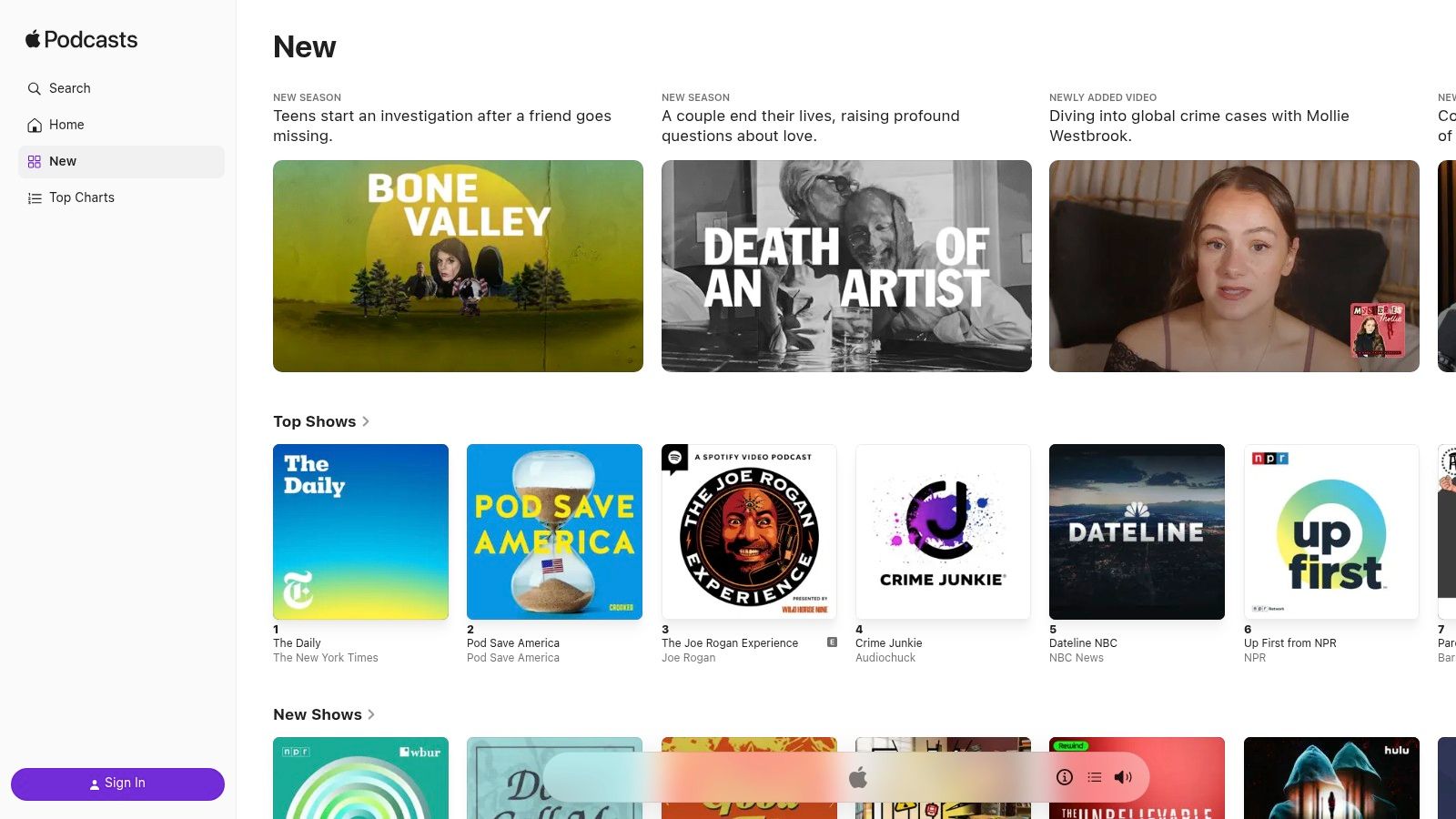
Apple Podcasts is useful when you already know the subject area but haven't identified suitable shows. Search, categories, charts, and editorial collections offer different entry points. For booking research, episode pages matter more than chart placement.
Open a candidate show and compare its newest episodes with its description. Look for named guests, recurring interview formats, and topics that match the contribution you can make. A category label alone is too broad to establish fit.
Read the archive as a producer
A show described as entrepreneurship might now focus on venture-backed founders. Another might interview local business owners rather than investors. Those differences should determine whether you pitch, even when both appear under the same category.
- What it reveals: Episode dates, titles, descriptions, and enough listening material to assess interview style.
- What it doesn't establish: Whether the producer accepts unsolicited guests or which contact route they prefer.
- Free-use boundary: Free shows are available without buying a subscription, while some publishers offer paid content.
Creators can submit free shows through Apple Podcasts Connect, but submission and listening aren't guest-booking workflows. Follow the show's own website from the listing and look for explicit submission instructions.
Don't treat reviews as a booking signal. They may help you understand listener reactions, but they won't establish availability, editorial priorities, or willingness to interview someone new.
3. Spotify
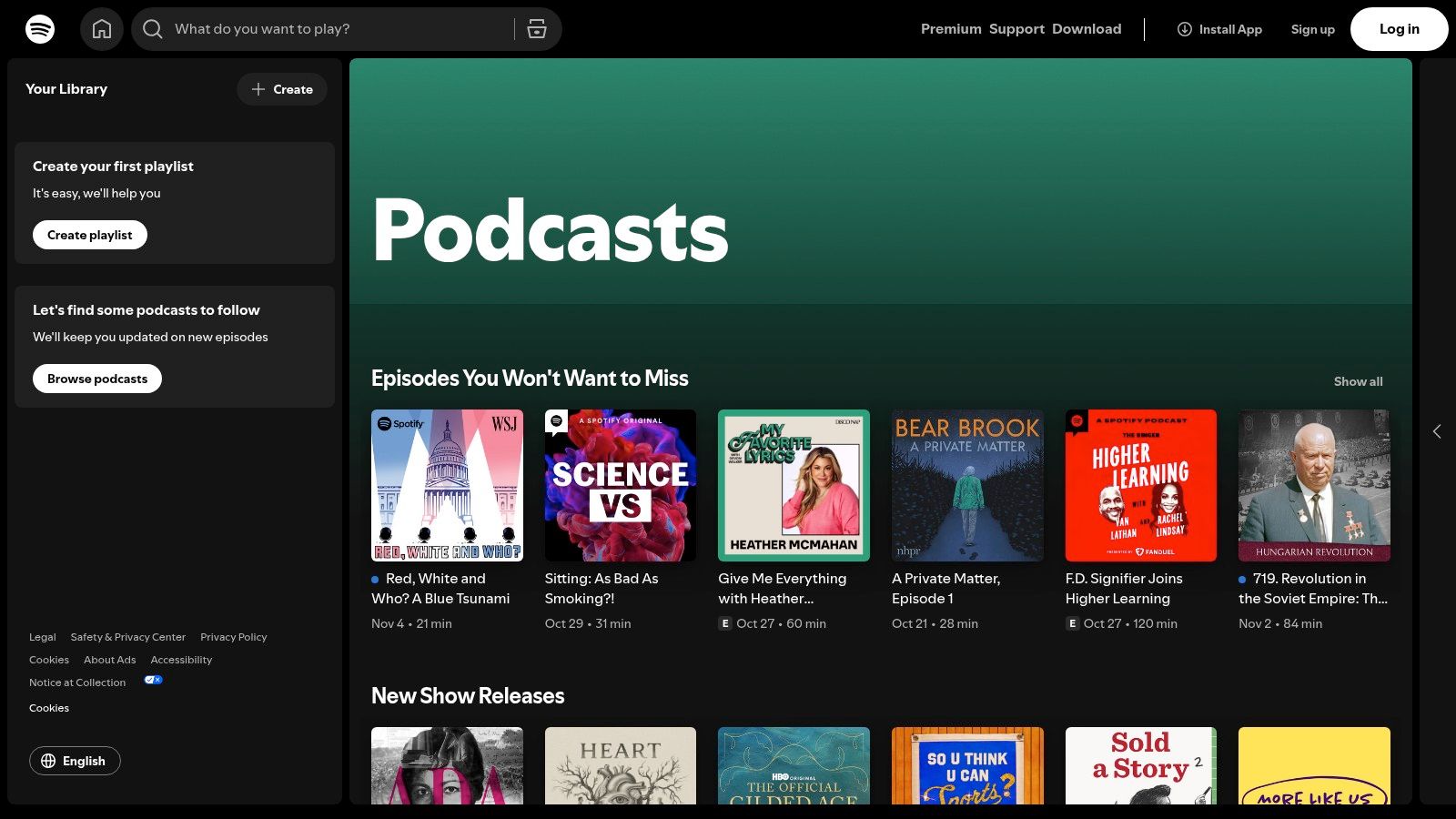
A promising show's description sounds perfect. Then you listen and discover that the presenter mostly delivers solo commentary. Spotify is useful for making that distinction before you spend time on outreach.
Its podcast search, recommendations, charts, and categories can surface candidates and related shows. Many shows are free to hear, making it practical to assess the host's questions, guest introductions, and expected level of technical detail.
Listen for the contribution a host wants from guests, not just the subject printed in the show description.
For example, a cybersecurity expert might find both beginner explainers and specialist incident-response interviews. The topic overlaps, but the suitable pitch, examples, and vocabulary won't.
Use recommendations without outsourcing judgment
Save relevant candidates, then verify each one independently. Spotify's recommendations reflect its own platform environment, not a neutral inventory of every show that might suit you.
Recent guest appearances show an interview format, not an open application process. Check whether guests come from a recurring organization, network, or professional circle before assuming outside submissions are welcome.
For creators, Spotify for Creators offers publishing and creator tools, with automatic Spotify publication for shows hosted there. Shows hosted elsewhere need a distribution or submission route. Neither arrangement tells a prospective guest who handles bookings, so continue to the show's official instructions.
4. Listen Notes
Listen Notes is particularly useful when your expertise is more specific than a podcast category. Search episodes by subject or person, rather than restricting yourself to show names.
Say you're pitching expertise on succession planning for family businesses. A relevant interview might sit inside a general accounting, entrepreneurship, or regional business show. Episode-level search can reveal that connection even when the podcast title gives you no clue.
- Topic research: Search the problem you solve, alternative terminology, and closely related professional language.
- Guest research: Search comparable experts to find shows that have hosted similar conversations.
- Editorial research: Open the episode and assess whether your proposed angle adds something genuinely different.
Basic search and discovery are free. Some advanced filters and larger result sets require paid membership, so don't build a research process that depends on unrestricted access to every feature.
An old match needs a current check
A highly relevant episode can still lead to a dormant show. After finding a match, inspect the current episode list and visit the show's own website before adding it to an outreach queue.
Listen Notes is a search product, not a booking platform. Its strength is finding otherwise overlooked conversations; you still need to establish present activity, outside-guest history, and a suitable pitch route.
For hosts, the same searches can uncover potential experts. Verify their current role and original work rather than treating a previous interview as proof of authority.
5. Podchaser
Who has already appeared on this show? Podchaser is useful for that question because it combines podcast and episode pages with creator profiles and guest credits.
Start with a relevant expert, then inspect their credited appearances. This can reveal interview shows whose names don't mention your niche. It also helps hosts investigate how a prospective guest explains their work across different conversations.
Free browsing, listening, adding a show, and claiming a show provide a useful starting point. Some audience, contact, and campaign intelligence belongs to Podchaser Pro, so distinguish public research from paid intelligence before relying on a particular workflow.
Credits are leads, not booking permissions
A credited guest appearance supports a narrow conclusion: that person participated in that episode. It doesn't prove the show routinely accepts cold pitches or that the same producer still handles interviews.
- Cross-check credits: Confirm the person appears in the episode description or recording.
- Verify recency: Compare profile information with the show's newest publishing activity.
- Check the route: Use current instructions from the show rather than assuming database information is complete.
Community-supplied information can be incomplete or outdated. Treat missing credits cautiously too, since an absent record doesn't establish that a show never interviews outsiders.
For a closer distinction between creator-credit research and episode search, see our Podchaser versus Listen Notes comparison. Choose the tool for the question you're trying to answer, not because its database looks more impressive.
6. Podcast Addict
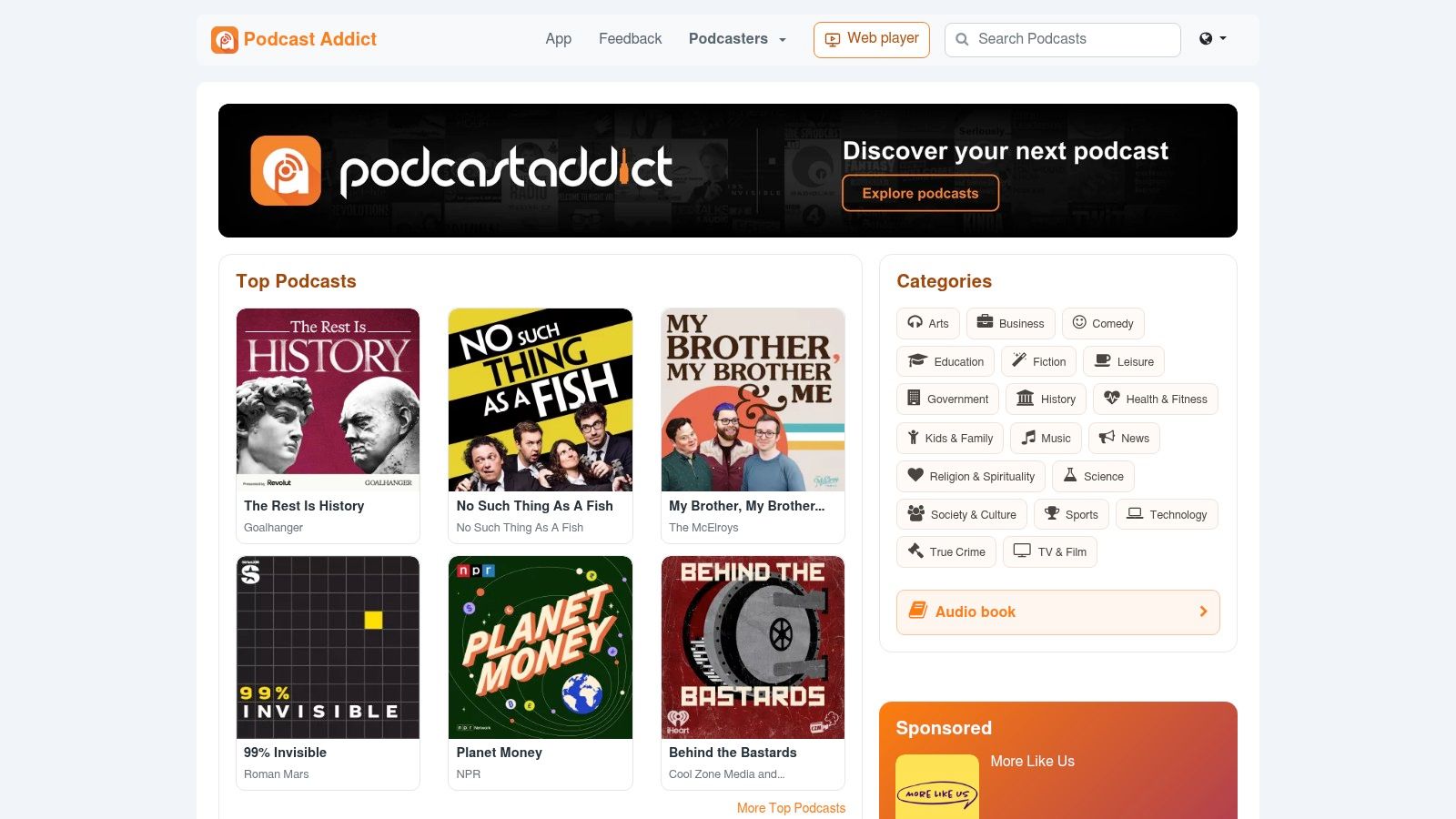
Podcast Addict combines an Android listening app with searchable podcast pages. For booking research, its practical value is straightforward: find the show, inspect its public episode history, and listen before approaching the host.
It's a useful option if you already research and listen on Android. A shareable show page also gives a producer or PR colleague a common reference without relying on a remembered title.
Follow the feed, then investigate the format
Use the listing to inspect episode dates and descriptions. Distinguish interviews from narrated stories, panel discussions, reruns, and promotional excerpts. A person named in an episode title isn't necessarily an interview guest.
- For prospective guests: Listen to how the host introduces outside contributors and frames their expertise.
- For producers: Check whether a potential guest offers useful explanations rather than only promotional talking points.
- For hosts listing a show: Public RSS-feed submission is free; optional paid promotion is separate.
Podcast Addict isn't a guest marketplace, and its Android focus won't suit every research workflow. It also won't resolve whether a listed show has paused bookings.
A valid public RSS feed supports directory submission, but technical availability and editorial openness are different things. If a show's page looks current, continue to its own website for pitch instructions rather than treating the directory listing as the final research step.
7. Podbean
Don't confuse a Podbean directory page with evidence that the show uses Podbean as its host. Creators hosted elsewhere can submit their feeds, so the page is best treated as another discovery and listening surface.
That matters when you're trying to identify the person behind a show. A directory account, hosting relationship, and editorial booking contact aren't interchangeable. Follow the publisher's own links rather than guessing who owns the production.
For guests, the episode archive is the useful part. Compare the current subject mix with your proposed contribution, and listen for whether the presenter regularly invites independent experts.
Listing and hosting are separate decisions
External-hosted shows can seek directory inclusion using a free Podbean account, with account verification required for free-account inclusion. Hosting plans and other services are separate from directory submission.
- Useful for discovery: Public pages and listening through Podbean's website and apps.
- Useful for qualification: Episode descriptions that help distinguish interview-led shows from other formats.
- Limited for outreach: A listing doesn't establish a current guest application process.
If you're a host seeking guests, use relevant episodes to identify contributors, then investigate their credentials outside the directory. If you're a guest, inspect the official show site for the preferred pitch route.
A shareable page helps organize research. It doesn't replace editorial verification.
8. iHeartRadio
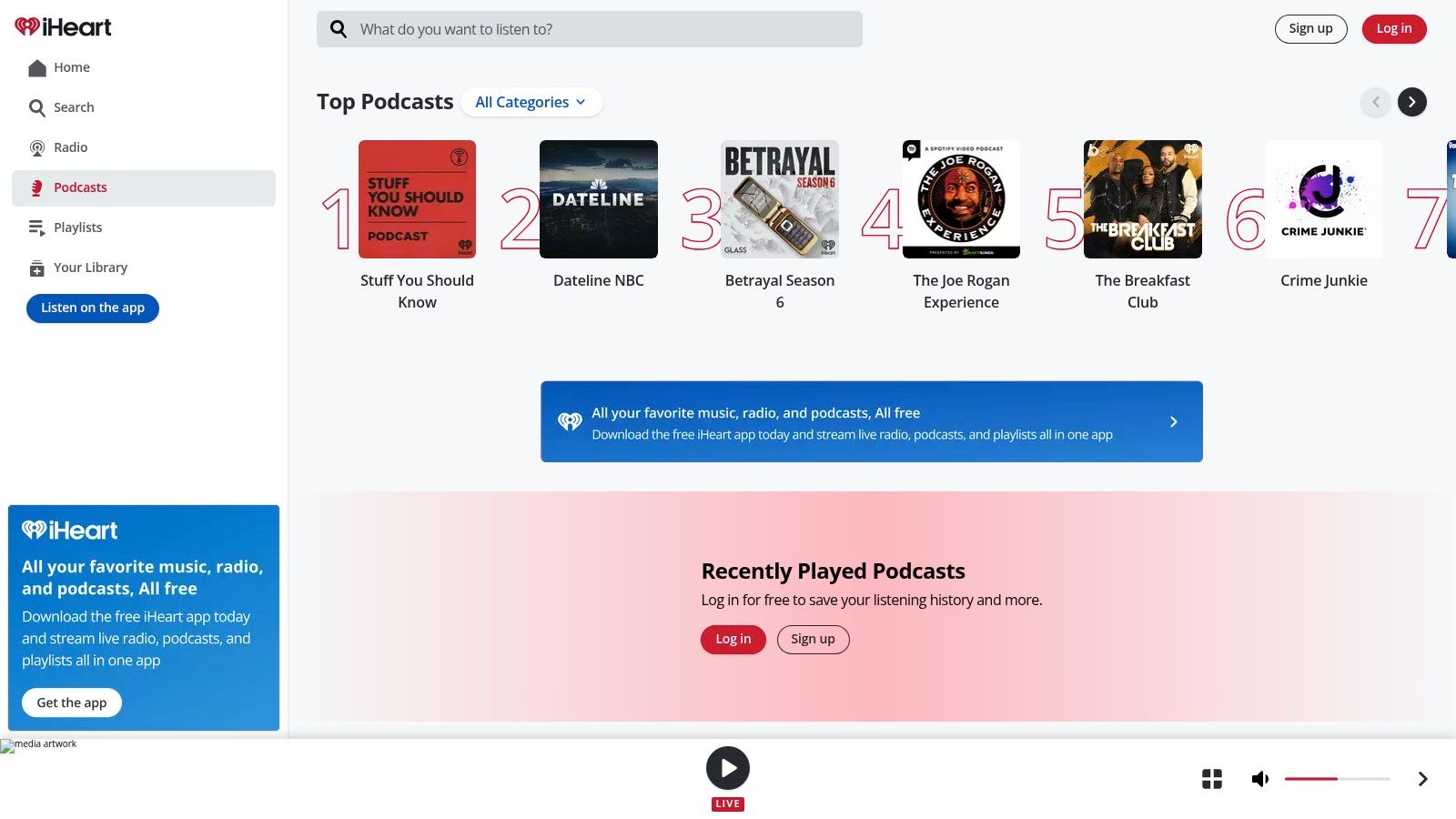
iHeartRadio places podcasts alongside radio and other audio content. That makes it useful for exploring shows in a different listening environment, but the booking route may require more investigation than the listening page provides.
A program might be an independent interview podcast, a radio-derived show, or part of a larger production operation. Identify the actual publisher before deciding whom to approach. Don't assume the on-air host personally manages guest requests.
Match the pitch to the production
For an independent show, the official website may provide direct instructions. For a network-run production, look for a named producer, program contact, or guest submission page associated with that specific show.
A platform's general support channel is not a substitute for a program's editorial contact.
Charts, categories, and editorial collections can identify candidates, but featuring doesn't demonstrate outside-guest openness. Inspect recent episodes for interview patterns and check whether guests are relevant to the angle you're proposing.
Creators can submit an RSS feed through iHeartRadio's creator portal, subject to its supported-region restrictions. Submission doesn't require moving hosting providers, but directory acceptance doesn't guarantee editorial placement.
For booking work, the main trade-off is discovery breadth versus contact clarity. Use the platform to understand the program, then verify the production team and pitch route elsewhere.
9. TuneIn
TuneIn is useful when your audience research includes radio listeners as well as podcast listeners. Its podcast browsing and recommendations provide another way to encounter programs you might otherwise overlook.
For a guest booker, however, a listening destination isn't necessarily a detailed research database. You may need to leave TuneIn to establish the show's editorial team, guest history, and current submission instructions.
- Discover: Browse relevant genres and subjects for candidate programs.
- Confirm identity: Match the title, presenter, artwork, and publisher with the official show site.
- Qualify: Review recent full episodes before deciding that the show suits your pitch.
That identity check matters for programs distributed in several forms. A radio program, podcast edition, and highlights feed may share branding without offering identical interview opportunities.
Use it as a secondary discovery source
TuneIn offers a self-service route for requesting a podcast listing, along with sharing and embedding options for listening. Don't assume a review deadline or guaranteed acceptance when planning distribution.
For outreach, use the official publisher's contact instructions, not a platform customer-service route. A program's presence on TuneIn doesn't establish who controls its guest calendar.
I'd use TuneIn to expand a shortlist, then do detailed qualification on the show's own pages. It's less useful when the immediate question is who books interviews and how they want to receive pitches.
10. Podcast Index
Podcast Index is the most feed-oriented option in this list. Its open directory and developer API support RSS-based discovery rather than tying research to a single listening app.
For booking work, that makes it useful for identifying a show's public feed and checking its publishing presence. The feed is a practical reference for episode history, especially when directory descriptions or app pages differ.
Verify the source behind the listing
Locate the show, inspect its feed-linked information, and compare recent entries with its official website. If you need help identifying the underlying feed, use our podcast RSS feed finder.
- Strongest use: Finding public feeds and checking show identity.
- Main trade-off: A more technical directory experience than a mainstream listening app.
- Booking limitation: No guest-outreach workflow or implied invitation to pitch.
RSS metadata can help you understand the program, but it shouldn't be treated as a current booking policy. Follow any published editorial instructions and avoid repurposing a technical contact as a guest-submission address.
For hosts, check that your feed clearly names the show, language, topics, and episode content. Link to readable show notes and transcripts where available so prospective guests can assess fit without relying entirely on audio.
Open discovery helps people find your program. Clear editorial instructions help the right people approach it.
How the free podcast directories compare for guest booking
| Item | Free to Use | Submission Route | Guest-Booking Signals | Best For |
|---|---|---|---|---|
| Podcast Directory: Find Podcasts by Niche | Free to browse and search | Browse by niche or search by topic, host, or title | Public-feed signals can indicate activity; guest availability is not guaranteed | Finding shows by niche and researching potential interview opportunities |
| Apple Podcasts | Free shows and show submissions | Submit through Apple Podcasts Connect with a valid feed and creator account | No guest-booking or host-contact workflow | Broad podcast discovery and Apple ecosystem reach |
| Spotify | Free listening for many shows; creator tools available free | Spotify for Creators publishes hosted shows automatically; other shows use their host's distribution process | A listing does not show whether a podcast is booking guests | Listening, recommendations, and creator tools |
| Listen Notes | Basic search is free; advanced research features are paid | Search shows and episodes; no submission route described | Research aid only; activity and guest fit need checking | Topic- and episode-level podcast research |
| Podchaser | Browsing, listening, adding, and claiming shows are free; Pro features are paid | Add or claim a podcast page | Guest credits show who has appeared on which shows | Finding shows through creator and guest credits |
| Podcast Addict | Listening and directory submission are free | Submit a public RSS feed through the creator portal | No guest-booking signals described | Reaching listeners, especially on Android |
| Podbean | Directory submission is free with an account; hosting services may be paid | Submit an RSS feed; free-account users must verify their account | No guest-booking signals described | Getting an external-hosted show listed and sharing its page |
| iHeartRadio | Submission cost not specified | Submit an RSS feed through the creator portal; access is limited to supported countries | Guest-booking status must be checked elsewhere | Reaching audiences who use iHeartRadio for audio |
| TuneIn | Listening is available; submission cost not specified | Request a listing through the self-service portal | No guest-booking signals described | Reaching people who use TuneIn for podcasts and radio |
| Podcast Index | Free to browse | Search listings and feeds; no creator submission route described | Public presence and feeds can be checked; no booking signals | Open, RSS-based discovery and developer tools |
Turn Directory Research Into Booked Interviews
A useful shortlist isn't a collection of podcast names. It's a set of shows for which you can explain why the topic fits, what confirms current activity, and how the producer wants to receive an approach. Keep those questions separate.
Start by recording the show's official website, latest original episode, recent outside guests, and published pitch instructions. Add the episode that supports your proposed angle and a brief explanation of what you could contribute. If you can't articulate that contribution, keep researching rather than drafting a generic introduction.
Separate discovery from permission
Podcast discovery happens well beyond directory browsing. In a survey from Sounds Profitable and JAR Podcast Solutions reported by Inside Radio, 40% of podcast listeners discovered their favorite podcast on YouTube. A clip or recommendation can therefore start your research, while a directory helps verify the show behind it.
The same distinction applies to contact information. A publicly available route may handle advertising, listener questions, technical support, or guest applications. Use it according to the publisher's stated purpose, and don't interpret silence about submissions as an open invitation.
- Confirm activity: Distinguish fresh interviews from reruns, trailers, and automated archive releases.
- Confirm outside participation: Look for independent contributors rather than only employees, cohosts, or recurring partners.
- Confirm fit: Offer an angle that extends the editorial conversation instead of repeating a recent interview.
- Confirm instructions: Follow the requested application, email, or marketplace route.
Our feed-checking process distinguishes current publishing, a usable contact route, and evidence of outside guests. These are qualification signals, not promises that a host has space available or will accept a particular proposal.
Write for the producer's decision
Your pitch should explain the conversation you can help create. Reference a relevant episode accurately, propose a focused angle, and establish why you're qualified to discuss it. Keep your biography secondary to the audience's reason to listen.
Hosts should make the reverse decision equally clear. State which topics you're booking, what qualifies a guest, and where applicants should send their information. Provide readable episode pages, detailed notes, and accessible supporting material so candidates can evaluate the show before applying.
Free directories reduce the cost of discovery, not the need for judgment. Better qualification gives you a defensible reason to contact a show and gives its producer a clearer reason to consider the interview.
Visit Let's Make A Podcast to use our free shortlist tool to find active, reachable shows with evidence of booking outside guests, without buying a contact list. During early access, joining, browsing, pitching, and messaging cost nothing, so you can move from directory research to a focused conversation with a host.