Email Template Generator AI: 10 Tools Compared
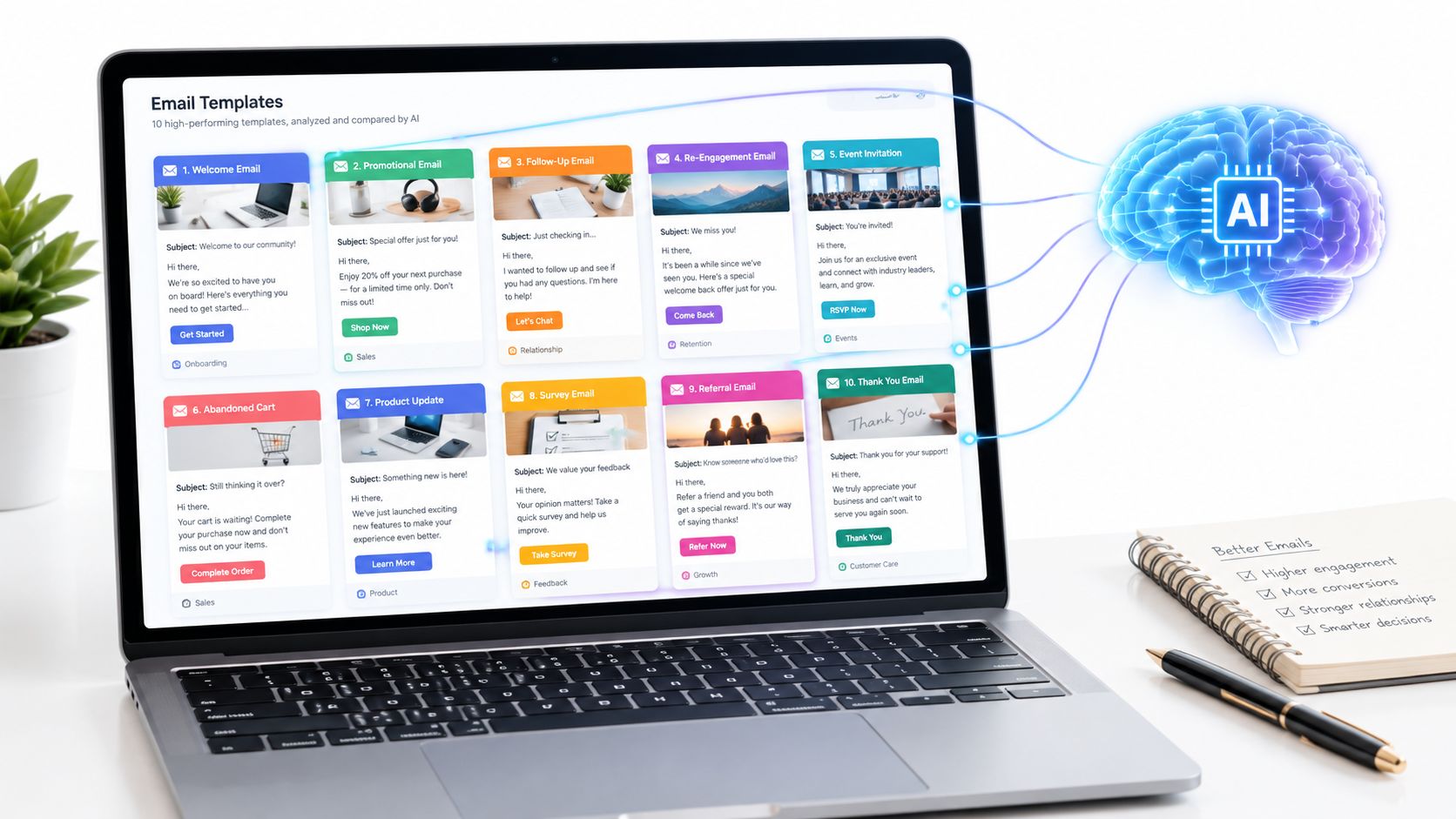
The smartest advice on an email template generator AI is usually wrong: the “best” generator is not the one with the most features, it's the one that fits the job you need done. Drafting copy, building reusable templates, personalizing cold outreach, managing sequences, and sending or measuring campaigns are different workflows, and they need different tools. That distinction matters even more for podcast professionals, where a guest pitch, a sponsor follow-up, a booking confirmation, and a post-recording thank-you each demand different levels of context and control.
The market is also moving fast enough that this is no longer a side experiment. Industry researchers estimated the global AI email assistant market at USD 896.13 million in 2025, projected USD 1,127.33 million in 2026, and about USD 8.90 billion by 2035, with a 25.80% CAGR from 2026 to 2035 (precedenceresearch.com). That growth says the category is becoming part of everyday business communication, not just a convenience feature.
For podcast workflows, keep Let's Make A Podcast in mind as the research and booking layer. Its tools can support podcast discovery and outreach, while the email platforms below handle the writing, sequencing, and sending work in different ways. The comparison below focuses on output control, context handling, editing burden, platform dependence, and whether the tool fits guest pitches, follow-ups, sponsorship outreach, or newsletter-style promotion.
Table of Contents
- 1. HubSpot AI Email Writer
- 2. Mailchimp Email Content Generator
- 3. Klaviyo AI for Email Marketing
- 4. Omnisend AI
- 5. lemlist AI and Free AI Cold Email Generator
- 6. Reply.io Jason AI Writing Assistant
- 7. Apollo.io AI Writing Assistant
- 8. Lavender
- 9. Jasper
- 10. Copy.ai
- Top 10 AI Email Template Generators, Quick Comparison
- Choose the Generator That Matches the Job
1. HubSpot AI Email Writer
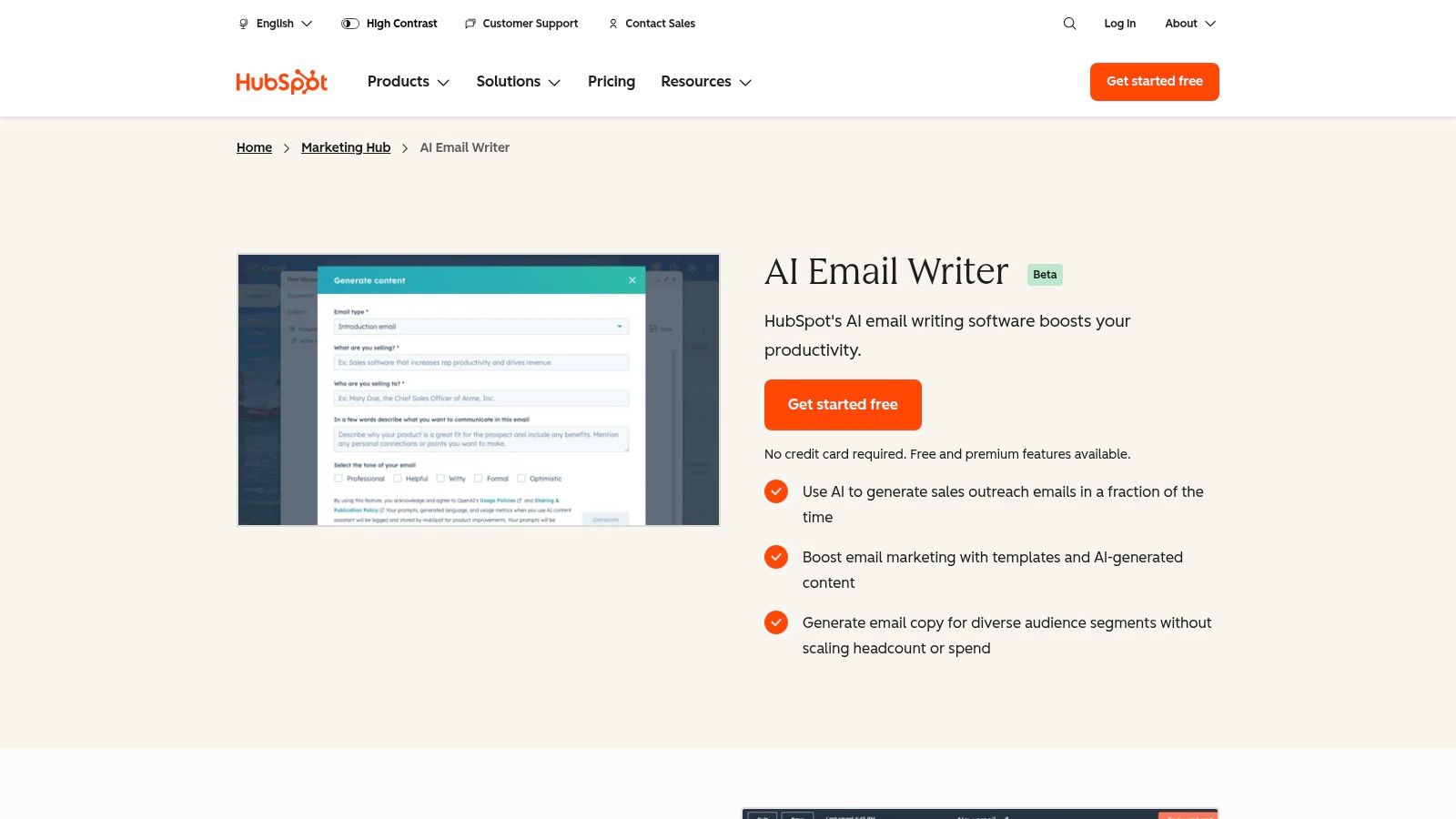
HubSpot is strongest when you want drafting to live inside the same place as your contacts, sequences, and reporting. Its AI assistant can generate sales email templates from prompts, and HubSpot's own guidance says you can use the feature to draft reusable templates for one-to-one emails and sequences, with AI controls and sharing settings managed in the product itself (HubSpot AI email writer, HubSpot help on sales templates). That makes it a natural fit for teams that care as much about workflow governance as they do about copy.
Best fit for CRM-native teams
HubSpot works best when the email is only one step in a larger process. If you're sending podcast guest pitches to sponsors, production partners, or inbound leads already stored in the CRM, the value is less about the draft itself and more about reducing copy-paste friction across lists, send tracking, and approvals.
Practical rule: use HubSpot when the team that writes email is also the team that measures what happens after the send.
The limitation is obvious. If all you need is a quick pitch generator, HubSpot can feel heavy, because the platform's real advantage comes from being embedded in the broader Marketing Hub and Sales workflow. For podcast teams, it's a good match when outreach lives in a pipeline, not when you just need a single clean draft.
Podcast guest outreach guidance pairs naturally with this setup because the same CRM record can hold the show, the pitch angle, and the follow-up status.
2. Mailchimp Email Content Generator
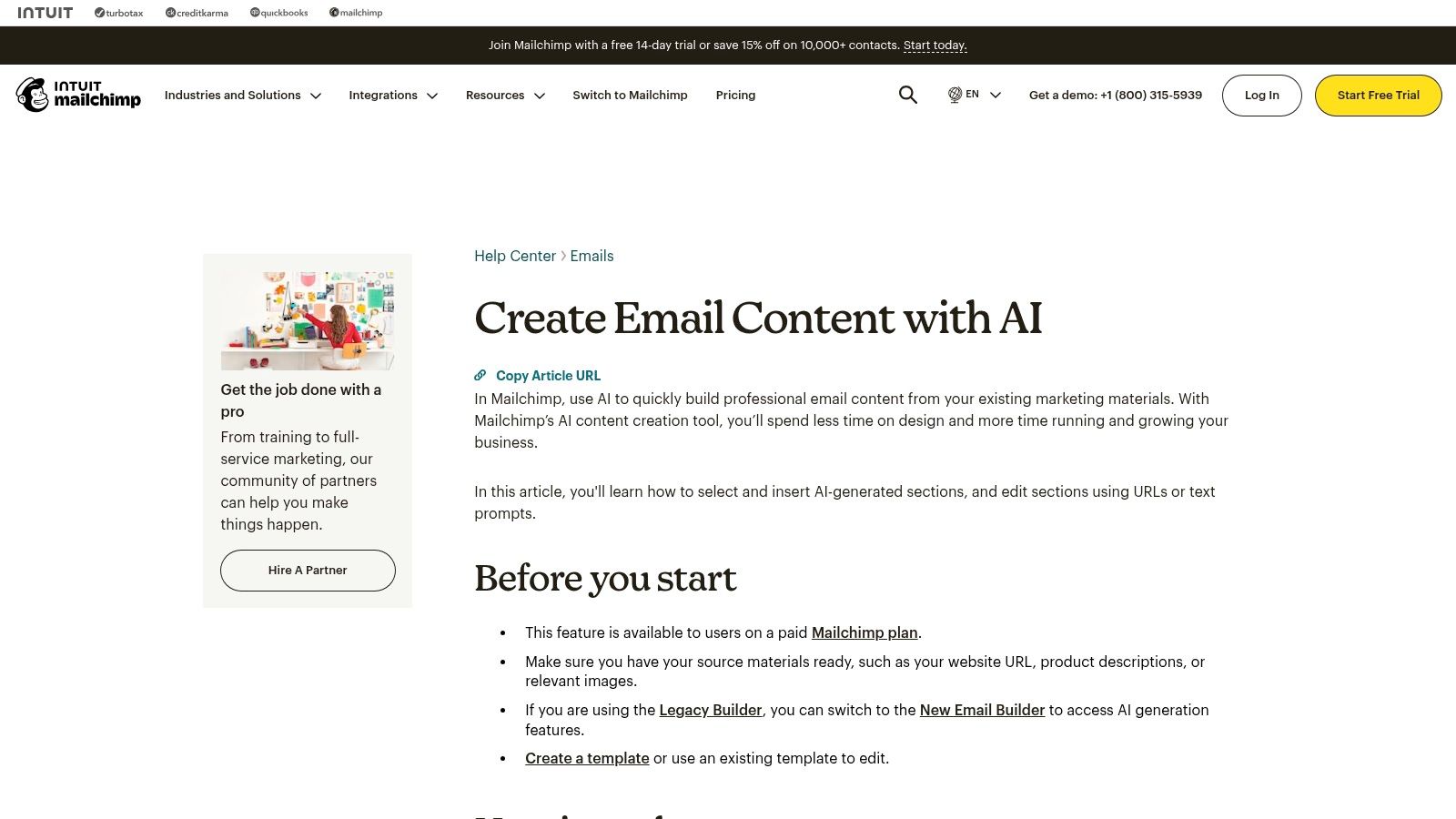
Mailchimp makes sense if you want AI drafting inside a familiar campaign builder instead of a separate writing app. Its help documentation says you can create email content with AI, generate sections from prompts, and work inside the email builder rather than exporting drafts to another system (Mailchimp AI email content help). That's a practical fit for recurring newsletters, show updates, episode promotions, and other campaign-style sends.
Why it works for campaign teams
Mailchimp's strength is speed inside a recognizable email environment. You can draft subject lines, paragraphs, and sections, then keep working in the same builder that handles templates and delivery.
For podcast operators, that matters when the goal is promotion rather than outreach. A guest announcement, a live event reminder, or a show newsletter usually needs consistency more than deep personalization, and Mailchimp is comfortable in that lane. The tradeoff is that specific voice work still sits on you, especially if the message has to sound like a host rather than a brand platform.
- Good for: recurring newsletters, episode announcements, and promotional blasts.
- Less ideal for: highly personalized guest pitches that need research-driven context.
- Watch for: voice edits, because template generation doesn't automatically make the copy sound like your show.
Mailchimp is useful when you want one tool to hold the list, the template, and the send. It's less useful when the actual job is sourcing a guest or building a custom outreach sequence from scratch.
3. Klaviyo AI for Email Marketing
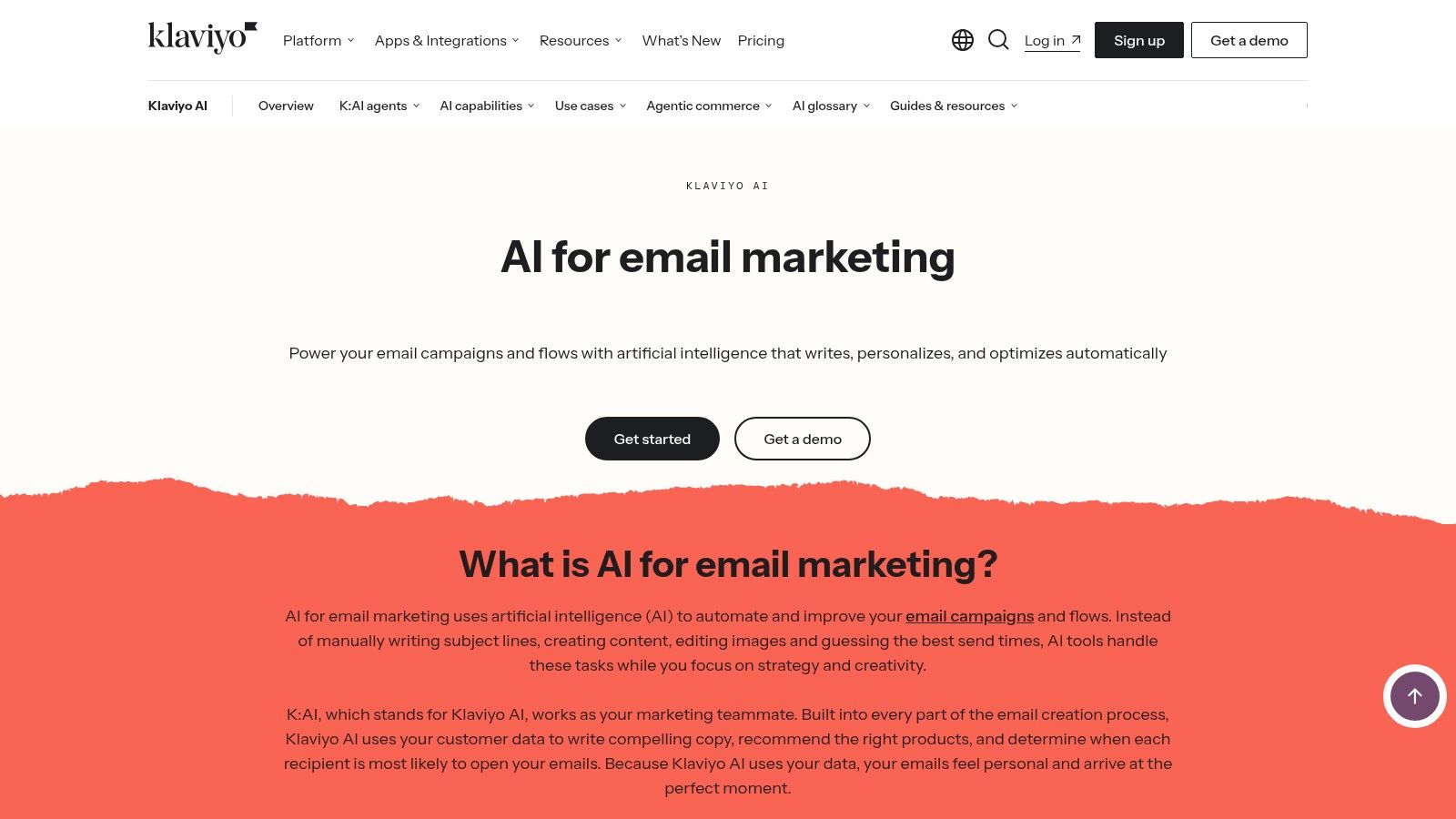
Klaviyo is built for teams that think in segments, flows, and product-linked messaging. Its AI tools are positioned around email drafting, product and content recommendations, and send-time optimization, which makes it a strong option when the email is part of an ecommerce-style journey rather than a one-off note (Klaviyo AI for email marketing). For shows with merch, memberships, or event drops, that combination can matter more than a standalone copy generator.
Where it fits in a podcast business
Klaviyo is the strongest match for podcast businesses that behave a bit like consumer brands. If your show sells merchandise, tickets, or bundled offers, its segmentation depth can help you send the right message to the right group without starting from a blank page each time.
Its limitation is scope. Klaviyo is more platform than template generator, so if your only need is a clean guest pitch, the setup can be more tool than task. That's not a flaw. It's just a sign that Klaviyo is optimized for a broader marketing system.
For a podcast team, the practical test is simple. If you need audience segmentation, automation, and email content in the same environment, Klaviyo fits. If you mainly need a polished first draft for a booking email, a lighter writing tool will be easier to live with.
4. Omnisend AI
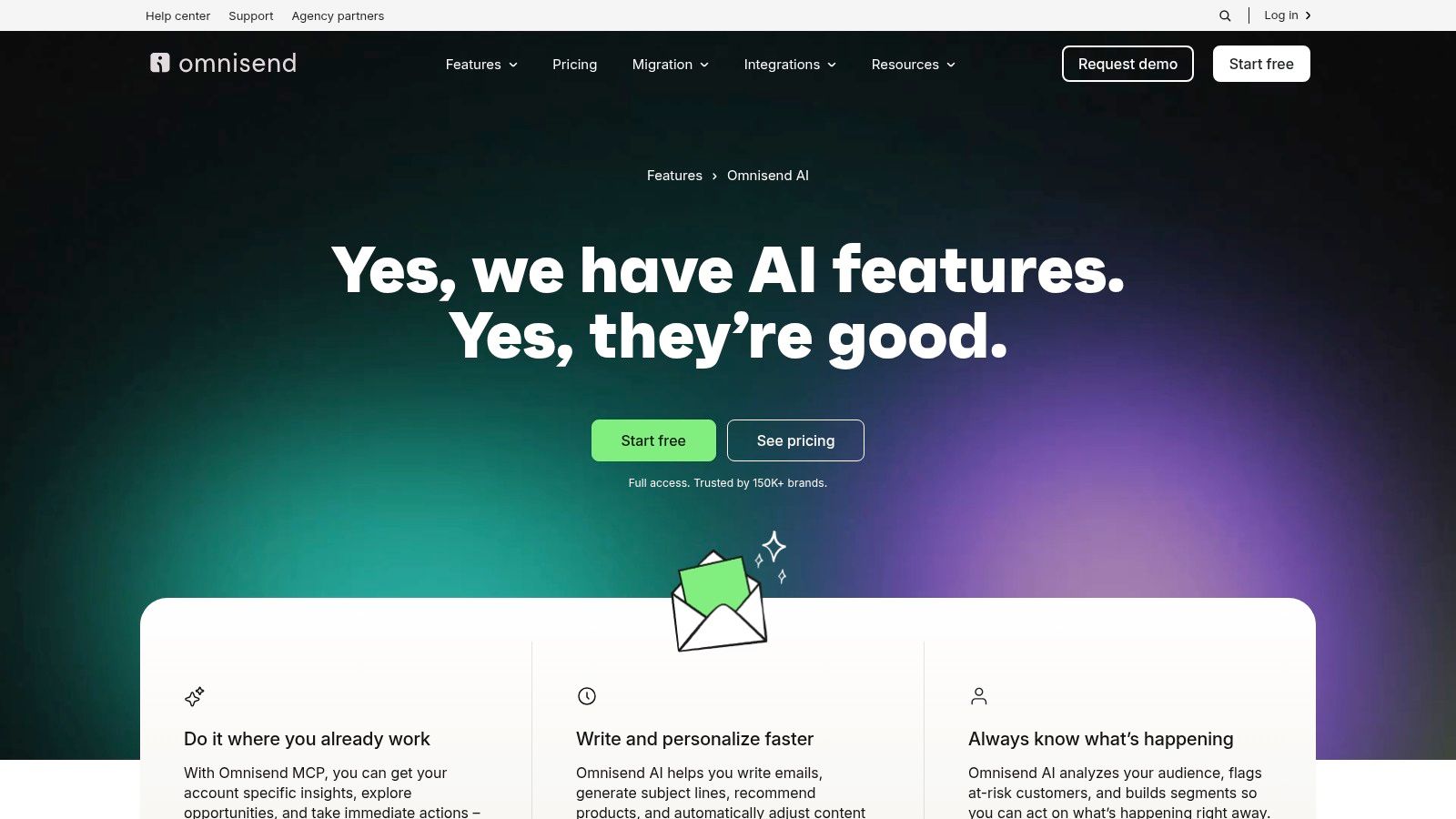
Omnisend is attractive when speed and simplicity matter more than platform depth. Its AI tools sit directly in the email editor, and the product positions them for quick copy generation, forms assistance, and campaign optimization in one workflow (Omnisend AI). That makes it a sensible option for smaller teams that want to ship campaigns without learning a dense system.
Small teams get the most from it
Omnisend's biggest advantage is that it lowers the friction between idea and send. You can draft copy, adjust the campaign, and move on without juggling a separate writer, designer, and automation tool.
That makes it useful for podcast teams that run small promotional campaigns around launches, live shows, or recurring announcements. It is less compelling for highly customized B2B outreach, because the tool is designed around campaign speed, not deep one-to-one personalization.
Omnisend is strongest when the email has one clear purpose and a fairly repeatable structure.
That's why it can work well for newsletter-style communication, especially when the message needs to be produced regularly and edited lightly. If you're booking guests or sponsors, though, you'll usually want a tool that handles research and personalization more aggressively.
5. lemlist AI and Free AI Cold Email Generator
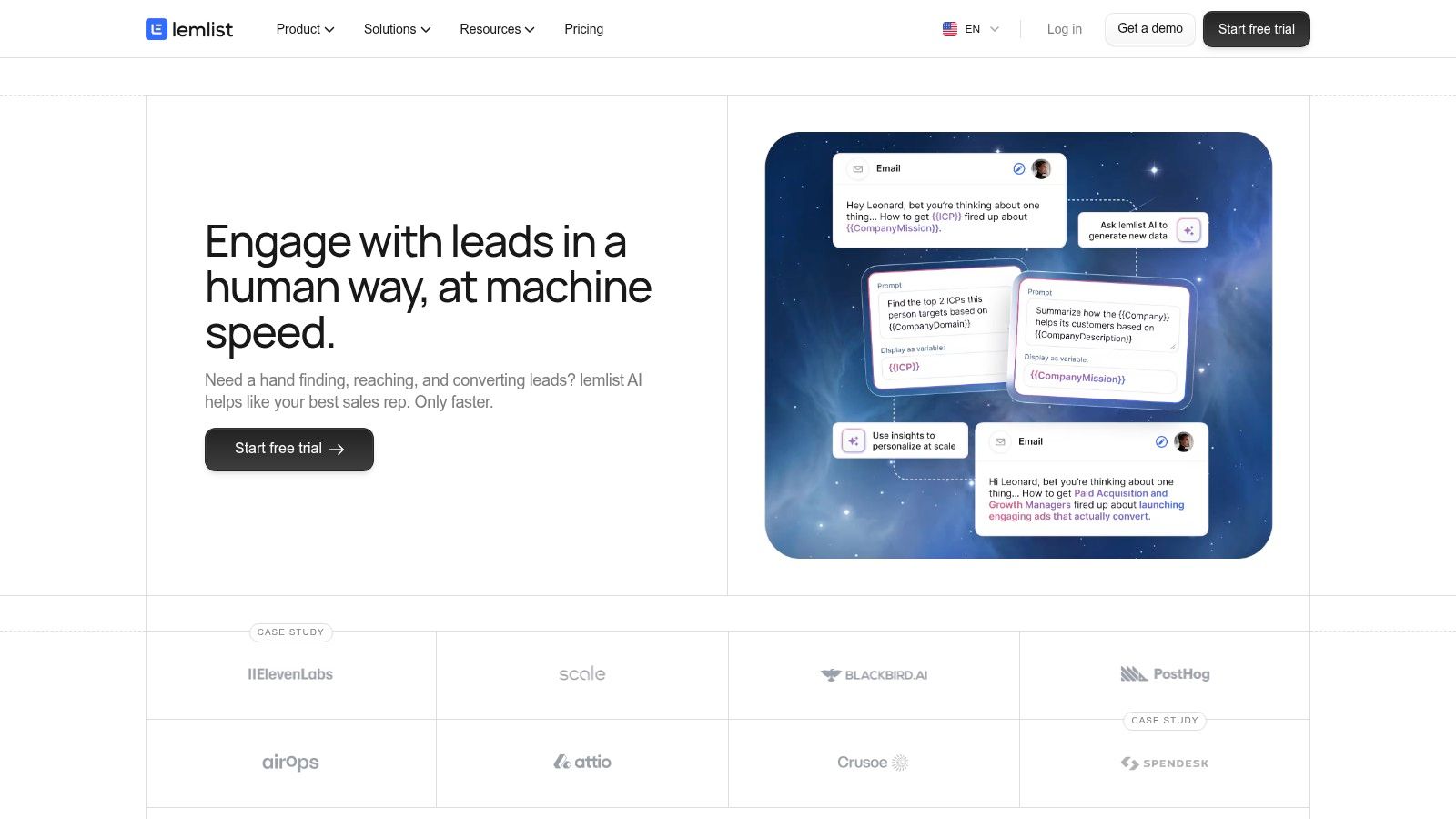
lemlist is built for outbound, which makes it a stronger fit for podcast guest booking and sponsor pitching than most general email writers. Its AI product page focuses on sequence generation, personalization, and multi-channel outreach, and it also includes a free AI cold email generator for quick starts (lemlist AI). That combination points to a workflow where the email is one part of a broader prospecting system.
Strongest for guest and sponsor outreach
lemlist is the closest thing on this list to a purpose-built cold outreach engine. If your job is to pitch a guest who has never heard of the show, or a sponsor who needs a short, relevant hook, sequence generation matters more than a pretty template.
The tool also benefits from structured inputs. It does better when you already know the target, the angle, and the reason for the outreach. That's exactly why podcast-specific research tools matter. Podcast pitch generation helps fill the context gap before the email is drafted.
- Best for: guest outreach, sponsor prospecting, and multi-step follow-up.
- Best use pattern: feed it specific show, host, or sponsor context.
- Main caution: don't rely on the generator to invent relevance for you.
For podcast professionals, that's the advantage. lemlist doesn't just write a note, it supports the outreach job itself.
6. Reply.io Jason AI Writing Assistant
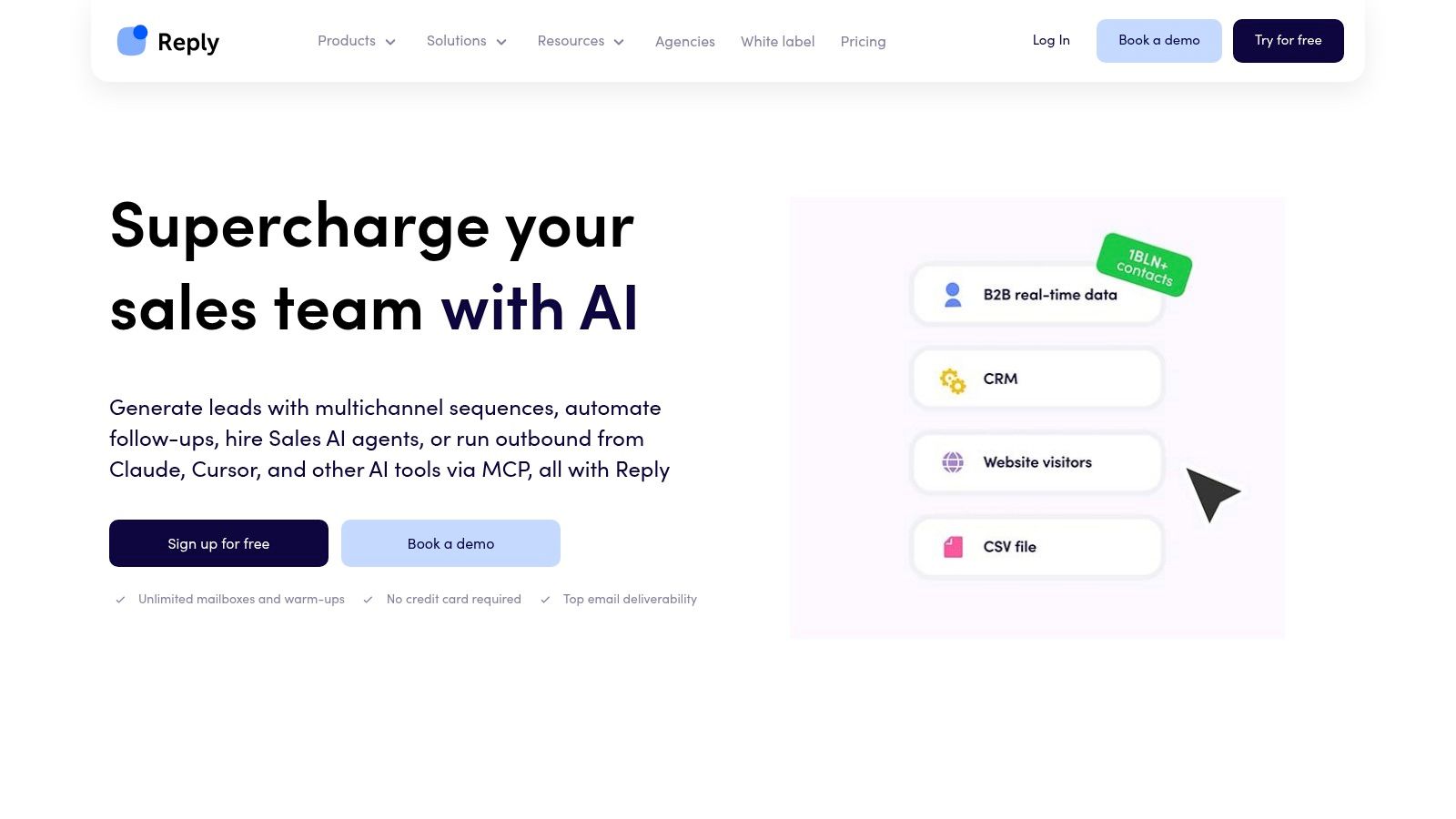
Reply.io is more than a writing assistant, and that's what makes it useful for coordinated outreach. Jason drafts sequences, rewrites steps for tone or length, and can help with replies in the inbox as part of a broader sales engagement workflow (Reply.io). If your podcast team runs structured outreach across guests, PR contacts, or sponsor leads, that workflow depth matters.
Better for sequences than single drafts
Reply.io is useful when the email is just one step in a planned cadence. That makes it a good fit for outreach where the first message might be a pitch, the second a reminder, and the third a low-friction follow-up.
The platform's value is not just copy generation. It's the surrounding sales workflow, including scheduling and other engagement features, which means it behaves more like an operating system for outbound than a standalone writer. That's helpful if your team wants consistency and inbox-level control.
For podcast use, it's a stronger fit for sponsor and guest follow-ups than for content marketing blasts. If you care about response handling, sequence logic, and writing refinements in one place, Reply.io belongs near the top of the shortlist.
7. Apollo.io AI Writing Assistant
Apollo combines data and writing in a way that matters for targeted outreach. Its AI assistant sits alongside a B2B database, sequencing, tracking, and analytics, so you can research a prospect and draft the email in the same place (Apollo.io). That makes it especially relevant for teams reaching out by role, company, or industry.
Good when prospecting and writing happen together
Apollo's advantage is context switching reduction. If you already use B2B lists to identify guest candidates, sponsors, or partner contacts, the writing assistant can turn that research into a draft without bouncing between too many tabs.
That said, Apollo brings its own complexity. Credit-based research adds another layer to manage, and the product is mostly built around B2B prospecting. If you already have a clean list of people to contact, Apollo may be more system than necessary. If you need both target discovery and outbound writing, it becomes much more compelling.
For podcast professionals, the key question is whether you want the tool to help find prospects, or just help write to them. Apollo makes sense when the answer is both.
8. Lavender
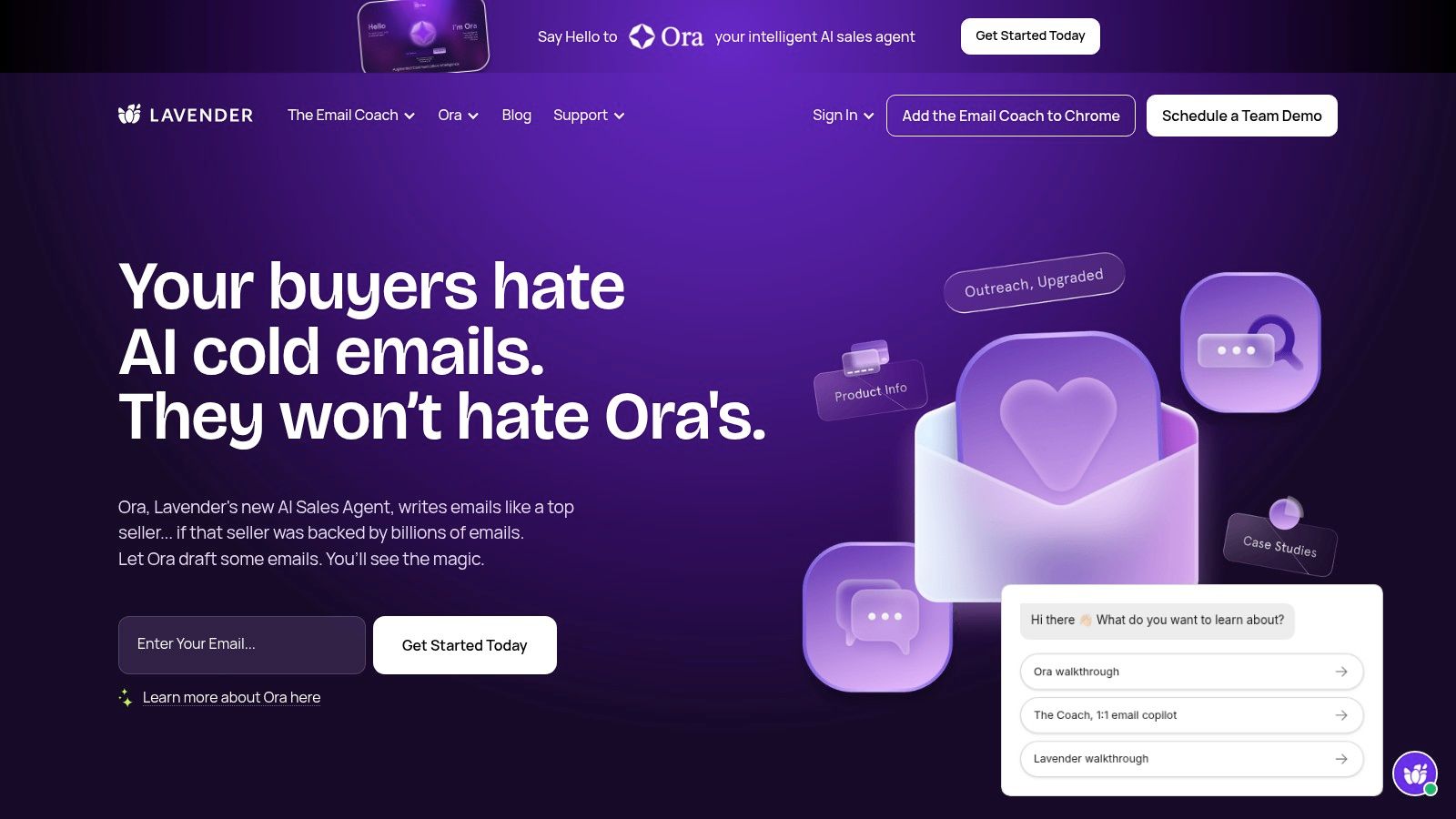
Lavender is not a sending platform first, and that's exactly why some teams like it. It works as an AI email coach and writer, scoring drafts and suggesting improvements for personalization, brevity, and clarity inside Gmail, Outlook, HubSpot, Apollo, and other tools (Lavender). That makes it a natural fit for people who send a lot of one-to-one outreach and want the writing quality to improve without moving their entire workflow.
A coach, not a mailbox
Lavender is strongest when you already have a sending system and just need better drafts. That matters for podcast hosts, producers, or PR teams sending individualized guest pitches from an existing inbox or sales platform.
The tool is especially useful when brevity and tone matter. Cold outreach often fails because it sounds generic or too long, and Lavender's coaching model is designed to catch those problems before you hit send. It also fits neatly beside other tools rather than replacing them.
If the team already has a CRM or inbox workflow, Lavender can raise draft quality without forcing a platform migration.
That separation is important. Lavender improves the writing, but it doesn't own the campaign. For podcast outreach, that can be exactly the right division of labor.
9. Jasper
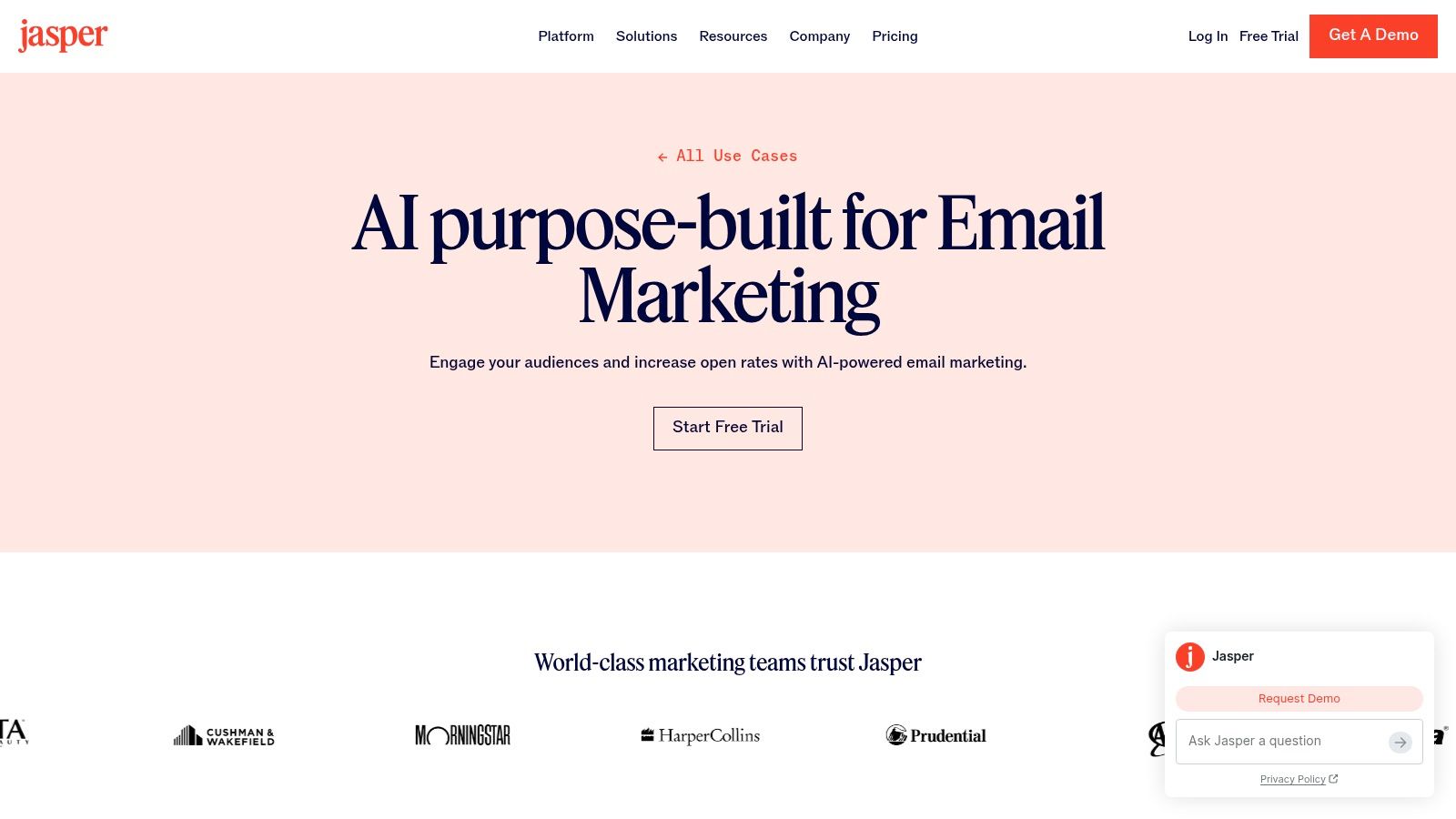
Jasper is a better fit for brand-led teams than for raw outbound volume. Its email marketing use case centers on templates, tone controls, brand voice memory, and an Email Sequence Agent for multi-step journeys (Jasper email marketing). That makes it appealing when the copy needs to stay on-brand across multiple messages.
Best for brand governance and planning
Jasper is useful when the writing team cares about consistency more than speed alone. For a podcast brand with a clear editorial voice, that can be valuable for pre-interview prep series, sponsor nurture emails, or a launch campaign that needs to sound the same across the whole sequence.
The tradeoff is that Jasper is generalist software. It still needs good prompts and clear process, and it doesn't replace a sending system on its own. If you want to move from idea to draft while protecting brand voice, Jasper works well. If you need a single tool to research, draft, send, and measure, it's not the whole answer.
Podcast pitch follow-up guidance pairs well with Jasper because follow-up language often benefits from voice discipline and consistency across sends.
10. Copy.ai
Copy.ai is strongest as a drafting and workflow layer, not as a sending system. Its templates and workflow automations are built for outreach, follow-ups, and announcements, which makes it useful when you want to turn repeated email jobs into reusable structure (Copy.ai). That works well for guest invites, episode promos, and post-recording thank-yous that later move into another platform.
Good for idea to draft speed
Copy.ai gives you a fast path from concept to usable draft. That makes it valuable when the team is trying to produce several email variations without building each one from zero.
For podcast teams, it is especially handy if the writing needs to cover different scenarios, like booking asks, promotional messages, or thank-you notes. The limitation is straightforward. You still need an ESP or CRM to send and track the campaign, and the output still benefits from editorial review before it leaves your inbox.
That means Copy.ai is best treated as a drafting engine. It can produce the language, but it doesn't replace the workflow around the language.
Top 10 AI Email Template Generators, Quick Comparison
| Tool | Core Capabilities ✨ | Best For 👥 | Ease & Quality ★ | Value / Price 💰 | Standout 🏆 |
|---|---|---|---|---|---|
| HubSpot AI Email Writer | AI drafts, subject lines, A/B test, CRM‑contextual copies ✨ | Teams already in HubSpot (marketing + sales) 👥 | ★★★★☆, context‑aware | 💰 Scales with seats/contacts; enterprise cost | 🏆 Native CRM + send/report workflow |
| Mailchimp Email Content Generator | “Write with AI” in builder, templates, deliverability helpers ✨ | Small teams/newsletters & episode promos 👥 | ★★★☆☆, fast drafts, needs voice edits | 💰 Free tier; paid for higher sends | 🏆 Strong deliverability & templates |
| Klaviyo AI for Email Marketing | AI copy + send‑time optimization + deep segmentation ✨ | Shows tied to ecommerce/merch/events 👥 | ★★★★☆, personalized timing | 💰 Contact‑based; can be pricey at scale | 🏆 Advanced segmentation & ecommerce flows |
| Omnisend AI | AI copy in editor, SMS + forms assistants, quick setup ✨ | Small teams wanting simple campaigns & SMS 👥 | ★★★☆☆, quick, pragmatic | 💰 Competitive for growing lists | 🏆 Simple email+SMS campaign stack |
| lemlist AI (plus Free AI Cold Email Generator) | AI cold sequences, personalization variables, multi‑channel ✨ | Outbound pitching (guests/sponsors) and solo founders 👥 | ★★★★☆, outbound‑focused | 💰 Credits for advanced AI; free generator available | 🏆 Built specifically for cold outreach |
| Reply.io, Jason AI Writing Assistant | Generate/refine sequences, tone adjust, inbox reply drafts ✨ | Multi‑touch outreach teams, PR & booking ops 👥 | ★★★★☆, mature outreach features | 💰 Team pricing; best at scale | 🏆 Full outreach workflow (scheduling, dialer, inbox) |
| Apollo.io, AI Writing Assistant | B2B data + AI drafts, research credits for context ✨ | Targeted B2B guest prospecting (roles/companies) 👥 | ★★★☆☆, data‑driven drafts | 💰 Credit model; variable cost | 🏆 Integrated large prospect database |
| Lavender, AI Sales Email Coach and Writer | Real‑time scoring, personalization coach, inbox integrations ✨ | One‑to‑one podcast pitches via Gmail/Outlook 👥 | ★★★★☆, improves reply potential | 💰 Add‑on pricing; team tiers cost more | 🏆 Real‑time quality scoring & coaching |
| Jasper, AI for Email Marketing (Email Sequence Agent) | Brand voice memory, templates, sequence agent ✨ | Teams needing brand governance & multi‑step journeys 👥 | ★★★☆☆, flexible but prompt‑driven | 💰 Subscription; not an ESP (export needed) | 🏆 Strong brand guardrails & sequence planning |
| Copy.ai, AI Email Templates and Workflows | Template library, workflow automations, fast drafts ✨ | Creators & small teams needing quick exportable drafts 👥 | ★★★☆☆, rapid idea‑to‑draft | 💰 Affordable plans; export to ESP required | 🏆 Large template/workflow library |
Choose the Generator That Matches the Job
The right email template generator AI depends on the job, not the hype. If your team already manages contacts and reporting in a CRM, a CRM-native tool like HubSpot is easier to govern. If your work is newsletter-driven or promotion-heavy, campaign builders like Mailchimp, Klaviyo, or Omnisend are a better fit because the writing, list management, and sending live closer together.
If the core task is guest outreach or sponsor prospecting, choose an outbound platform. lemlist, Reply.io, and Apollo are built for sequencing, context, and follow-up, which matters more than generic copy generation. If you mainly need to improve drafts before they go out, an inbox coach like Lavender is more useful than a full send stack. If you're building brand-safe sequences or planning future campaigns, Jasper or Copy.ai gives you more control over voice and structure, then lets you export the result to the system that sends.
For podcast outreach, don't confuse a copy generator with a complete workflow. A strong pitch still needs targeted show research, a clear reason for the guest fit, and disciplined follow-up. That's where Let's Make A Podcast can help, because it supports discovery, show-fit filtering, one-sheet creation, and scheduling alongside the outreach process.
Use this checklist before you ship anything. Define the recipient and objective. Give the tool concrete context, not vague instructions. Verify every personalization detail. Edit for voice and accuracy. Test the call to action. Then track replies or conversions in the system that sends the email, not in the draft tool.
If you want better podcast booking results, pair the right generator with a workflow built for outreach. Let's Make A Podcast gives hosts, guests, and PR teams a practical way to research shows, shape a pitch, and move from discovery to scheduled conversation without guessing which inbox to use next.