7 Best Exercise Podcast Picks for 2026
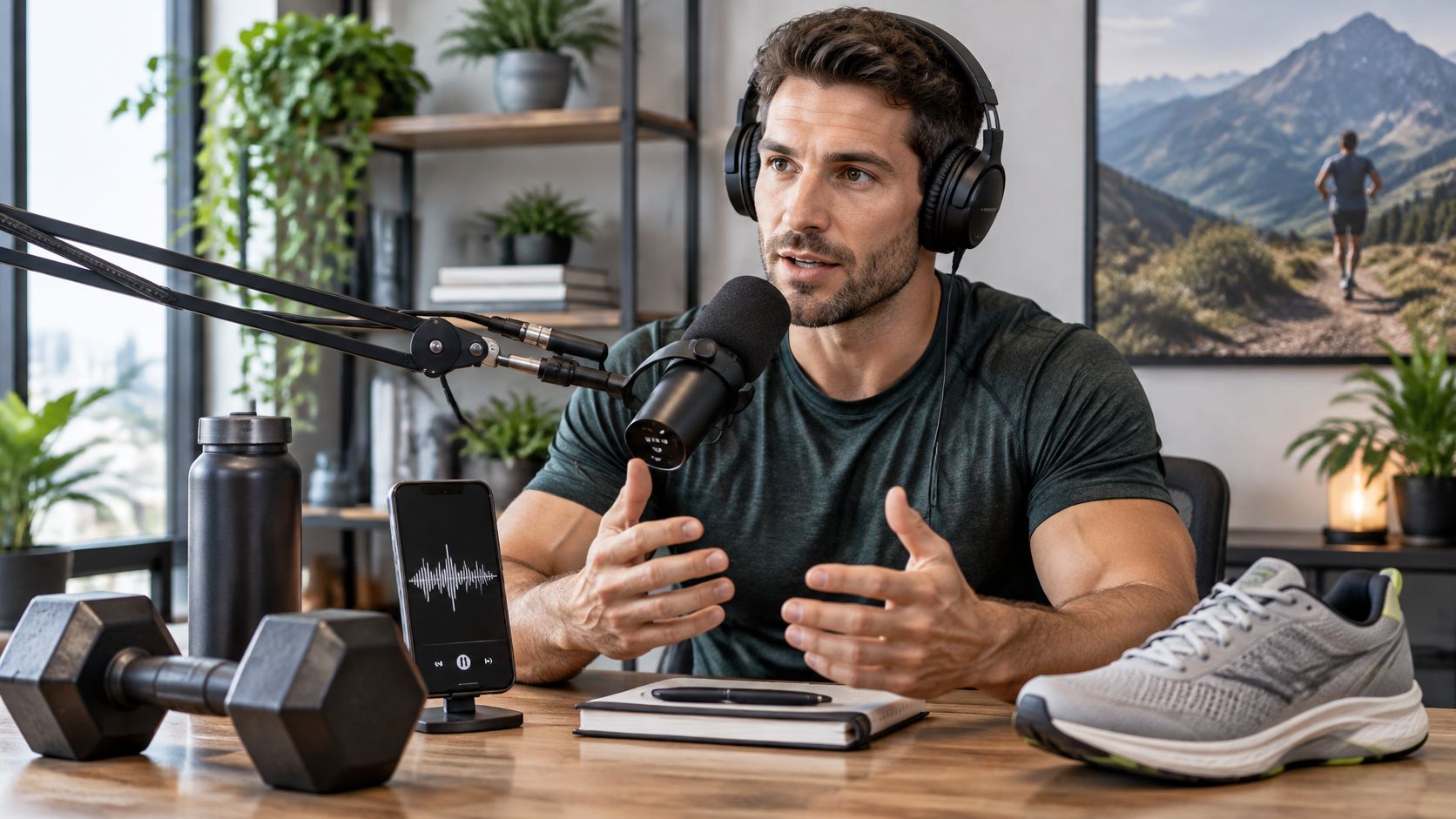
You're on your Tuesday commute, replaying yesterday's lifting session. Did that final set need to reach failure, or did you just make yourself more tired? Meanwhile, a runner listening on the same train wants to understand why their coach keeps recommending strength work when the next race will be decided on the road.
Those listeners don't need the same show. The best exercise podcast depends on the question you're asking, whether that's interpreting lifting research, building muscle, improving running, or making fitness fit into everyday life.
The audience isn't listening just for entertainment. In Pew Research Center's research on podcast engagement, 36% of podcast listeners said they'd tried a lifestyle change because of something they heard, including a workout routine, diet, or journaling practice.
That makes choosing useful advice worth the effort. These picks are organized by listening goal rather than popularity, with a clear distinction between learning about exercise and following an audio workout. Trainers and fitness creators will also find a practical guest-pitch angle for each show, without assuming every feed accepts unsolicited guests.
Table of Contents
- 1. Barbell Medicine Podcast
- 2. The Strength Log Podcast
- 3. Iron Culture
- 4. The Running Explained Podcast
- 5. Strength Running Podcast
- 6. TRAINED
- 7. Mind Pump Raw Fitness Truth
- How the seven exercise podcasts compare on focus, access, and best listener
- Choose One Show to Start, Then Pitch Your Way Onto the Mic
1. Barbell Medicine Podcast
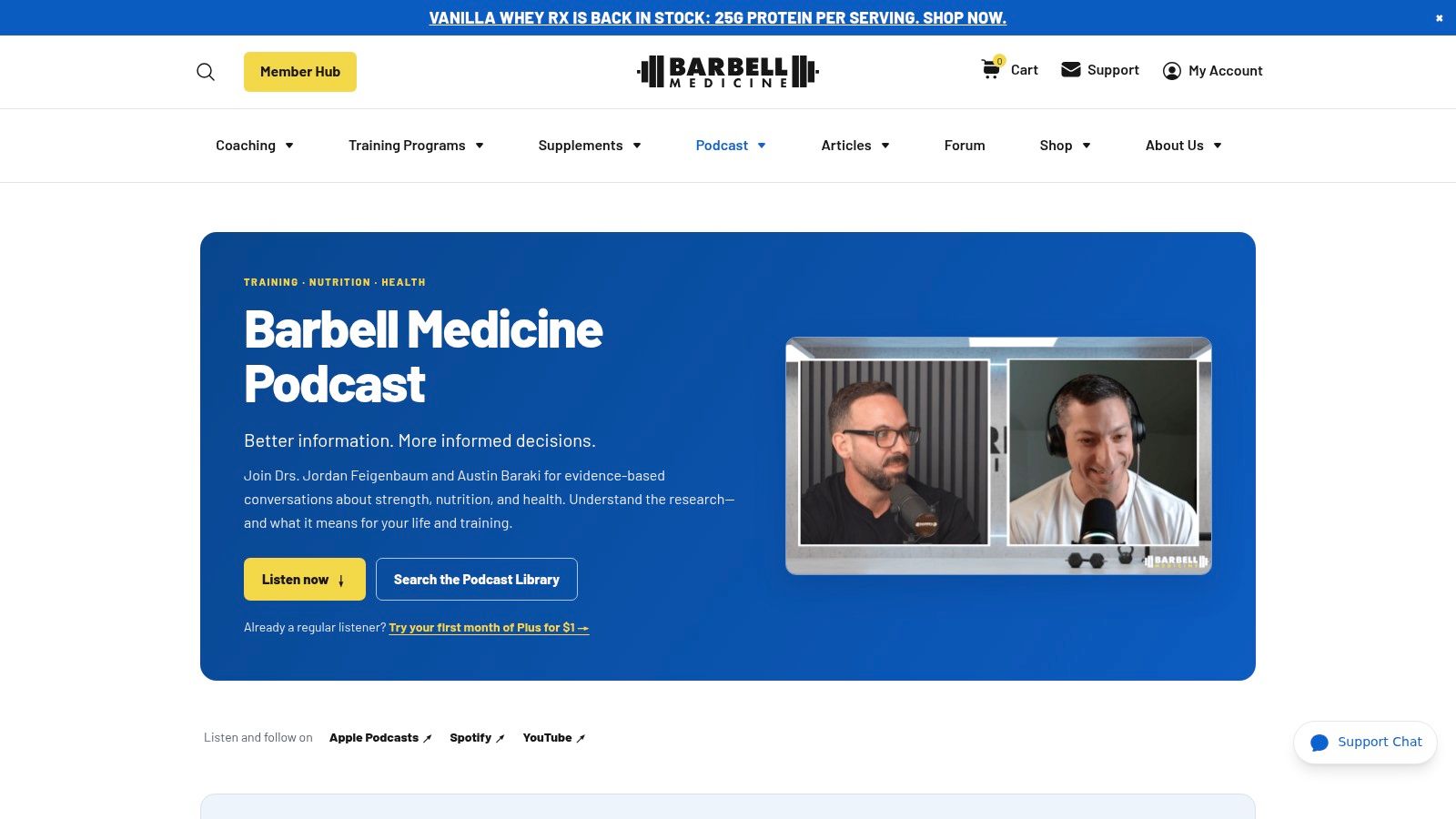
Best for lifters who want to understand the evidence behind a training decision. Barbell Medicine suits questions that don't have a tidy answer, particularly where strength training overlaps with health, nutrition, cardio, or rehabilitation.
Hosted by physicians and strength coaches, the Barbell Medicine Podcast combines research discussion with practical training considerations. Its searchable library and detailed show notes make it useful when you want to investigate a topic beyond what you remember from the audio.
Use it to examine a decision, not collect rules
For a question such as training to failure, listen for how the discussion distinguishes research findings from coaching judgment. The useful outcome isn't another absolute rule. It's a better understanding of what might change your decision, including your training priorities and circumstances.
- What works: Research references and show notes give you somewhere to follow up rather than relying on a memorable sound bite.
- The trade-off: Detailed episodes demand attention. This is a better match for a commute or walk than a session where you need frequent exercise cues.
- Access: Public episodes are free. Barbell Medicine Plus offers ad-free listening, early access, and bonus material.
For prospective guests: Start at the official podcast page and verify whether it identifies a current submission or contact route. Pitch a focused question within your qualifications, not a broad promise to discuss fitness. If you're also researching adjacent performance shows, the Perform with Dr. Andy Galpin guest page is a separate prospect, not a Barbell Medicine booking route.
2. The Strength Log Podcast
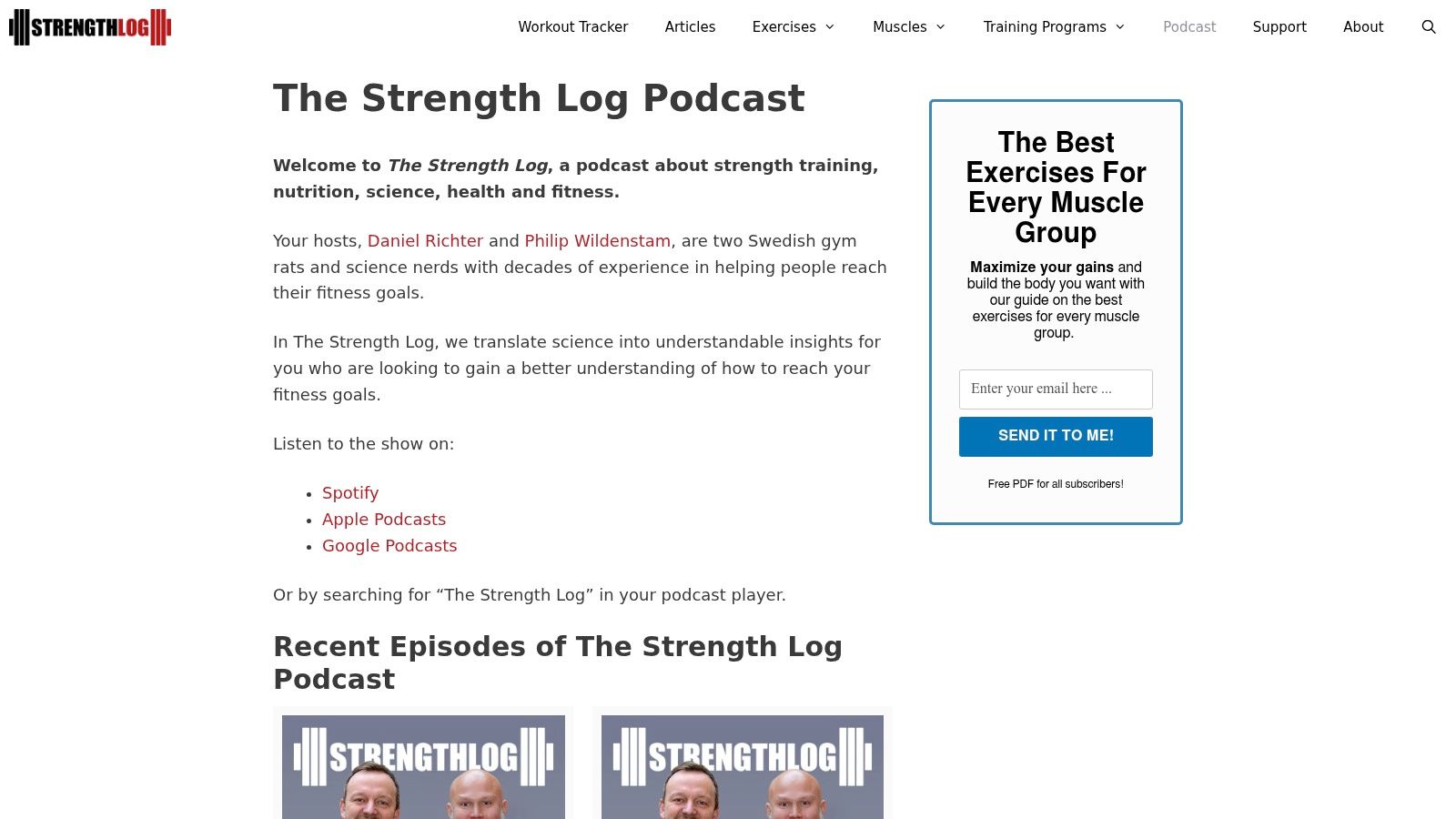
Your program has become a collection of borrowed ideas: an exercise from a video, a split from a friend, and a recovery rule you can't remember hearing. The Strength Log Podcast is a good fit when you want to make everyday lifting decisions more coherent.
The official Strength Log podcast page offers free episodes covering strength training, fitness science, and nutrition. Discussions connect research with practical questions about training frequency, muscle growth, sleep, exercise selection, and workout organization.
Bring a programming question
Compared with Barbell Medicine's broader health-and-training scope, Strength Log is a more direct match for listeners whose main concern is what happens in the gym. Listener questions and recurring programming discussions give the research a concrete application.
Try listening with an unresolved decision in mind: whether your schedule suits your current routine, why you've chosen particular exercises, or which part of your program you're trying to improve. That approach is more useful than changing your entire routine whenever you hear an interesting idea.
Practical rule: Treat an episode as input for a training decision, not an instruction to rebuild your program.
The limitation is its specialization. It's not the first choice for running strategy, broad wellness interviews, or guided exercise, and it won't coach you through a workout in real time.
For prospective guests: Check the show's own page for a stated contact route before approaching the team. A focused explanation of a common programming problem would fit better than a general personal-training biography. Reference a recent discussion, explain what you can add, and distinguish your coaching experience from any research credentials.
3. Iron Culture
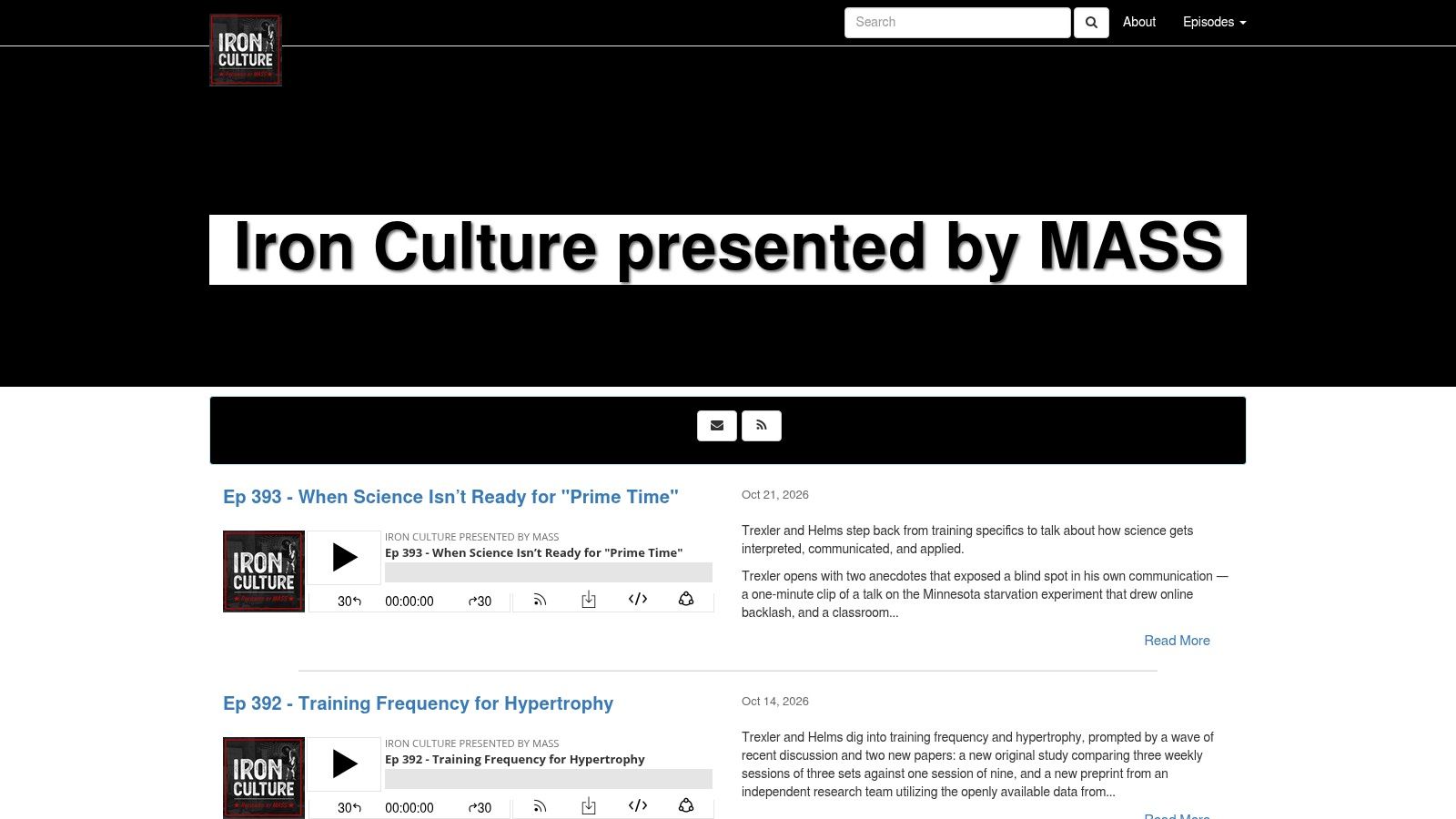
Choose Iron Culture when muscle building is the main subject, not a side topic. Its bodybuilding and strength-sport focus makes it a stronger match for listeners who enjoy examining hypertrophy questions in depth.
Hosted by Eric Helms and Eric Trexler, Iron Culture mixes exercise science, coaching perspectives, expert interviews, and conversations about lifting culture. Public episodes are free, while MASS Research Review, which presents the show, is a separate paid service.
Depth comes with some detours
The conversational format gives the hosts room to explain disagreements and explore the context behind training advice. That's useful if a short answer leaves you wondering which assumptions the speaker has made.
It also means the show isn't always a direct route to a programming takeaway. Some conversations explore strength-sport history or culture rather than telling you how to organize your next training block.
- Choose it for: Bodybuilding, hypertrophy, nutrition, and detailed strength-sport discussion.
- Choose something else for: General beginner movement advice or an episode that functions as a follow-along workout.
- Listen deliberately: Select an episode by subject instead of expecting every conversation to solve the same training problem.
The distinction from Strength Log is largely one of listening intent. Pick Strength Log for an approachable programming discussion; pick Iron Culture when you want to spend more time inside the muscle-building conversation.
For prospective guests: Review the official episode page and any contact information it provides. Pitch a narrowly defined contribution, such as a research interpretation or coaching problem within your expertise. Don't assume that an expert-interview format means unsolicited pitches are currently open.
4. The Running Explained Podcast
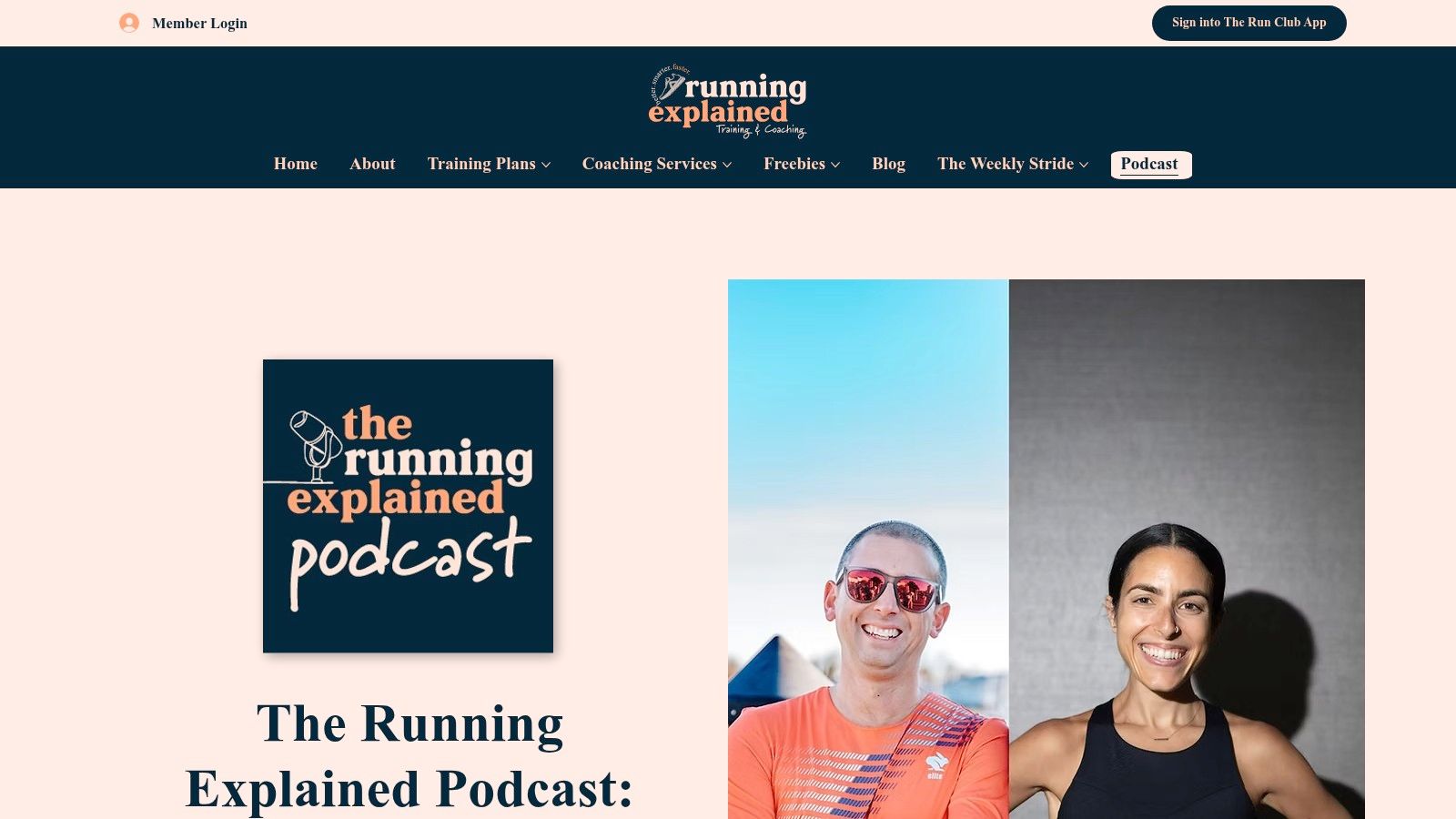
Running advice can become confusing when every recommendation arrives without context. You're told to fuel better, recover properly, and adjust your training, but you still need to understand what those instructions mean for your own routine.
The Running Explained Podcast is the clearest match here for interpreting running guidance. The official podcast page describes coach-led discussions from Amanda Katz and Nick Klastava, with expert guests addressing training, fueling, recovery, and the research behind common advice.
Best for understanding the reason behind the run
Its running specialization helps you narrow your search without sorting through unrelated lifting conversations. Free episodes are available through Spotify, Apple Podcasts, and YouTube, while coaching and training resources are offered separately.
The practical advantage is the combination of explanation and coaching context. Listen for how the speakers frame a recommendation, who it's intended for, and what problem it addresses before deciding whether it belongs in your own training.
A podcast you enjoy during a run isn't necessarily a podcast designed to guide that run.
That's the main limitation: this is educational listening, not a substitute for a guided session or an individualized plan. It's also less suitable if your primary interest is muscle building.
For prospective guests: Verify the contact or submission route on the show's own page. Lead with a specific running question and explain your relevant expertise. If your work also involves body composition, use the guide to weight-loss podcasts to research separate prospects rather than forcing a weight-loss pitch into a running conversation.
5. Strength Running Podcast
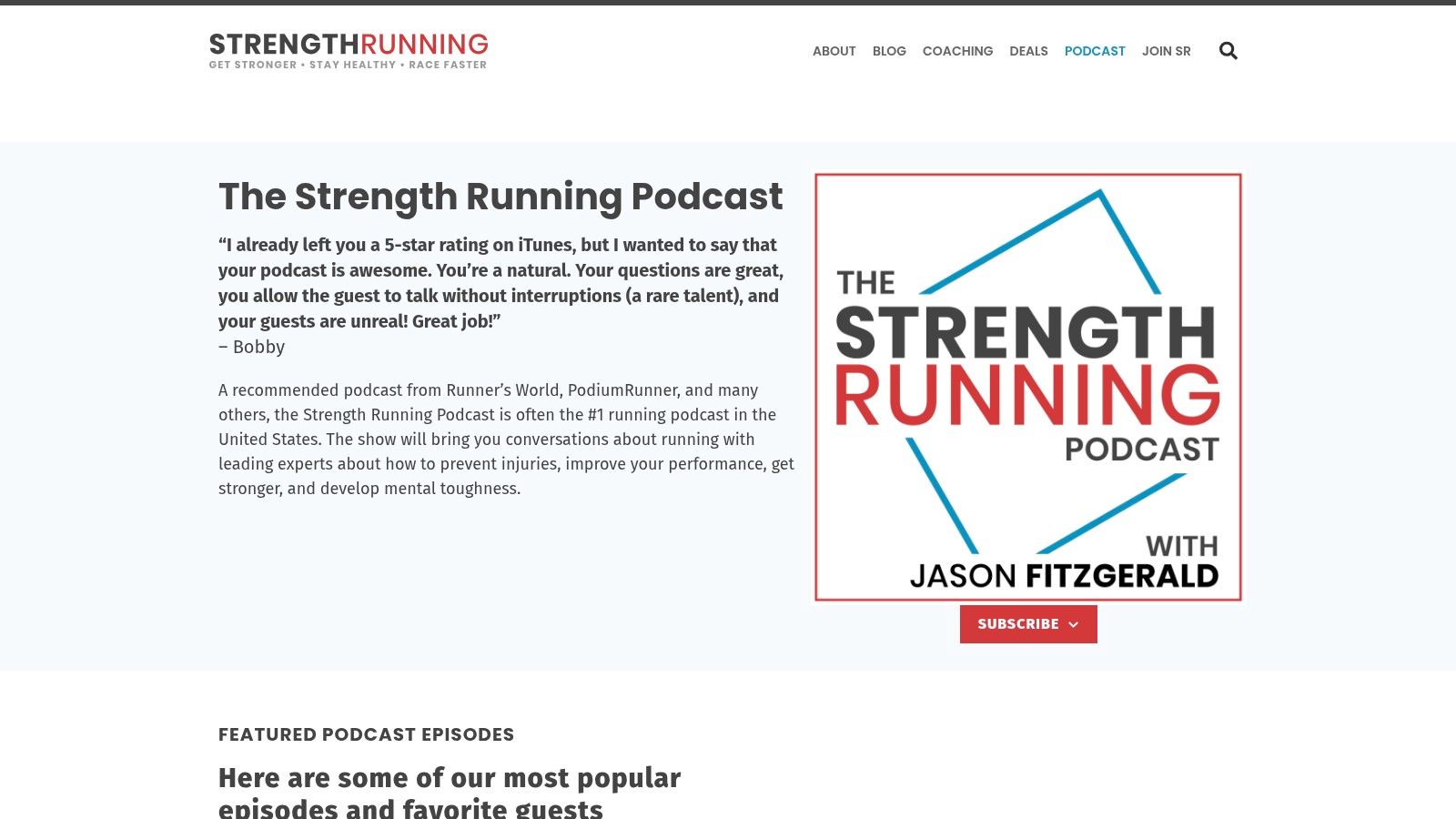
Strength Running is the pick for runners who want to think beyond pace and mileage. It's particularly relevant to the runner wondering how strength work, recovery, and mental resilience belong alongside running sessions.
The Strength Running Podcast features coaches and specialists discussing performance, training strategy, strength, injury management, and recovery. Its free episode archive lets you look for a specific training subject rather than relying only on the latest release.
Compare it with Running Explained by question
Running Explained is a useful starting point when you're trying to interpret running advice. Strength Running is especially appealing when your question concerns the supporting work around running and how different training priorities fit together.
Neither description should be treated as an exclusive boundary. Choose the episode whose subject matches your current problem rather than subscribing to a show solely because its title sounds right.
- Main advantage: Interviews bring different coaching and specialist perspectives into the running discussion.
- Main limitation: The focus remains running, so general fitness listeners may find fewer relevant episodes.
- Practical caution: An interview about injury management can help you ask better questions, but it can't assess your symptoms or prescribe your return to training.
Release frequency may vary, so use the archive as well as the current feed. Don't equate an older episode with an irrelevant one, but check its subject and context before applying the advice.
For prospective guests: Begin with the official show page and follow any published contact instructions. A trainer should pitch a runner-specific problem they're qualified to discuss, not just offer a conversation about strength. Show how the proposed topic adds to a recent episode without repeating it.
6. TRAINED
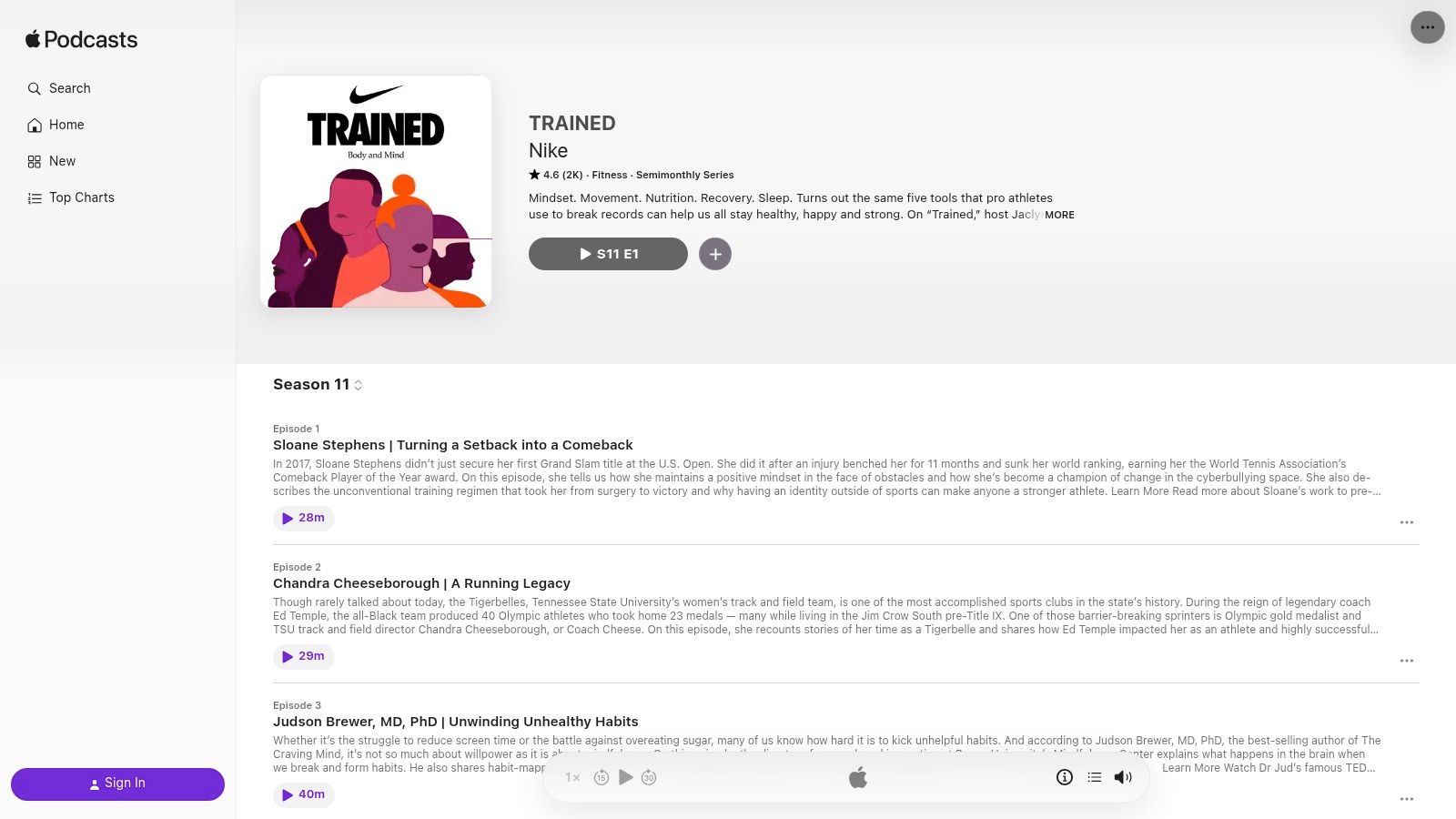
Sometimes the obstacle isn't exercise selection. You understand the workout, but you want a broader conversation about mindset, recovery, sleep, and the place training occupies in your life.
Nike's TRAINED podcast explores those subjects through interviews with athletes and specialists. It's the best fit in this selection for listeners who want performance and wellness perspectives rather than detailed lifting programming.
Use the back catalogue selectively
Publicly available episodes cover movement alongside nutrition, mindset, recovery, and sleep. The back catalogue makes topic-led listening practical, particularly when you're interested in something beyond the mechanics of your next session.
The trade-off is specificity. An accessible interview can give you a useful way to think about training without explaining exactly which exercises to choose or how to progress them. Some episodes are more inspirational than instructional, and the release cadence may be less consistent than that of regularly publishing training shows.
Listening filter: Separate an athlete's personal experience from a recommendation you're qualified to apply to yourself or your clients.
That distinction matters when a compelling story makes a practice sound universally appropriate. Take away a question worth exploring rather than assuming another person's routine should become yours.
For prospective guests: Start with the linked show listing and verify the publisher information and any official contact route it provides. Don't mistake a platform review field for a submission channel. If no guest route is stated, don't assume bookings are open; develop a pitch only after confirming whom to contact and whether the show is currently commissioning interviews.
7. Mind Pump Raw Fitness Truth
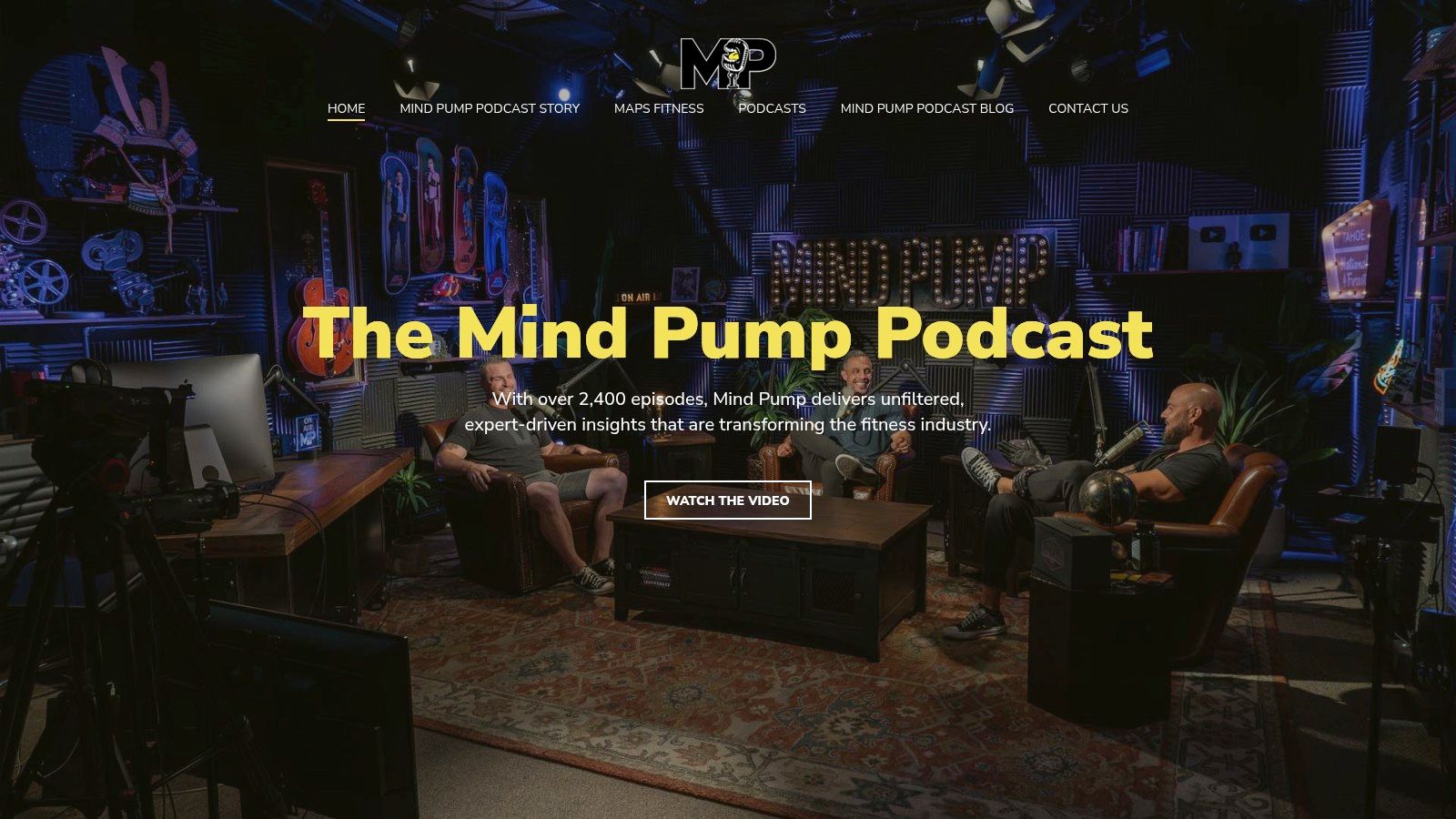
Prefer a gym conversation to a research lecture? Mind Pump is the informal, broad-fitness option, covering resistance training, nutrition, workout habits, and common fitness-industry claims.
The Mind Pump podcast website provides access to a large archive and related training resources. The main podcast is free, while training products and programs are sold separately.
Personality is part of the appeal and the trade-off
The multi-host format may suit listeners who find a conversational exchange easier to stay with than a tightly structured explanation. Frequent episodes also provide plenty of material for people who like recurring listening.
That format requires some selectivity. Episodes can be lengthy, conversations can wander, and depth varies across the range of subjects covered. If you need a precise answer, check the episode description before committing your listening time.
- Use it for: Familiar gym questions, training habits, and informal fitness discussion.
- Use caution with: Broad health claims that you might otherwise mistake for advice fitted to your medical history.
- Keep separate: Enjoying the hosts' discussion and deciding whether a related paid program suits your needs.
Compared with TRAINED, Mind Pump stays closer to everyday gym conversation. Compared with Barbell Medicine or Iron Culture, its broader informal format may appeal more than a sustained research discussion.
For prospective guests: Verify the current contact instructions on the official website before pitching. Connect your expertise to a recent, relevant discussion and offer a clear contribution rather than a promotional appearance. The health and fitness podcast guide can help you research alternative shows if the topic or booking route isn't a fit.
How the seven exercise podcasts compare on focus, access, and best listener
| Item | Main Focus | Access | Best For |
|---|---|---|---|
| Barbell Medicine Podcast | Evidence-based strength, cardio, nutrition, health, and rehabilitation | Free public episodes on major podcast platforms; optional paid membership | Listeners seeking detailed, research-informed guidance |
| The Strength Log Podcast | Strength training research and practical programming | Free on the website and major podcast apps | Lifters looking for approachable answers to training questions |
| Iron Culture | Bodybuilding, muscle growth, strength training, and nutrition | Free public episodes; separate paid research service | Listeners interested in hypertrophy and strength-sport discussions |
| The Running Explained Podcast | Running training, fueling, recovery, and research | Free on Spotify, Apple Podcasts, and YouTube | Runners seeking practical, coach-led guidance |
| Strength Running Podcast | Running performance, training strategy, strength, and recovery | Free episodes and archive on the show website | Runners exploring performance and complementary strength work |
| TRAINED | Movement, mindset, nutrition, recovery, and sleep | Free through major podcast apps | Listeners who enjoy broad, interview-led fitness discussions |
| Mind Pump: Raw Fitness Truth | Resistance training, fitness habits, and nutrition | Free podcast; related training products sold separately | Listeners seeking conversational takes on everyday fitness questions |
Choose One Show to Start, Then Pitch Your Way Onto the Mic
The best exercise podcast is the one that answers your current question at the right level of detail. Choose Barbell Medicine for evidence-led training and health discussions, Strength Log for everyday lifting decisions, or Iron Culture for deeper muscle-building conversations.
For running, start with Running Explained when you need help interpreting advice and Strength Running when you're exploring performance and complementary training. Choose TRAINED for broader wellness perspectives or Mind Pump if informal gym discussion keeps you engaged.
Turn listening into a useful next step
Select an episode by subject and decide what you want from it before pressing play. Afterward, write down the practical takeaway, what remains uncertain, and whether you need individual guidance before acting. Don't confuse an articulate explanation with a personal assessment, especially when pain, injury, pregnancy, or a chronic condition affects your starting point.
For trainers and influencers, apply the same specificity to outreach. Match the show to your expertise first, then verify its current submission route. A relevant topic doesn't guarantee that a host accepts guests, and an older contact instruction may no longer reflect the booking process.
- Reference a recent episode: Explain what you could add rather than merely saying you enjoyed it.
- Propose a focused conversation: Offer a question listeners would recognize, with clear boundaries around your expertise.
- Prepare a one-sheet: Include your bio, qualifications, proposed topics, photo, and past appearances if you have them.
- Respect the stated process: Use the host's published route and follow any submission requirements.
A useful pitch makes the producer's decision easier. It explains why this conversation belongs on this show, why you're qualified to contribute, and what listeners could understand or do differently afterward.
Start by listening closely enough to identify a genuine fit. Then send an invitation to have a useful conversation, not a request for access to someone else's audience.
Let's Make A Podcast offers free guest one-sheet, pitch, and follow-up tools to help you prepare exercise-podcast outreach. Visit Let's Make A Podcast to research relevant shows, organize your expertise into a shareable profile, and draft a pitch tied to a conversation you can meaningfully contribute to.
Pitch this show as a guest
One show from this article is in our directory, each with a page on how it books guests and what to send.
More shows that book guests: Health & Fitness podcasts