7 Best Health and Fitness Podcast Picks
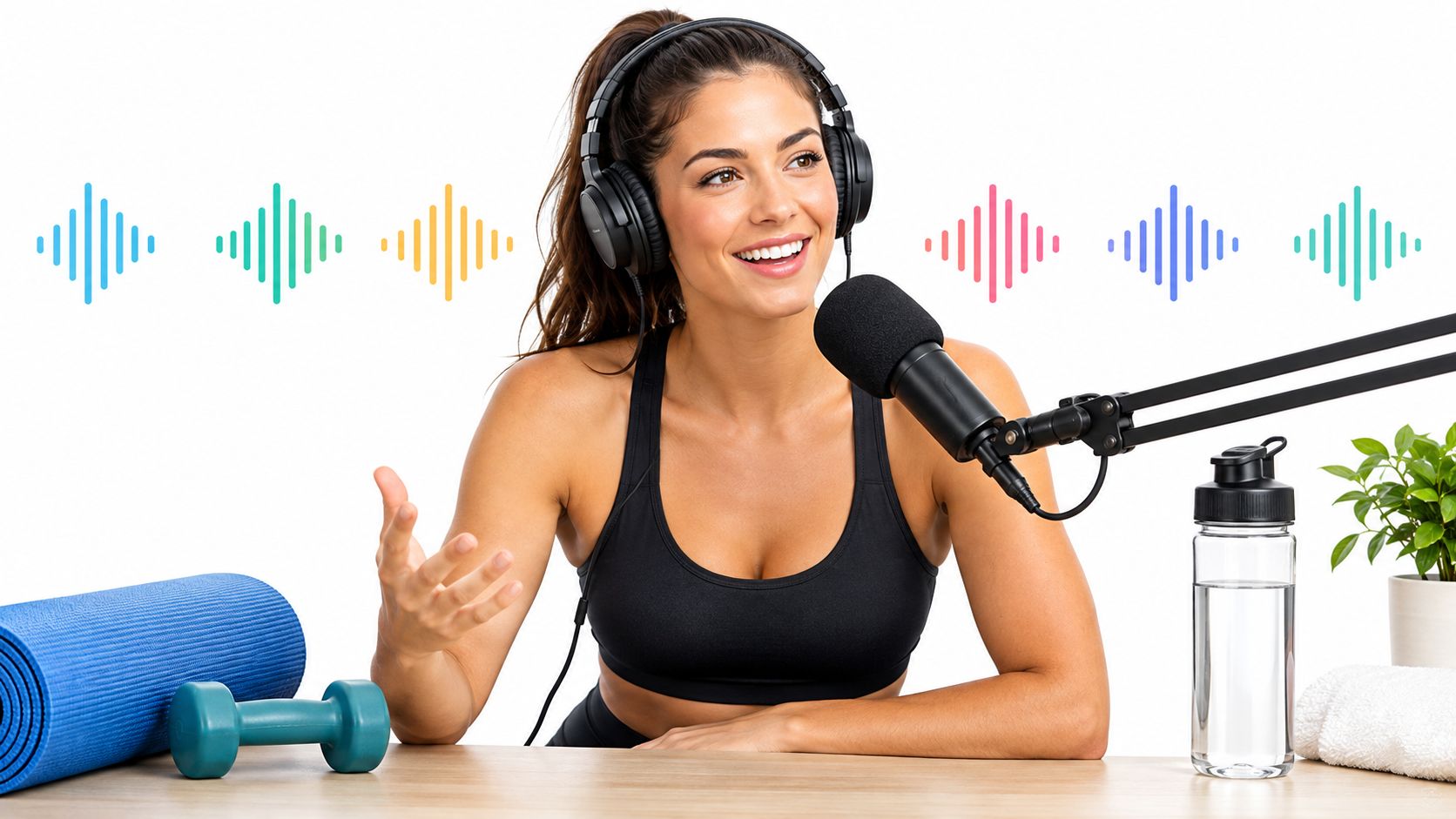
You've got a useful health topic, credible experience, and a guest pitch ready to send. Then you open a podcast archive and discover that your subject has already appeared repeatedly, the host favors a different interview style, or the show's fitness coverage is only a small part of its broader focus. A recognizable name isn't necessarily the right booking target.
There's a meaningful audience to reach. In Sounds Profitable's 2025 Podcast study, 20% of recent adult podcast consumers in the United States reported listening to Health and Fitness content, a measure of category reach among podcast consumers, not all adults (audience profile and study methodology).
For prospective guests, the useful comparison isn't which health and fitness podcast is best. It's which format lets you contribute something specific, credible, and relevant to that host's listeners. These picks emphasize audience alignment, format constraints, and practical booking hooks. Treat them as research targets rather than confirmed guest openings, and check each show's current submission route before pitching.
Table of Contents
- 1. Huberman Lab
- 2. The Rich Roll Podcast
- 3. FoundMyFitness
- 4. Mind Pump Raw Fitness Truth
- 5. The Model Health Show
- 6. Barbell Medicine Podcast
- 7. The Peter Attia Drive
- Top 7 Health & Fitness Podcasts: Comparison Guide
- Crafting Your Podcast Pitch Strategy
1. Huberman Lab
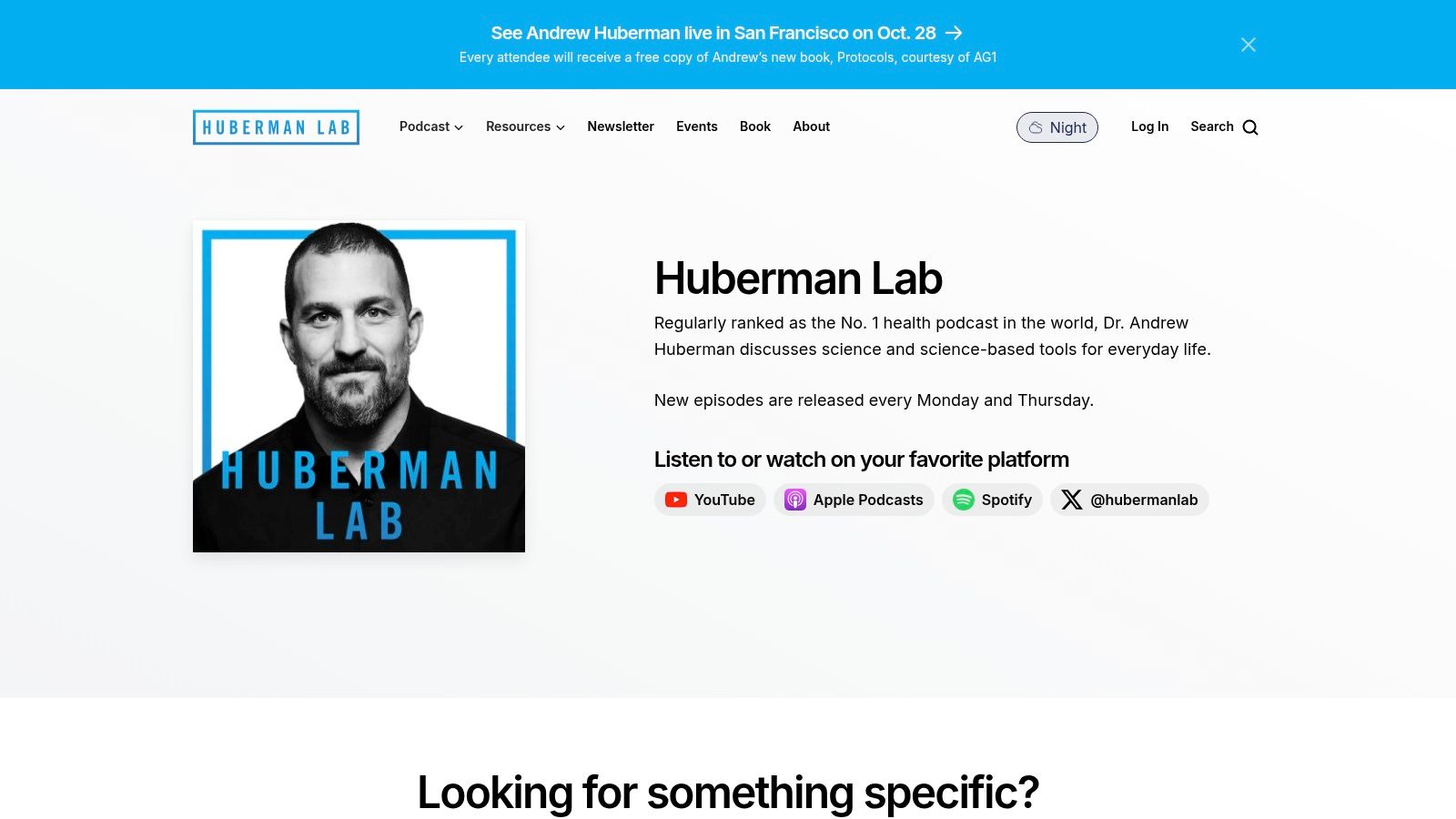
Best fit for specialists who can connect mechanisms with practical decisions. Andrew Huberman's show combines solo explainers and interviews across neuroscience, exercise, nutrition, sleep, recovery, and mental health. The Huberman Lab podcast library provides a useful starting point for researching topic overlap before proposing a conversation.
Its breadth is an advantage if your expertise crosses related disciplines. A researcher studying sleep and physical performance, for example, can propose a focused connection rather than a general discussion of healthy living. The trade-off is that fitness shares space with other subjects, so category relevance alone doesn't establish fit.
Pitch the unresolved question
A stronger pitch identifies what listeners could understand differently after your interview. Rather than offering another broad recovery conversation, propose examining how to distinguish a plausible recovery mechanism from evidence that an intervention improves meaningful outcomes.
- Lead with scope: State the population, intervention, and decision you're qualified to discuss.
- Explain uncertainty: Separate established findings from preliminary research and your own interpretation.
- Check prior coverage: Identify what your proposed discussion adds without dismissing earlier guests.
Pitching rule: A mechanism can explain why an intervention might work. It doesn't, by itself, establish that listeners should use it.
The detailed style makes broad motivational commentary a weaker proposition. Prepare clear explanations, limitations, and practical implications rather than a collection of impressive terminology.
Use a health and fitness podcast directory to compare adjacent shows too. A narrower audience match may be more useful than forcing your subject into a prominent show's format.
2. The Rich Roll Podcast
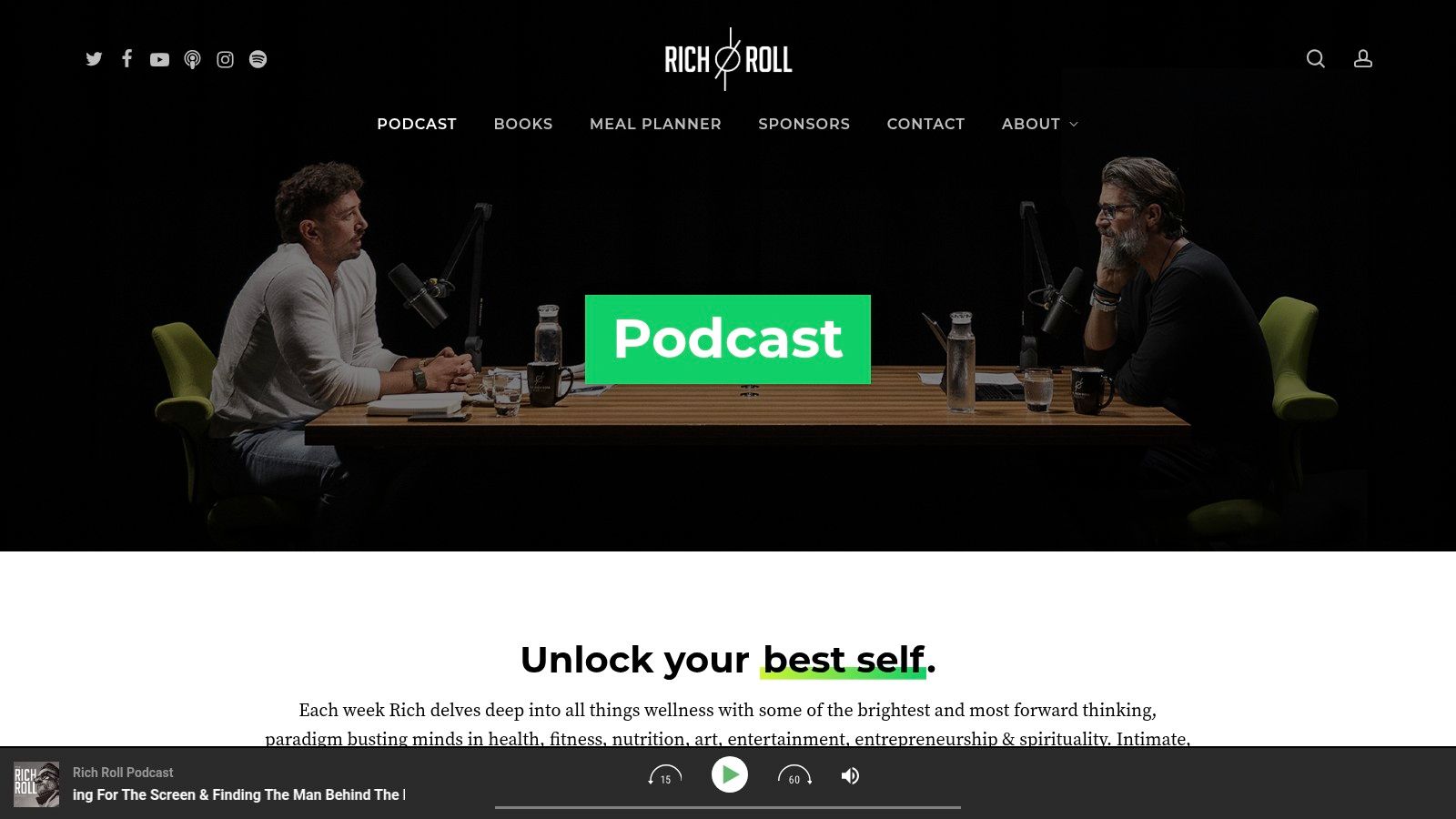
A compelling personal story matters here, but it needs more substance than a polished transformation narrative. Hosted by endurance athlete and author Rich Roll, the show uses long-form conversations to explore fitness, nutrition, wellness, personal development, entrepreneurship, and culture. Browse the Rich Roll episode archive to assess how your expertise and experience might support an extended discussion.
The advantage is room for context. An athlete can discuss the relationship between training and identity; a practitioner can explain how working with people changed an earlier assumption. The disadvantage is that a useful tip or product announcement may not sustain the format.
Build a conversation, not a résumé
Propose a narrative with tension: a belief you reconsidered, a difficult trade-off, or a limitation you learned to respect. Then connect it to something the audience can use without suggesting that your personal experience proves a general health claim.
That broader positioning has a defensible audience rationale. Sounds Profitable reported that 45% of Health and Fitness podcast listeners also consumed Self-Improvement podcasts, supporting consideration of adjacent topics rather than fitness labels alone (analysis of listening mindsets).
- Useful hook: How an endurance athlete rebuilt a sustainable relationship with training after questioning an optimization-focused identity.
- Weaker hook: An author is available to discuss a new book about success.
Don't manufacture vulnerability to suit the format. Offer a genuine story, identify its limits, and explain why listeners would benefit from hearing it. Long-form storytelling works best when experience and expertise complement each other rather than compete for attention.
3. FoundMyFitness
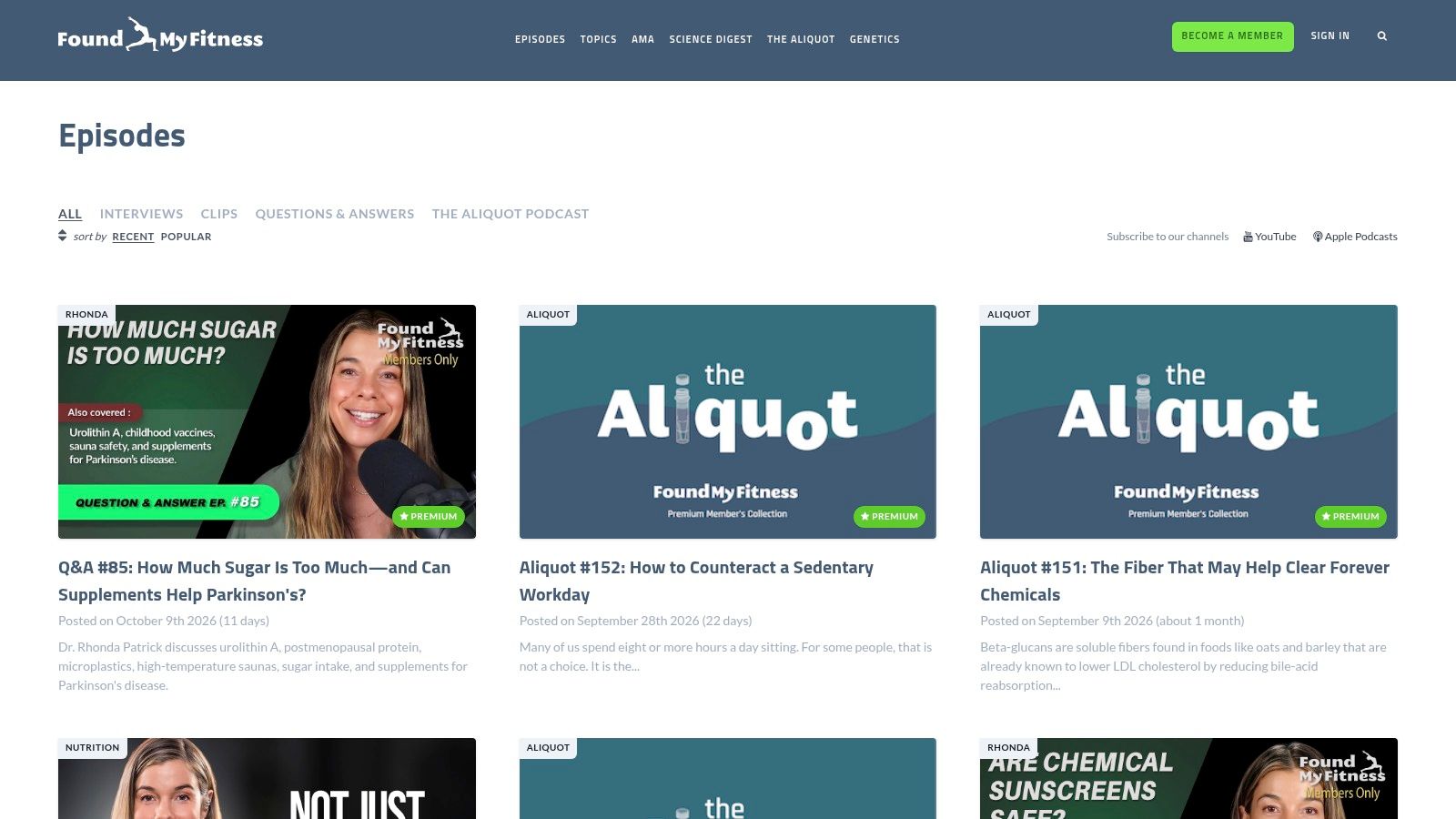
Before pitching FoundMyFitness, define the scientific question you can answer and the boundaries of that answer. Dr. Rhonda Patrick's FoundMyFitness episode library covers nutrition, aging, physical performance, and health science through interviews, Q&A material, and shorter Aliquot content. Public episodes sit alongside membership-supported material.
This is a stronger fit for a specific research contribution than a broad wellness philosophy. Topic pages help prospective guests investigate existing coverage, while the different formats offer useful clues about how narrowly a subject can be framed. Don't assume those formats are all external guest opportunities.
Make the evidence understandable
A proposed conversation about nutrition should specify the question, the relevant population, and the outcomes under discussion. Explain whether you're addressing clinical outcomes, performance measures, or intermediate markers, and avoid treating those categories as interchangeable.
- Strength: A focused scientific subject can support detailed discussion without requiring a sweeping lifestyle narrative.
- Trade-off: Technical precision takes preparation, and some supporting content is membership-based.
- Booking hook: Explain where a popular interpretation of research exceeds what the underlying evidence can establish.
Bring the limitations into the proposed conversation. Don't save them for a disclaimer after making the strongest claim.
A useful pitch might examine why findings from a tightly controlled nutrition study can be difficult to translate into ordinary eating decisions. That's more substantive than promising a definitive answer to an unsettled question.
If your expertise is primarily dietary rather than broader health science, compare nutrition-focused podcasts before deciding where to invest preparation time. Choose the format that can accommodate the nuance your topic requires.
4. Mind Pump Raw Fitness Truth
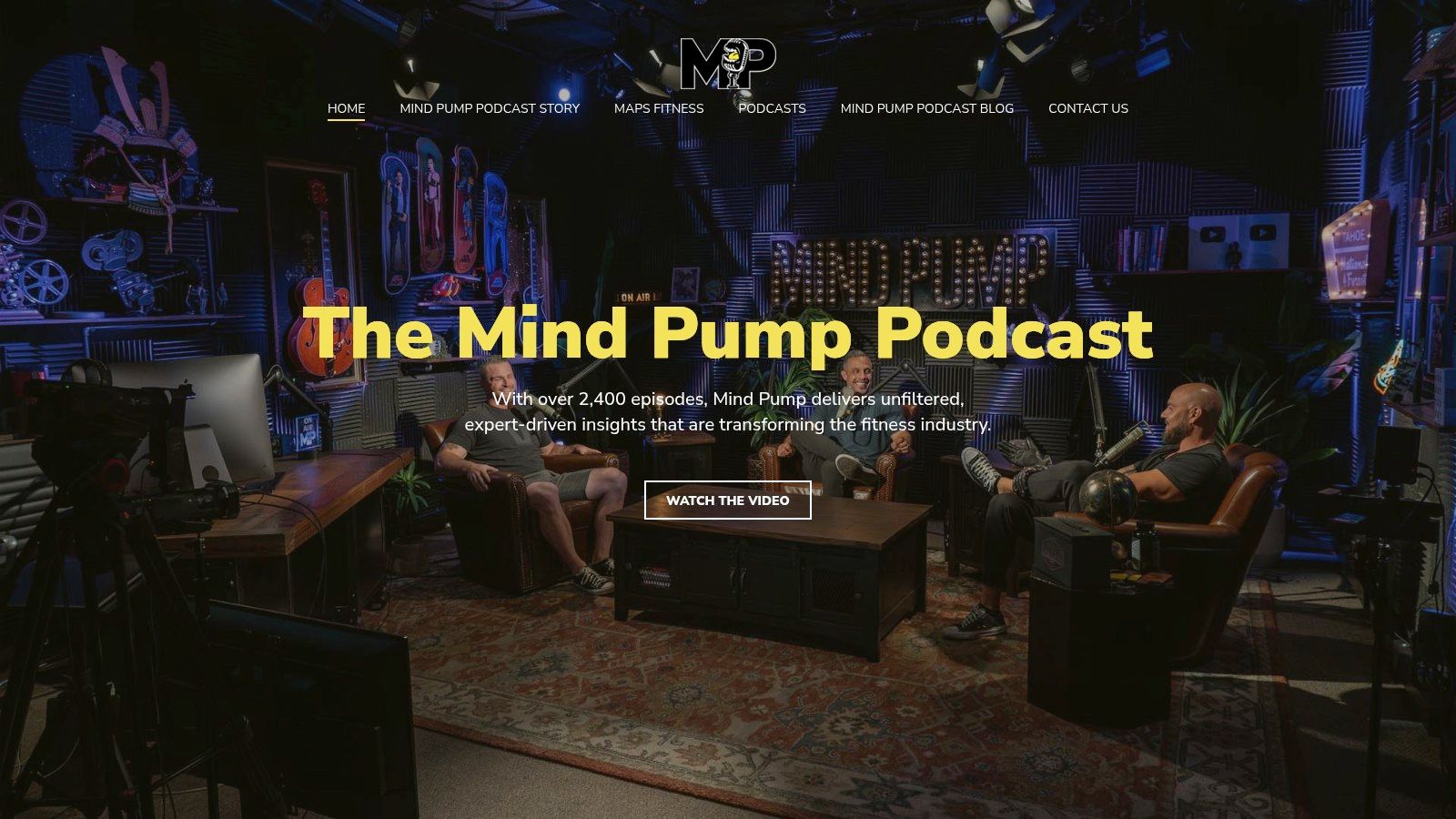
Can you explain what someone should change in their training, and why? That's a useful starting test for a Mind Pump pitch. Hosted by Sal Di Stefano, Adam Schafer, and Justin Andrews, Mind Pump combines host discussions, interviews, and listener-oriented advice around strength training, nutrition, physique goals, and fitness-industry claims.
The conversational, opinionated style offers a different setting from a research seminar. Practical coaching examples can fit well, provided you can distinguish an illustration from evidence. The show also sells training products separately, so review the commercial context alongside the editorial content.
Make the advice survive ordinary life
A useful angle addresses the gap between an ideal program and a program someone can repeat. Consider proposing a discussion about adapting strength training when work schedules change, equipment is limited, or motivation fluctuates.
Global wellness research identifies cost, availability, time, motivation, and trust as barriers to healthier behavior, making those constraints worth addressing directly rather than treating them as excuses (global health and wellness research).
- Bring alternatives: Explain how recommendations change with equipment access, experience, and recovery capacity.
- Show trade-offs: Describe what a simplified plan preserves and what it gives up.
- Avoid absolutes: Don't turn a coaching preference into a universal rule.
The informal format won't suit every practitioner, especially someone who needs extensive qualification before answering. Listen for how the hosts handle disagreement before approaching them.
For a separate prospect, review the Optimal Health Daily guest page. It isn't a Mind Pump submission route, so assess its format independently.
5. The Model Health Show
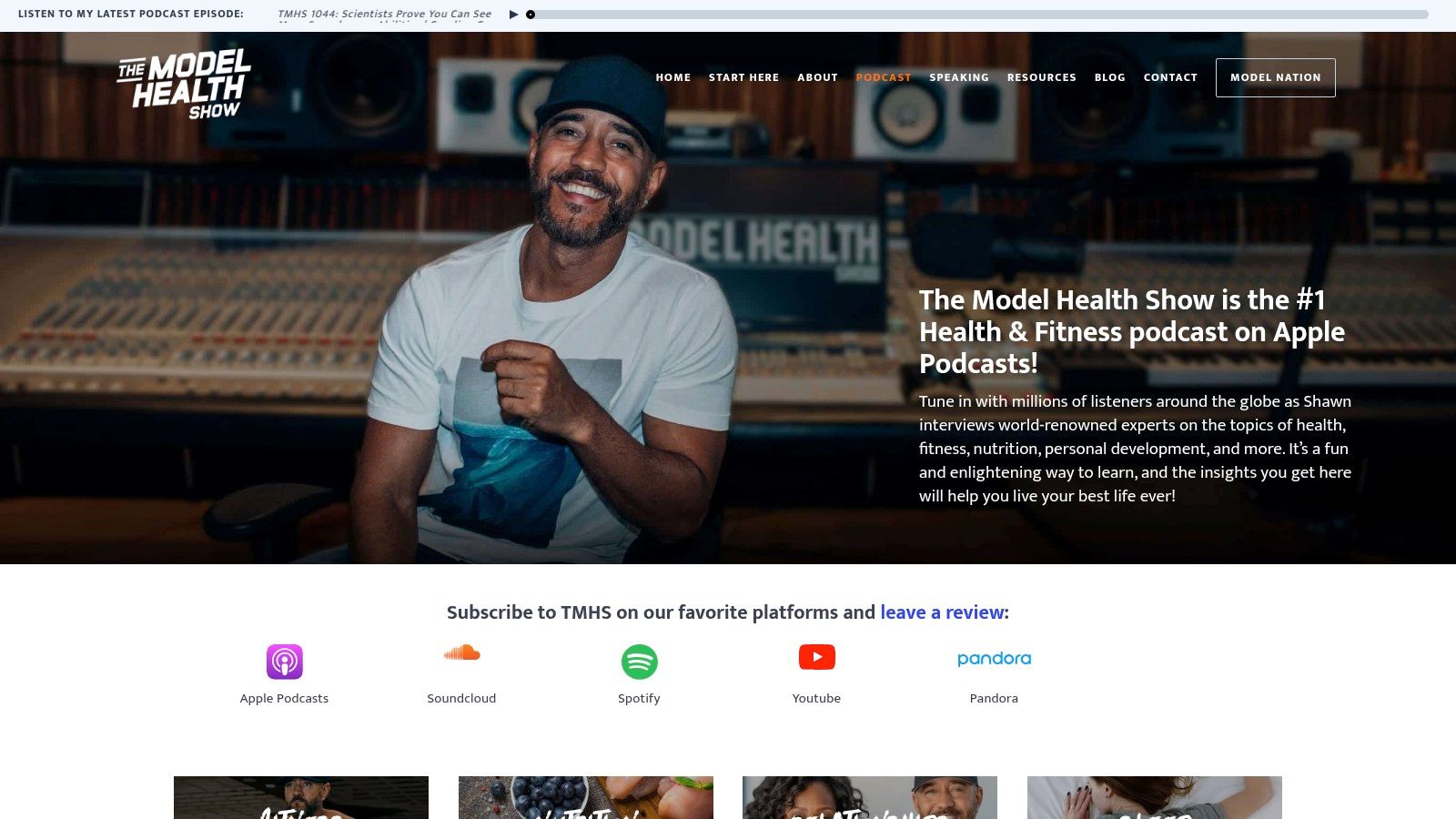
A sleep specialist who can explain how daily routines affect exercise decisions has a clearer proposition than someone offering generic advice about balance. Shawn Stevenson's The Model Health Show covers nutrition, fitness, sleep, stress, relationships, and personal development through expert interviews and host-led masterclasses.
Its broad scope favors accessible connections between subjects. Clinicians, researchers, authors, and practitioners can frame a specific topic within everyday life. The corresponding limitation is that a highly technical subject may need more translation than its specialist audience would normally expect.
Design for someone who isn't watching
Audio suitability should influence the pitch itself. SiriusXM Media reported that 71% of health-and-wellness podcast listeners listened hands-free while cooking, working, or exercising, which makes screen-dependent explanations a poor default (podcast listening context report).
For a movement-related topic, explain which ideas can be communicated safely through speech and which require visual assessment or individualized instruction. A conversation about choosing an appropriate exercise progression is different from asking listeners to copy a complicated movement while distracted.
Audio test: Rehearse the explanation without slides. If listeners need a diagram to understand the central point, redesign the segment.
A promising pitch could connect sleep routines, training expectations, and realistic habit changes while clearly separating general education from individualized care. Bring examples that clarify the decision rather than merely make the interview entertaining.
The accessible format is an advantage when you can simplify language without simplifying the evidence. It's a weaker fit if your proposed contribution depends on jargon, visual demonstrations, or unsupported promises of a complete lifestyle reset.
6. Barbell Medicine Podcast
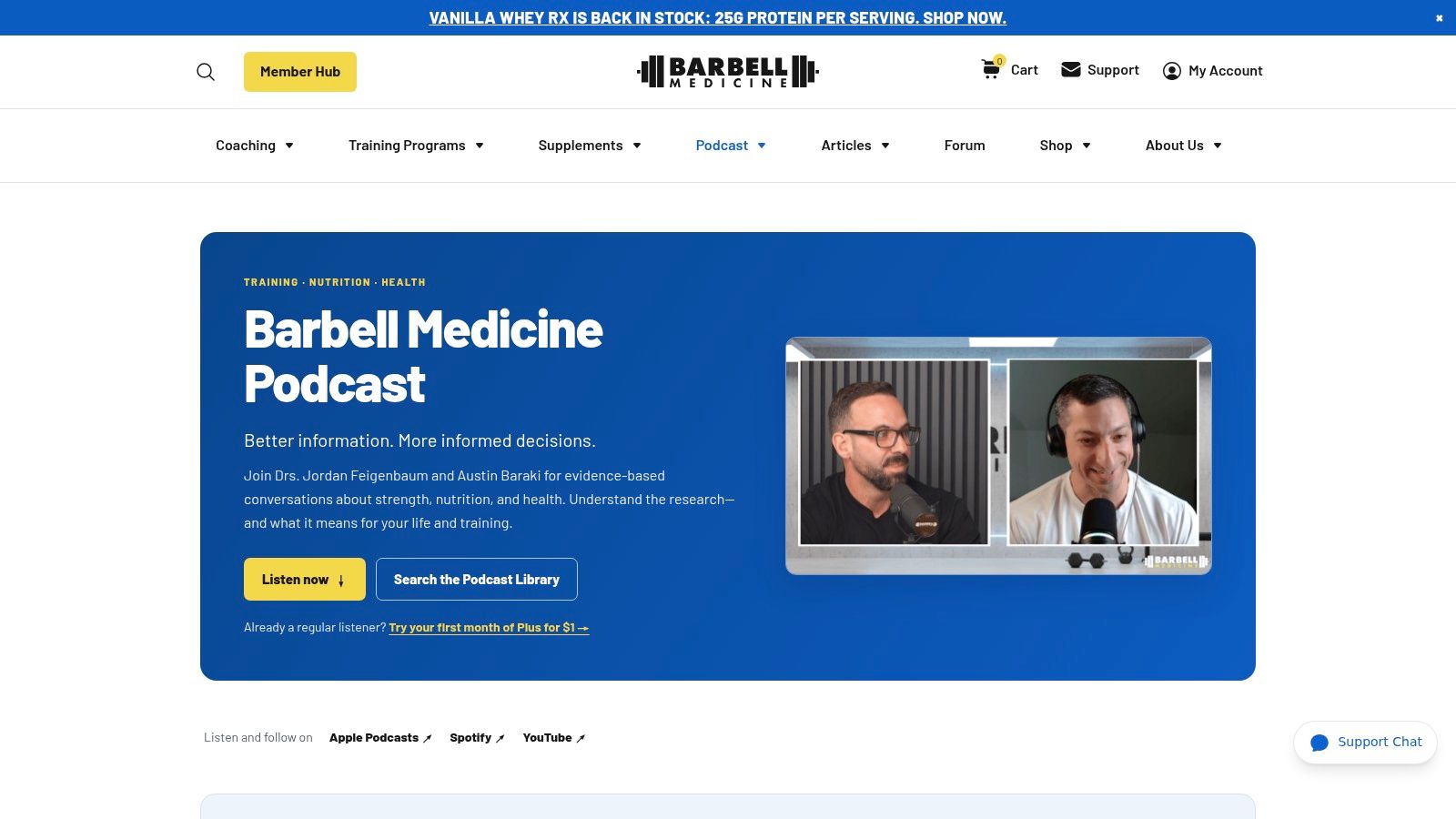
Best fit for the intersection of strength training and clinical reasoning. Physicians Jordan Feigenbaum and Austin Baraki connect training, nutrition, medicine, pain, and rehabilitation on the Barbell Medicine Podcast. Its searchable library supports topic research, with public episodes and optional membership content.
Compared with a general wellness interview, a proposed discussion here should make its reasoning explicit. A rehabilitation professional might explain how recommendations change with the person's goals, training history, and clinical circumstances rather than presenting a universal corrective routine.
Pitch a decision under uncertainty
A useful proposal could examine how practitioners communicate uncertainty when someone wants a definitive answer about returning to training. Define the educational question without attempting to diagnose hypothetical listeners.
- Strong contribution: Explain the evidence, competing interpretations, and practical consequences of choosing between approaches.
- Useful preparation: Identify where your own specialty ends and another professional's assessment becomes necessary.
- Poor fit: A motivational appearance with little connection to training, medicine, or evidence interpretation.
A scoping review of health-related podcasts reported high satisfaction and trust when programs combined personal anecdotes with reliable medical information, while cautioning that the underlying engagement studies were heterogeneous (review of health-related podcast research). For pitch preparation, that supports using a relatable example alongside careful explanation, not replacing evidence with a story.
The trade-off is depth. Detailed discussions may demand more preparation from guests and more attention from listeners, but they can accommodate distinctions that a quick-tip format can't. Don't promise certainty just to make your proposed episode sound decisive.
7. The Peter Attia Drive
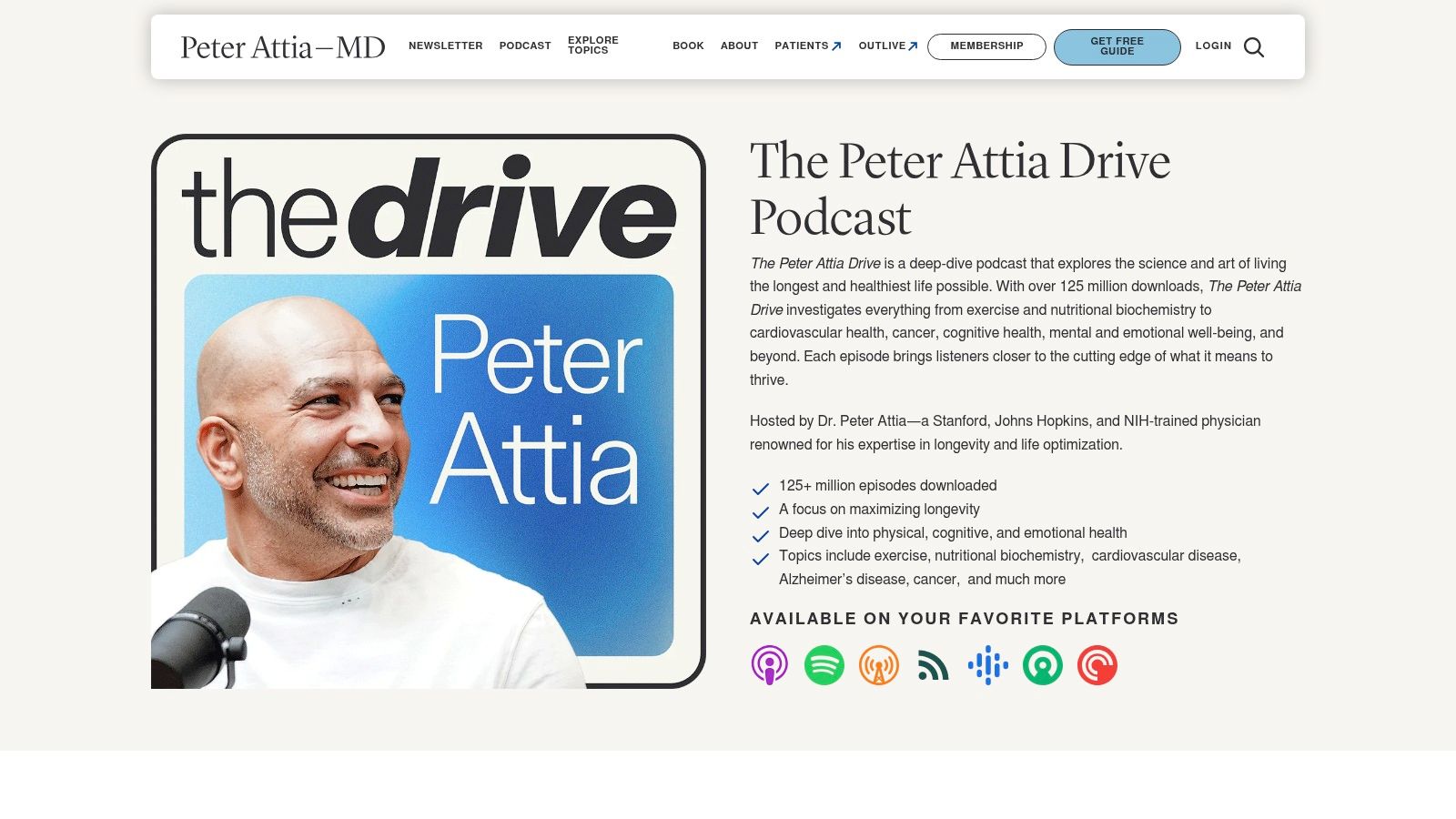
The important distinction is between having a longevity topic and having a substantive contribution to a longevity discussion. Physician Peter Attia's The Drive podcast combines expert interviews and AMAs across exercise, nutrition, cardiovascular health, physical performance, and related health science. Its archive labels episodes by topic, while membership adds supplemental material.
A specific, well-supported area of expertise is the strongest starting point. Research the archive for the exact question you want to address, not just a matching keyword. Previous coverage should help you narrow the proposal rather than prompt a claim that the entire subject has been overlooked.
Offer an evidence boundary, not another optimization promise
A useful pitch could examine what a measurement can tell someone, what it can't establish, and whether it should change a practical decision. That lets a specialist contribute depth without promising a universal longevity prescription.
The need for better interpretation is substantial. About 4 in 10 U.S. adults report getting health information from influencers or podcasts, according to the Pew findings described in AP's reporting on health information creators.
- Explain applicability: Specify who was studied and who may not be represented.
- Separate outcomes: Don't equate movement in a biomarker with proof of a broader health benefit.
- Disclose incentives: Identify commercial relationships relevant to your proposed discussion.
The detailed format is less suitable for a short promotional message or beginner-level overview without a distinctive contribution. Prepare to discuss limitations as carefully as practical implications, and don't confuse the existence of public interviews with an open invitation to pitch.
Top 7 Health & Fitness Podcasts: Comparison Guide
| Podcast | Format & topic scope | Access / resources | Ideal use cases | ⭐ Key advantages | Considerations |
|---|---|---|---|---|---|
| Huberman Lab | 🔄 Solo explainers and interviews on fitness, nutrition, sleep, recovery, and neuroscience | Public episodes on major listening and video platforms; searchable topic library | Science-focused health discussions and experts with broad health knowledge | 📊 Wide health coverage; searchable archive; varied episode formats | Not every episode covers fitness; detailed science-oriented style |
| The Rich Roll Podcast | 🔄 Long-form interviews on fitness, endurance, wellness, nutrition, and personal development | Public episodes on major podcast platforms; episode archive | In-depth conversations connecting health expertise with personal stories | ⭐ Allows detailed discussion; broad guest backgrounds | Long episodes; fitness is not always the focus |
| FoundMyFitness | 🔄 Interviews, Q&A, and short-form Aliquot content on health science, nutrition, aging, and performance | Many public episodes; premium membership starts at $15/month for additional content and features | Specialists, researchers, and focused science discussions | 📊 Topic pages and archive support targeted research | Science-heavy approach; some content is paid; cadence varies |
| Mind Pump: Raw Fitness Truth | 🔄 Frequent, conversational host discussions, interviews, and listener advice on training and nutrition | Major platforms; large searchable archive; training products sold separately | Actionable strength-training, nutrition, and fitness-claim discussions | ⚡ Frequent publishing; practical advice; extensive backlog | Informal, opinionated style; some product promotion |
| The Model Health Show | 🔄 Expert interviews and host-led masterclasses on health, fitness, sleep, stress, and personal development | Public episodes on listening platforms; searchable topic archive | General-audience explanations and discussions with health practitioners | 💡 Accessible style; topic categories aid discovery | Lifestyle topics share airtime; may lack technical depth for specialists |
| Barbell Medicine Podcast | 🔄 Evidence-informed discussions linking strength training with medicine, nutrition, pain, and rehabilitation | Public episodes; optional Plus membership listed at $9.95/month after a $1 introductory 30 days | Clinicians, coaches, researchers, and rehabilitation professionals | ⭐ Connects research and medical perspectives to practical decisions | Detailed episodes; bonus content requires membership |
| The Peter Attia Drive | 🔄 In-depth interviews and AMAs on longevity, exercise, nutrition, and health science | Public episodes; premium membership listed at $149/year for exclusive content and resources | Established experts and detailed discussions of health and longevity | 📊 Topic-labeled archive; exercise is a recurring theme | Not every episode focuses on fitness; supplemental material is paid |
Crafting Your Podcast Pitch Strategy
Start with format fit, not name recognition. Huberman Lab, FoundMyFitness, Barbell Medicine, and The Drive warrant different preparation from a narrative-led Rich Roll conversation or a practical Mind Pump discussion. A broadly relevant topic still needs a show-specific reason to exist.
Build your shortlist around questions you can answer credibly. Listen to a recent interview, inspect relevant archive entries, and confirm whether the host accepts outside pitches through a stated route. Don't assume a directory listing means a show is currently seeking guests, or that every named podcast participates in the same marketplace.
Turn research into an organized workflow
Tools like Let's Make A Podcast can support discovery and coordination through topic filters, guest one-sheets, pitching tools, messaging, and scheduling. Use those functions to keep the operational work organized while retaining responsibility for the substance of each proposal.
- Record the editorial fit: Note the relevant episode, your additional contribution, and the intended listener takeaway.
- Keep the pitch narrow: Offer a clear conversation premise, credible qualifications, and examples of what you can explain.
- Track the next action: Record the submission route, response status, and any agreed follow-up rather than relying on memory.
- Prepare an appropriate destination: Give interested listeners a relevant article, resource, or service page instead of sending everyone to a generic homepage.
A guest one-sheet should make evaluation easier, not repeat an entire biography. Include relevant credentials, proposed topics, representative appearances, and any disclosures that affect how a host should assess your expertise.
Follow up with context rather than pressure. If you have a meaningful update, explain it briefly; if the host declines or states that submissions are closed, respect that boundary.
Finally, plan what happens after recording. Confirm how the host wants the episode shared, prepare useful supporting material, and evaluate audience response against the purpose of the appearance. A worthwhile booking connects the right listeners with a contribution you're qualified to make, rather than producing a recognizable logo for your website.
Let's Make A Podcast offers a podcast directory, guest one-sheet tools, pitching support, and scheduling to help hosts and prospective guests coordinate interviews. Visit Let's Make A Podcast to find relevant health and fitness shows, present your expertise clearly, and organize your next outreach campaign.
Pitch these shows as a guest
2 shows from this article are in our directory, each with a page on how it books guests and what to send.
- How to be a guest on Huberman LabScicomm Media
- How to be a guest on Mind PumpSal Di Stefano, Adam Schafer, Justin Andrews, Doug Egge
More shows that book guests: Health & Fitness podcasts