10 Podcasts on Public Speaking Worth Hearing
What if the best podcasts on public speaking aren't the loudest or most inspirational, but the ones that solve the exact problem you're facing right now? Some shows help with shaky delivery in meetings, some sharpen presentation design, some train executive presence, and others teach the business of getting paid to speak. The right choice depends less on fame and more on fit.
I ranked these shows by practical usefulness, specificity, depth, audience fit, and limitations. That matters because a listener who needs fast workplace tactics wants something very different from a founder preparing for a panel, or a professional speaker building a pipeline. It also matters for guests, because the best pitch starts with a clear read on what a show's audience actually needs.
A useful shortcut is to think in categories, not titles. Delivery coaching helps you sound better in the room. Presentation design helps your slides carry the message. Executive communication helps you influence senior people. Storytelling helps you make ideas stick. Business-of-speaking shows help you turn skill into bookings and revenue.
If you want to pitch a show later, pay attention to format as much as topic. Short solo episodes, interviews, mini-series, and guest-heavy shows all reward different kinds of pitches, and the shows below reveal those patterns quickly.
Table of Contents
- 1. Think Fast, Talk Smart
- 2. The Toastmasters Podcast
- 3. The Presentation Boss Podcast
- 4. Storytelling with Data Podcast
- 5. Speak Up Develop Your Executive Presence
- 6. The Speak Good Podcast
- 7. Speaking Your Brand
- 8. Talk About Talk
- 9. The Speaker Lab Podcast
- 10. Speakernomics
- Top 10 Public Speaking Podcasts Comparison
- Turn Listening Into Better Speaking
1. Think Fast, Talk Smart
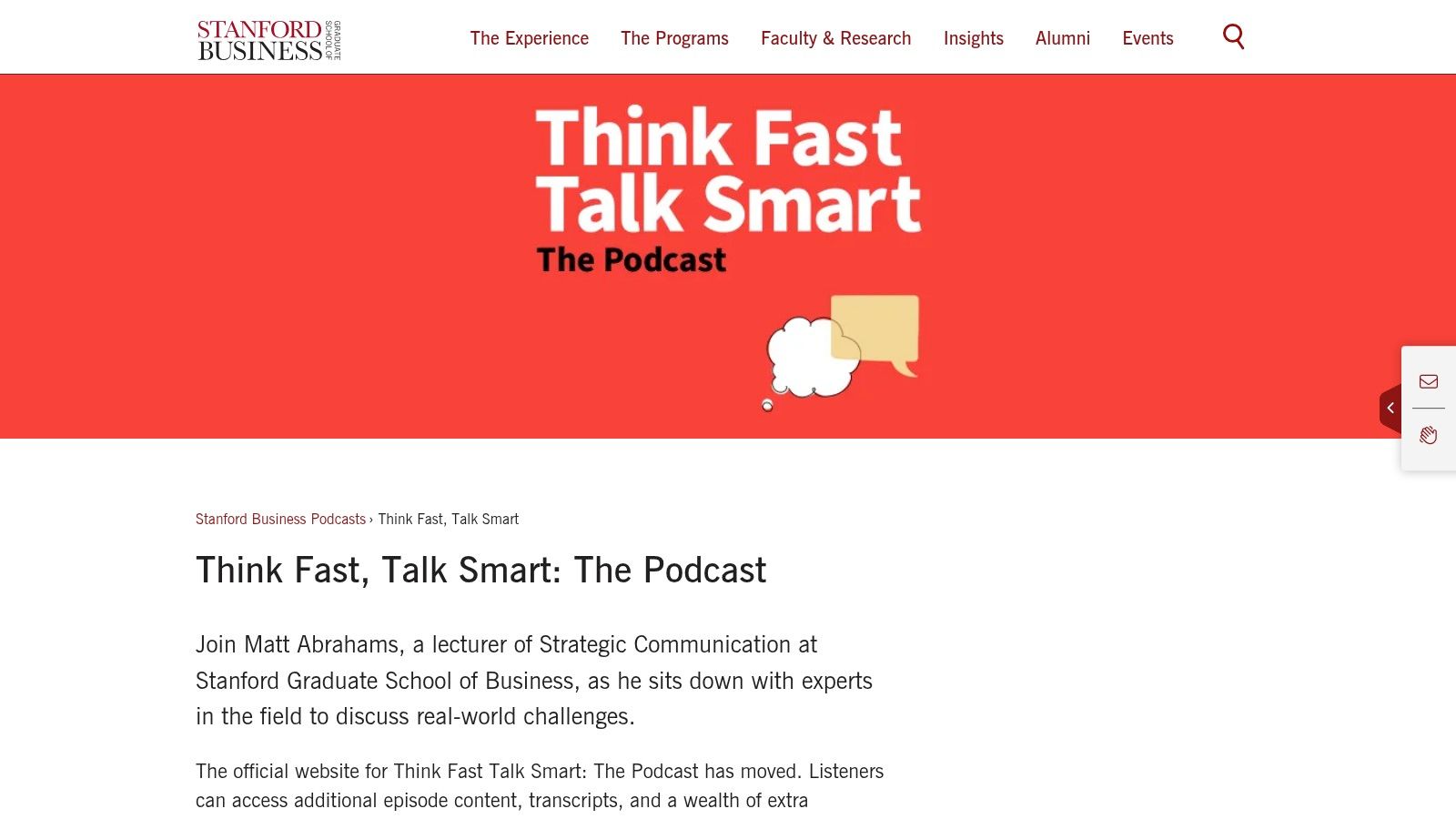
Think Fast, Talk Smart is the strongest first stop for listeners who need immediate workplace speaking tactics. Stanford's Matt Abrahams keeps the focus on speaking, presenting, and leadership communication, so the show feels built for people who need a better answer in the room, not a theory about communication. It's especially useful if you want quick techniques you can test in your next meeting or interview.
Why it ranks first
The show's practical value comes from its emphasis on research-backed, audience-first communication, plus bite-sized “Quick Thinks” that make the format easy to use in short bursts. The editorial quality also stands out, because the Stanford GSB brand supports a disciplined, polished production standard. For listeners, that means less wandering and more repeatable methods.
Practical rule: If you only have time for one episode before a presentation, choose one tactic and apply it the same day.
The limitation is depth. Advanced speakers who want long-form craft discussion may outgrow the pace, because the show is designed for applicability rather than exhaustive analysis. For guests, that's also the lesson, pitch one concrete communication problem and one clear takeaway, not a broad personal story. If you're preparing for a recorded conversation, this guide to podcast interview prep fits the show's direct, useful tone well.
2. The Toastmasters Podcast
The Toastmasters Podcast solves a different problem, it gives beginners a low-friction way into speaking fundamentals. Because it comes from Toastmasters International, the show feels connected to a long-running training culture that already understands how nervous speakers think. That makes it easier to trust if you're building confidence from the ground up.
The most useful episodes tend to be the ones tied to member stories, speaking evaluation, and club projects. Those topics are less glamorous than keynote strategy, but they're the ones that help a hesitant speaker rehearse structure, feedback, and stage habits in manageable steps. That's why the show works well for people who want community-backed coaching instead of one-off inspiration.
Best fit and main limit
It's a strong entry point for new speakers, career switchers, and people who need comfort with the basics before they try more advanced podcasts. The downside is clear, it's not built around the business side of speaking, so professional speakers looking for fees, lead generation, or positioning won't get enough from it.
For prospective guests, the show's tone suggests a simple pitch works best. Link your expertise to a concrete speaking struggle, then show how you'd help a beginner move from fear to practice. That's the kind of guest angle this audience can use.
3. The Presentation Boss Podcast
The Presentation Boss Podcast is the most practical pick for people who live in slides, workshops, and business presentations. Its value is plain-English guidance on building, practicing, and delivering presentations without overcomplicating the process. That makes it especially relevant for managers, trainers, consultants, and internal communicators.
The show's “what you'll learn” summaries help you decide quickly whether an episode is worth your time. That editorial clarity matters because presentation advice can get vague fast, and this show does a decent job of keeping things grounded in usable moves. The combination of slide craft and live delivery advice is the reason it lands above broader motivational shows.
Where it helps most
- Slide structure: It's useful when your deck needs cleaner logic and fewer crowded slides.
- Live delivery: It gives straightforward tactics for meetings, workshops, and talks.
- Audience engagement: It addresses the problem of losing people halfway through a presentation.
The main limitation is reach. It's an Australian show, so some tools and references may feel region-specific, even if the core advice travels well. Still, for listeners who want concrete business presentation guidance, that's a manageable tradeoff. If you're a guest, think in terms of audience problems and practical takeaways, not personal branding.
4. Storytelling with Data Podcast
Storytelling with Data Podcast solves the problem of making charts, slides, and business insights understandable. It's the strongest fit for analysts, product teams, researchers, and executives who need to explain what the data means, not just display it. That focus makes it more specialized than general speaking advice, but also more valuable when your credibility depends on clarity.
The show's strength is its audience-first design mindset. Instead of treating data as decoration, it treats visuals as part of the argument. That shift matters when a speaker has to guide a room through a complex decision and keep the narrative moving.
What makes it different
The episode themes often circle around slide titles, narrative structure, and confident delivery, so the show bridges communication and design rather than separating them. That's useful for people who know their material but struggle to make it land. The supporting training and workshop ecosystem also gives listeners a path beyond the audio format.
Useful filter: If your talk depends on numbers, don't start with the chart. Start with the decision the chart is supposed to support.
Its limitation is scope. Pure keynote speakers or motivational speakers may find the data emphasis too narrow, even if the storytelling lessons still help. For guests, the right angle is usually a concrete communication challenge, like turning complexity into a decision-ready message.
5. Speak Up Develop Your Executive Presence
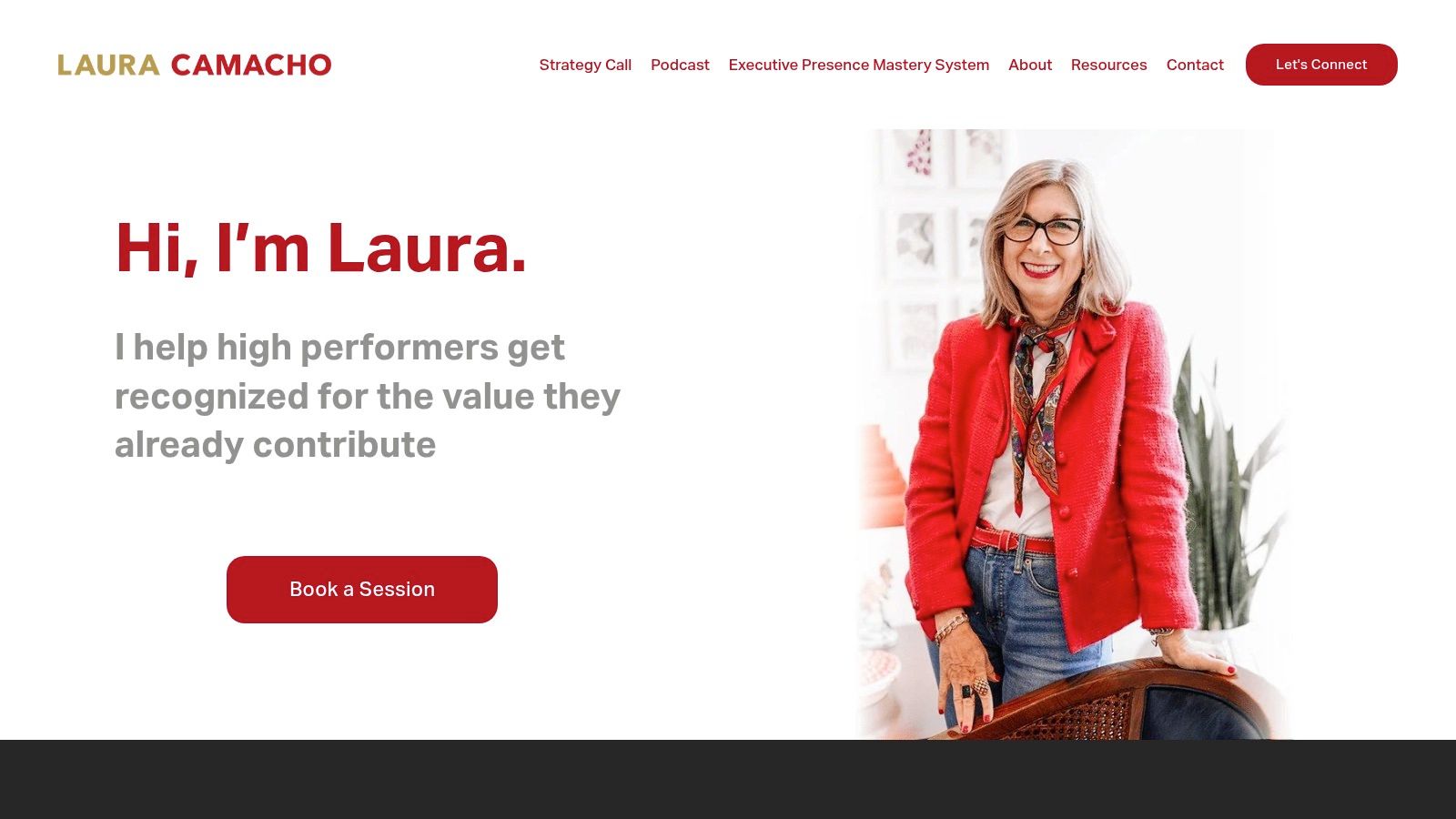
Speak Up is the best match for people whose speaking problem is really an influence problem. Laura Camacho's focus on executive presence, concise messaging, and leadership communication makes the show feel designed for professionals who need to speak up in rooms of power. It's less about performance polish and more about credibility, brevity, and visibility.
This is also where the show's practical tone matters most. Instead of generic “be more confident” advice, it leans toward how to say things inside meetings, how to get heard by senior stakeholders, and how to communicate with enough precision that your point survives the hierarchy. That's a real pain point for managers, directors, and high-potential employees.
If you're evaluating whether the show belongs in your rotation, ask one question. Do you need to sound more like a speaker, or more like a leader? If the answer is the second one, this is a strong fit.
For readers who want leadership-focused guest planning, this leadership podcast resource lines up well with the show's corporate emphasis.
6. The Speak Good Podcast
The Speak Good Podcast is a trainer-led show for people who care about message discipline as much as delivery. Brad Phillips and the Throughline Group team approach speaking as a craft tied to persuasion, clarity, and high-stakes communication. That makes the show especially useful for spokespeople, leaders, and anyone who has to speak carefully in public-facing or media-facing settings.
Why it stands out
The show's mix of presentation technique, messaging strategy, and ethical awareness gives it a more analytical tone than the average public-speaking podcast. That's a good thing if you're dealing with sensitive topics, organizational messaging, or moments when sloppy phrasing creates real consequences. The detailed show notes and blog tie-ins also suggest a deeper teaching layer than a typical interview show.
It isn't the warmest or most motivational option, and that's part of the tradeoff. People who want encouragement may find it a little stern, but professionals who need precision often prefer that. The strongest value here is the balance between craft and context.
Some speaking problems are not delivery problems. They're message problems, and this show treats them that way.
For prospective guests, specificity matters. Lead with a communication scenario, such as a difficult announcement, a crisis response, or a high-stakes presentation, and show how your expertise helps people stay clear under pressure.
7. Speaking Your Brand
Speaking Your Brand is built for experts who want a signature talk that works across stages, podcasts, and thought-leadership platforms. Carol Cox's focus on storytelling, structure, confidence, and TEDx prep makes the show especially useful for women and other speakers who want a clear message platform rather than scattered advice. That emphasis on adaptability is a real advantage.
The archive is substantial, with 450+ episodes mentioned on the site, so the show has room to cover both foundational and advanced concerns. That depth helps listeners work through message development over time instead of chasing one-off tips. It's also where the show becomes more than a “speaking” resource, because it connects talk design to visibility and personal brand.
Best use case
If you need a talk that can be repeated, refined, and repurposed, this is one of the better choices. It's less about tactical booking mechanics and more about building the kind of talk that gets remembered and reused. That's a meaningful distinction for subject-matter experts, founders, and mission-driven professionals.
The limitation is also part of its identity. If you want sales funnels, speaker bureaus, or contracting advice, you'll need a different show. If you want a message that travels, this one earns attention.
8. Talk About Talk
Talk About Talk sits in the middle of the field in the best possible way. Dr. Andrea Wojnicki blends communication science, executive coaching, and practical speaking advice, so the show works for people who need clearer meetings, stronger presentations, and better presence without feeling like they're being sold a seminar. That balance makes it easy to recommend across career levels.
The show is especially useful for confidence, framing, and message clarity. It doesn't treat speaking as a performer's game, it treats it as a business skill that affects how people perceive your competence. That makes it valuable for individual contributors and executives alike.
Why it's a strong generalist
- Research-informed advice: The tone feels grounded without becoming academic.
- Broad applicability: The episodes map to meetings, keynotes, and media appearances.
- Mindset plus skill: It covers the head and the hands, which many shows separate.
Its main limitation is the same thing that makes it useful, it's broad. You won't find much about booking a speaking career or pricing a keynote. You will find a reliable bridge between communication science and day-to-day speaking improvement. For many professionals, that's exactly the right mix.
9. The Speaker Lab Podcast
The Speaker Lab Podcast is the best fit for people who already see speaking as a business. Its archive is deep, with a long-running library that supports the idea that this niche is not a short-lived trend but a sustained category with repeated publishing and broad audience interest. That depth matters if you're building systems instead of just improving a talk.
The show covers finding gigs, pricing, outreach, CRM habits, demo materials, and niching. In other words, it addresses the infrastructure behind a speaking career, not just stagecraft. That makes it valuable for authors, consultants, entrepreneurs, and speakers who need revenue, not applause.
For people trying to get booked, the show's companion resources and tactical interviews can help structure a real pipeline. This guide to getting booked as a podcast guest is a useful adjacent resource if you're translating speaking credibility into guesting opportunities.
Main tradeoff
Advice density varies by episode and guest, so listeners need to be selective. The upside is breadth, the downside is unevenness. If you're patient and organized, the archive can still pay off.
10. Speakernomics
Speakernomics is the clearest answer for anyone focused on the business of professional speaking. The National Speakers Association keeps the show tightly aligned to fees, marketing, ethics, AI, and the future of the profession, so it feels less like a general speaking podcast and more like an industry briefing. That specificity is exactly why it ranks here.
The show's weekly cadence gives it a topical feel, which helps when the business side of speaking shifts or when speakers need current thinking from working professionals. It's especially valuable for people already trying to earn from speaking, because it focuses on the systems that support a paid speaking career. If you want delivery coaching, this isn't the first place to go. If you want to build a speaking business, it belongs near the top.
Who should prioritize it
Professional speakers, NSA members, bureau-facing speakers, and consultants trying to monetize talks will get the most from this show. The business angle is narrow by design, but that narrowness is the point. It avoids pretending that the same advice fits beginners, hobbyists, and full-time speakers equally.
For guests, the pitch should be commercially relevant and timely. Tie your idea to pricing, client acquisition, ethics, or how the profession is changing, because that's the language this audience expects.
Top 10 Public Speaking Podcasts Comparison
| Podcast | Core focus & features ✨ | Best for 👥 | Guest value 💰 | Quality & format ★🏆 | Booking fit / Pitchability ✨ |
|---|---|---|---|---|---|
| Think Fast, Talk Smart (Stanford GSB) | Research-backed speaking tactics; "Quick Thinks" mini-episodes ✨ | Managers, busy pros 👥 | Immediate, actionable takeaways for workplace speaking 💰 | High production; concise episodes ★★★★★ 🏆 | Moderate, curated academic show; contact via site ✨ |
| The Toastmasters Podcast (Toastmasters Int.) | Member stories, fundamentals, club-based tips ✨ | Beginners, club members, confidence-builders 👥 | Reach global Toastmasters audience; foundational coaching 💰 | Reliable, organization-backed production ★★★★ | Low, Moderate, org-run; guest spots are selective ✨ |
| The Presentation Boss Podcast | Slide craft + delivery; "What you'll learn" summaries ✨ | Everyday business presenters & trainers 👥 | Practical, copy-paste tactics and resource links for meetings 💰 | Practical, coach-hosted; good balance ★★★★ | Moderate, independent show open to practitioner guests ✨ |
| Storytelling with Data Podcast | Data viz, narrative structure, visual design tactics ✨ | Analysts, product managers, execs who present data 👥 | Showcase data-story expertise; design-forward guidance 💰 | Strong design focus; high editorial quality ★★★★ | Moderate, expert guests; pitch via site/resources ✨ |
| Speak Up: Develop Your Executive Presence | Executive presence, concise messaging, influencing leaders ✨ | Mid-to-senior leaders & aspiring execs 👥 | Visibility with leadership-focused listeners; "say-it-this-way" help 💰 | Coaching-led, research-informed ★★★★ | Moderate, coaching show, curated guest selection ✨ |
| The Speak Good Podcast (Throughline Group) | Message discipline, media-facing skills, ethics ✨ | Spokespeople, PR professionals, leaders 👥 | Nuanced persuasion & media prep; strategic exposure 💰 | Trainer-led, analytical, detailed show notes ★★★★ | Low, Moderate, targeted to professional spokespeople ✨ |
| Speaking Your Brand | Signature talks, storytelling frameworks, inclusivity ✨ | Thought leaders, experts (esp. women) 👥 | Build a reusable signature talk and visibility across formats 💰 | Vast archive; framework-driven ★★★★ | Moderate, high episode volume; opportunities for niche guests ✨ |
| Talk About Talk (Dr. Andrea Wojnicki) | Communication science, confidence, framing tactics ✨ | Professionals leveling up presentation & mindset 👥 | Research-backed tips and workshops; practical skill gains 💰 | Clear, pragmatic coaching style ★★★★ | Moderate, curator-led; workshop tie-ins may open doors ✨ |
| The Speaker Lab Podcast | Business of speaking: gigs, pricing, systems ✨ | Professional speakers & entrepreneurs 👥 | Tactical playbooks for booking, pricing, and scaling a speaking business 💰 | Long-running, resource-rich archive ★★★★★ 🏆 | High, guest topics often aligned with speaker business themes ✨ |
| Speakernomics (National Speakers Association) | Fees, marketing, industry trends; NSA tie-ins ✨ | Paid speakers, business-of-speaking pros 👥 | Direct access to NSA audience; practical revenue-focused advice 💰 | Industry-focused, timely weekly episodes ★★★★ | Moderate, NSA channel; pitching via association routes ✨ |
Turn Listening Into Better Speaking
The fastest way to use podcasts on public speaking is to match the show to the problem, not to the brand. Start with Think Fast, Talk Smart if you need quick workplace tactics. Start with The Toastmasters Podcast if you're building fundamentals and confidence. Choose The Presentation Boss Podcast or Storytelling with Data Podcast if your challenge is slides, structure, or data-driven persuasion. Choose Speak Up or Talk About Talk if you need executive communication and professional presence. Choose The Speaker Lab Podcast or Speakernomics if you're building a paid speaking pipeline.
The most effective listening habit is simple. Pick one episode, apply one technique in a real speaking situation, then review what changed before you add another show. That keeps the learning concrete and prevents you from collecting advice without changing behavior.
If you're aiming to become a guest, use the same discipline. Study a show's recent episodes, note the format, identify the audience problem it serves, and build a focused one-sheet around that fit. A relevant pitch works better when it names the show's context and offers a topic that matches the host's current direction.
Let's Make A Podcast can help with that workflow by showing active shows, organizing one-sheet details, and supporting targeted outreach. If you want to find relevant guest opportunities and pitch them with more context, visit Let's Make A Podcast and use it to narrow the search before you send a single email.
Pitch these shows as a guest
2 shows from this article are in our directory, each with a page on how it books guests and what to send.
- How to be a guest on Think Fast Talk SmartMatt Abrahams, Think Fast Talk Smart
- How to be a guest on Speak UpLaura Camacho
More shows that book guests: Careers podcasts, Leadership podcasts